



Cane Seat Hall Chair
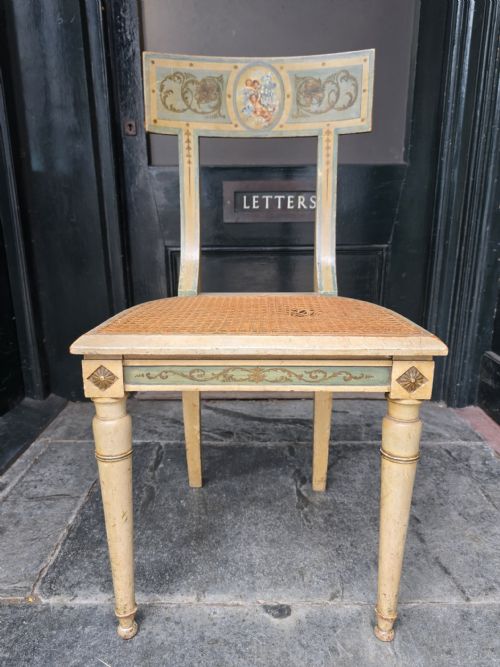
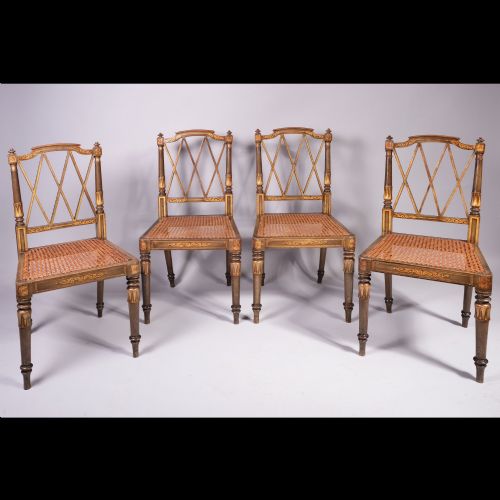
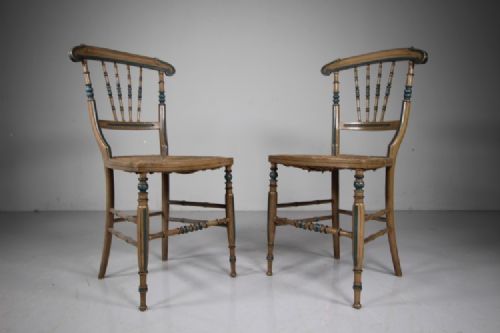
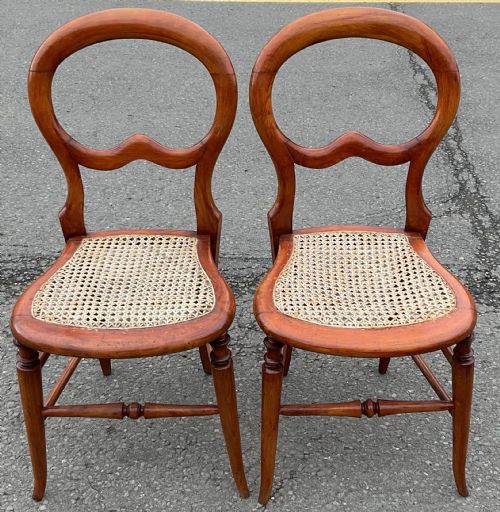
A cane seat hall chair brings lightness to an entrance with woven panels and timber frames.
Cane Seat Hall Chair
A cane seat hall chair combines rigid wooden frames with woven natural seating panels. Buyers searching for a cane seat hall chair encounter robust entrance seating originating from periods including Regency, Victorian, and the eighteenth century.
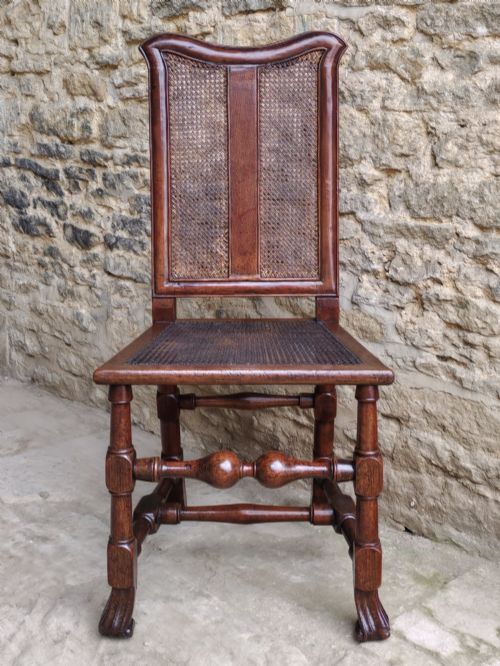
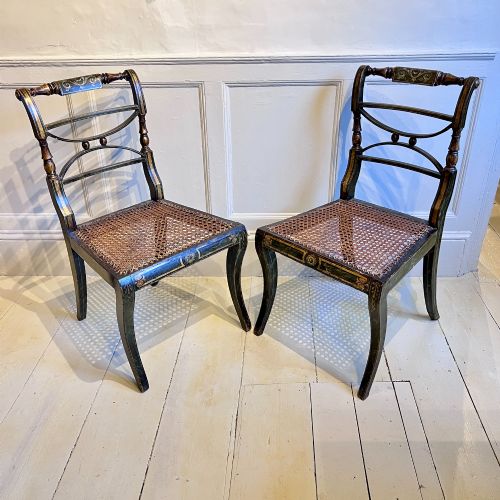
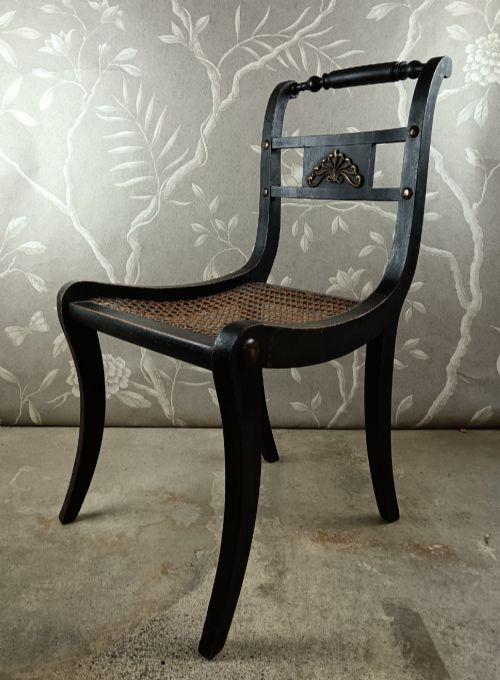
The selections available range from formal Regency ebonised models to solid satinwood Ceylonese examples and oak pieces featuring barley twist legs. Side chairs and hall chairs dominate the forms, often appearing in matched pairs or small sets.
Makers drew on historic revival styles such as William and Mary, Carolean, and Jacobean to shape these upright seats. The resulting variety spans painted finishes, simulated rosewood, and inlaid mahogany constructed for hallway and occasional use.
Quality differences
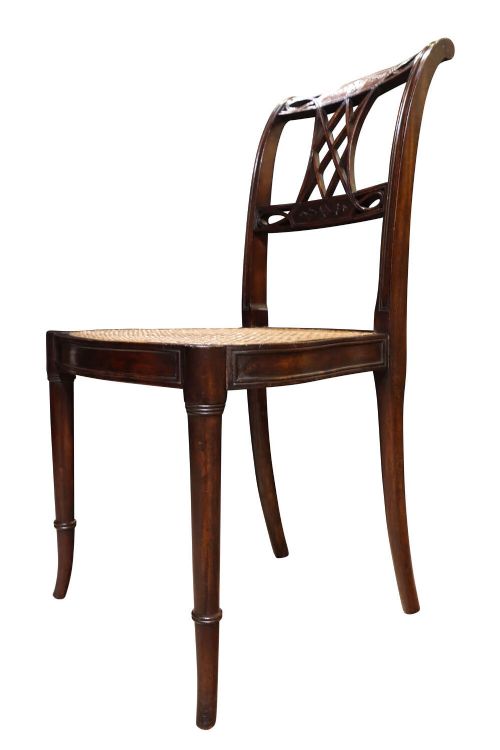
The refinement of the carving and the fidelity of the revival style dictate the upper tier of these chairs. Regency ebonised frames with gilt highlights and crisp sabre legs demonstrate superior execution compared to simpler provincial builds.
The integrity of the woven cane panel and the choice of dense hardwood timbers such as walnut or solid satinwood elevate the standing of a piece. Original painted finishes and matched pairs command distinct interest among collectors.
Revival styles represented include William and Mary, Jacobean, Carolean, and Grand Regency.
Waring & Gillow·Gillows
The Cane Seat Hall Chair Glossary
- Cane
- A material derived from the peeled stems of rattan palms, woven in patterns to form breathable chair seats. It provides both structural support and visual lightness.
- Ebonised
- Wood treated with a dark finish to imitate expensive ebony. This technique appears frequently on Regency formal seating.
- Barley Twist
- A turning technique where timber is carved into a helical screw shape. This decorative joinery is common on seventeenth-century revival oak chairs.
- Sabre Leg
- A concave curving leg that tapers toward the foot, typical of Regency design. It contributes to the outward-splaying stance of classical side chairs.
- Japanned
- European furniture finished with oriental-style varnishes and lacquer work. It mimics Asian export lacquer popular in earlier centuries.
Cane Seat Hall Chair: Frequently Asked Questions
Where should I place a cane seat hall chair?
These upright chairs suit narrow corridors, landings, and entrance spaces where deep seating proves impractical. Their light woven panels prevent dark hallways from feeling overcrowded.
Position them against a wall to display the carved backs and turned legs without obstructing everyday movement through the room.
How do I care for antique cane?
Keep woven panels away from direct heat sources and harsh sunlight to prevent the natural fibres from drying and snapping. Occasional light dusting with a soft brush maintains the weave.
Avoid placing heavy items directly onto the centre of the woven surface to preserve the tension of the cane over time.
Are these chairs comfortable for daily sitting?
Hall chairs and side chairs were originally designed for brief use in entrances rather than long hours of lounging. The upright backs encourage a formal posture.
Adding a tailored squab cushion provides extra comfort if you intend to use the chair at a desk or in a bedroom.
How do I identify a Regency hall chair?
Look for classical architectural motifs, ebonised or painted finishes, and distinctive sabre legs. Regency examples often incorporate gilt highlights and decorative Trafalgar styling.
The frames prioritise clean lines and neoclassical symmetry inspired by ancient Greek and Roman furniture.