
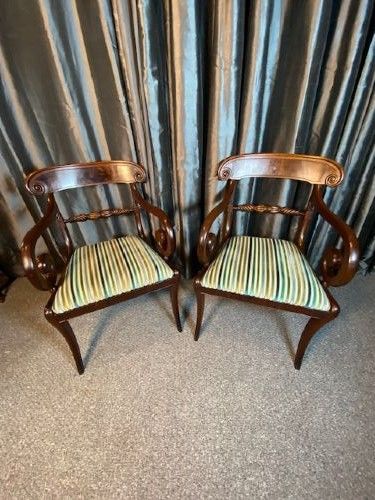
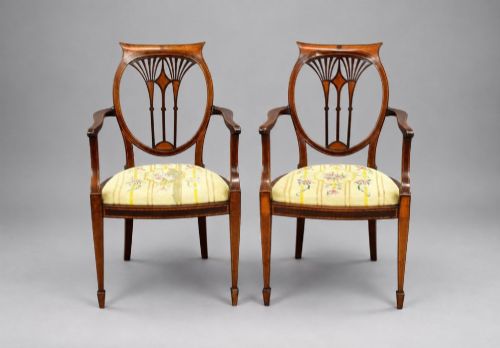
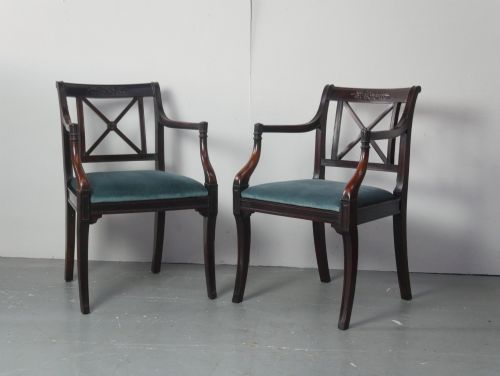
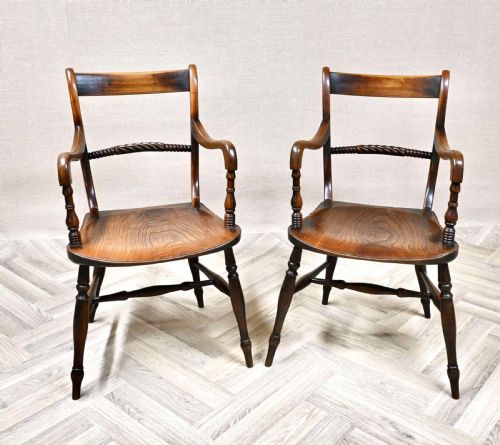
Pair of Carver Armchairs
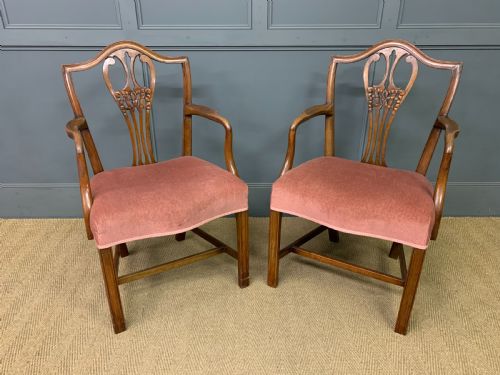
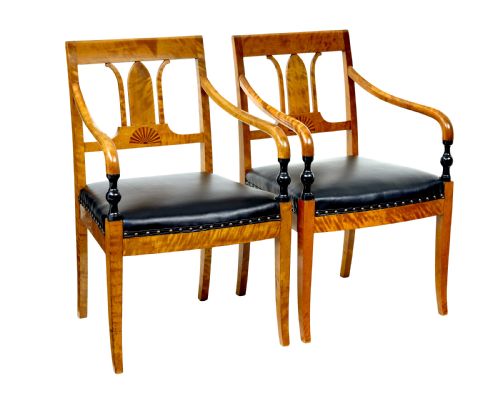
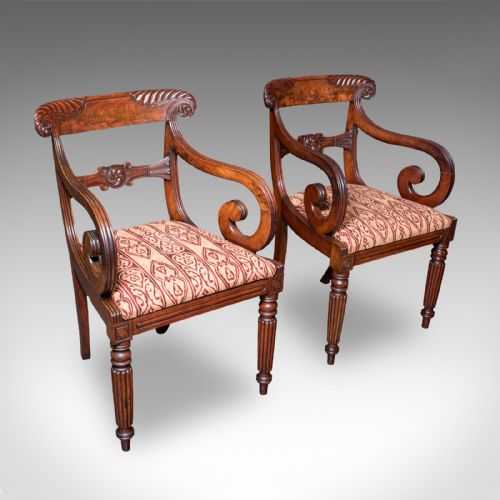
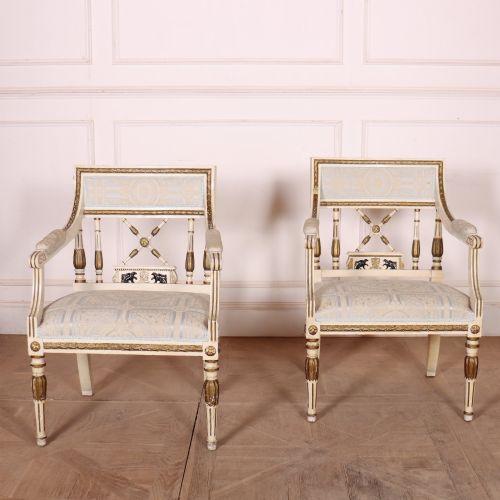
A pair of carver armchairs brings matched seating to a room, offering wider proportions and supportive armrests designed for dining or parlour use.
Pair of Carver Armchairs
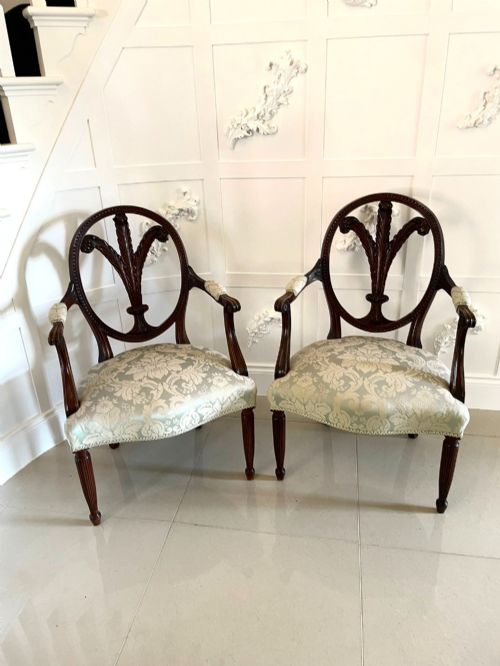
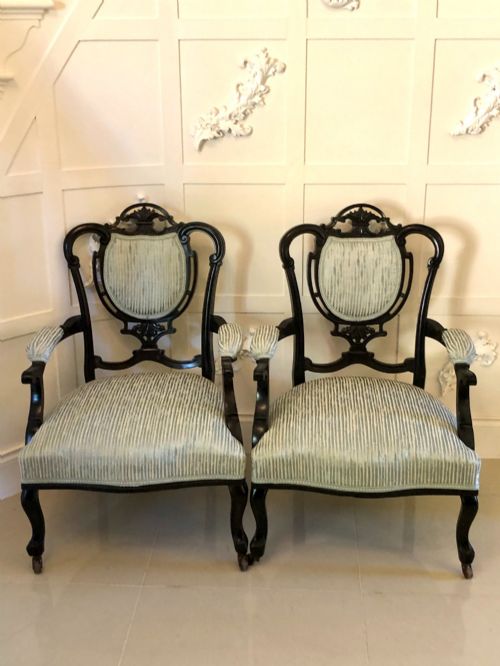
A pair of carver armchairs spans formal dining seats and sturdy country windsors, reflecting the specific social rooms they inhabited. Buyers searching for a pair of carver armchairs encounter diverse regional variations from the Georgian, Victorian, and Edwardian eras.
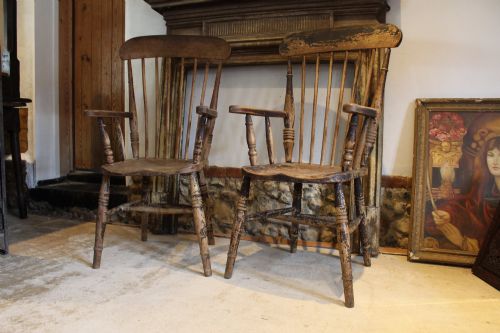
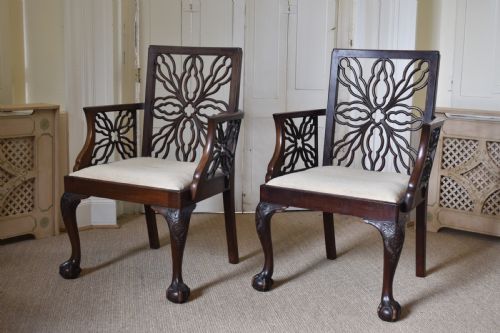
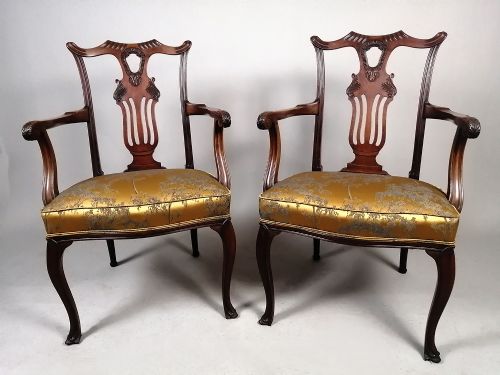
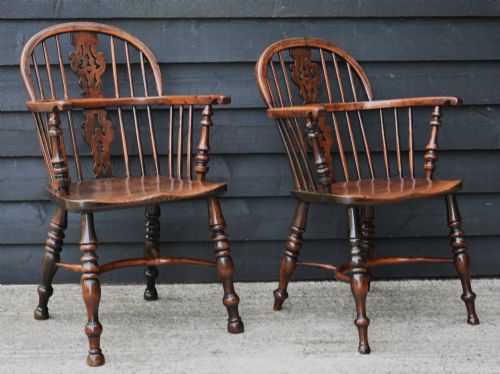
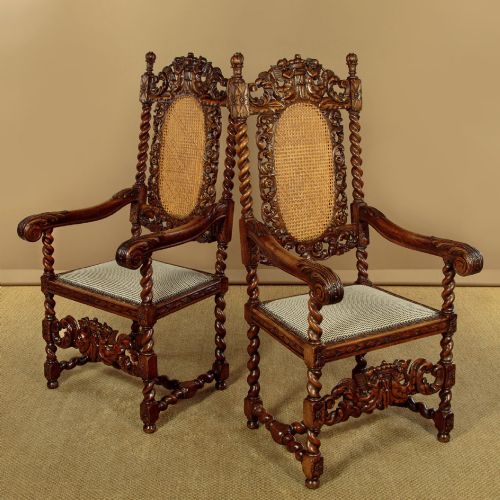
The selections on this page range from mahogany lyre-back designs and walnut library seats to elm windsor armchairs with pierced splat backs. These pieces typically served at the head and foot of a dining table or as individual reception seats in a morning room.
Materials and Construction
Cabinet makers utilised dense hardwoods such as mahogany, walnut, oak, and yew, often pairing them with flexible secondary timbers like elm and beech. Turned spindles, steam-bent armbows, and mortise and tenon joints provide structural integrity to these seating forms.
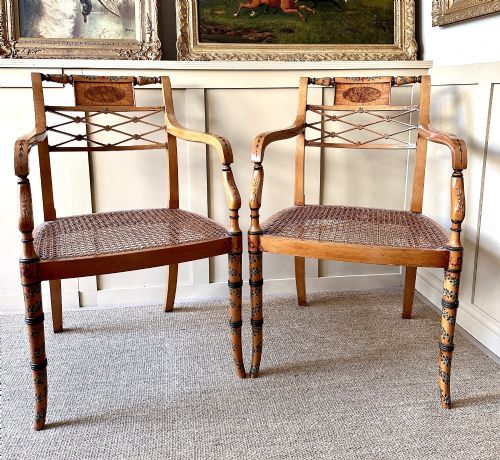
Surface treatments vary from polished wood finishes and black lacquer to painted neoclassical motifs and brass detailing. Seating panels incorporate traditional methods, utilising woven cane, upholstered fabric, or dropped-in velvet squabs.
Windsor armchairs occasionally retain tiny carpenter marks hidden beneath the seat planks to align the leg tenons.
The Distinction in Craft
Quality rests in the crispness of carved splats, the symmetry of turned components, and the original integrity of the timber framing. Superior examples display thoughtful grain matching and robust joinery that withstands centuries of daily pressure on the armrests.
The distinction between standard commercial production and finer workshop output lies in the detailing of the arms and legs, such as reeded edges, scrolling handgrips, or finely pierced back splats executed by skilled hands.
Edward Barnsley
The Pair of Carver Armchairs Glossary
- Carver
- An armchair, typically designed with arms to match a set of dining chairs without arms. These pieces historically seated the head of the household.
- Splats
- The vertical wooden strip down the centre of a chair back. Pierced splats are carved out with decorative openings.
- Windsor
- A chair built with a solid wooden seat into which the legs and back spindles are wedged directly. Traditional versions utilise steam-bent hoops and elm seats.
- Lyre Back
- A chair back featuring a central splat shaped in the outline of an ancient Greek lyre musical instrument. This motif is frequently found on Regency and revival dining seats.
Pair of Carver Armchairs: Frequently Asked Questions
How do I spot a matched pair?
Examine the timber grain, turnings, and overall dimensions closely. Matched pairs share identical construction methods and proportional measurements.
Minor variations in hand-carved details often indicate individual artisan output rather than factory standardisation.
Were carvers only used for dining?
These armchairs served multiple domestic functions beyond the dining table. They frequently furnished libraries, morning rooms, and hallways as reception seating.
The broader proportions and supportive arms suited prolonged sitting in private studies.
How do I care for antique wood?
Maintain timber surfaces by avoiding direct sunlight and maintaining stable room humidity. Natural beeswax polish preserves the aged patina without sealing the wood.
Check joinery periodically for movement caused by central heating.