
Black Ebonised Chair
A black ebonised chair brings dark, dramatic grain and disciplined line to a room, offering both sculptural presence and practical seating.
Black Ebonised Chair
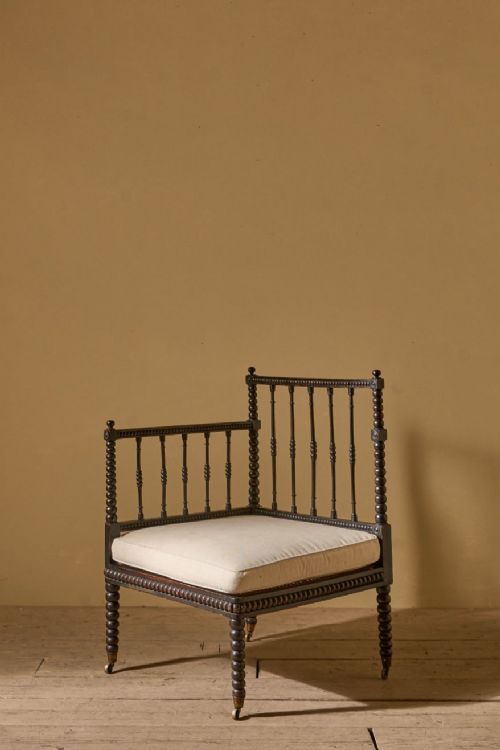
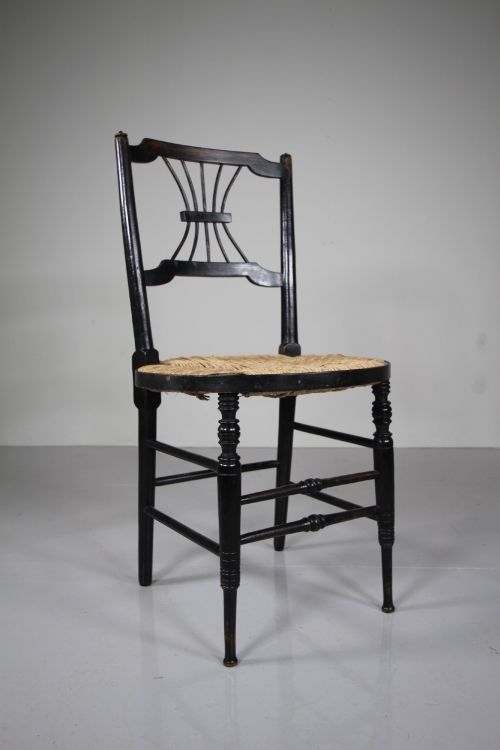
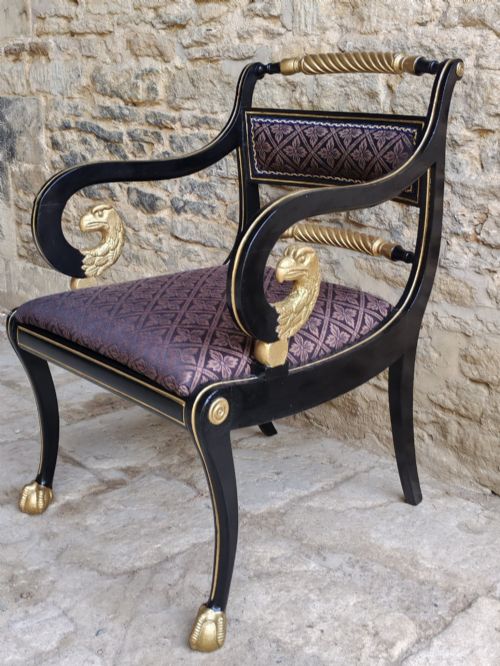
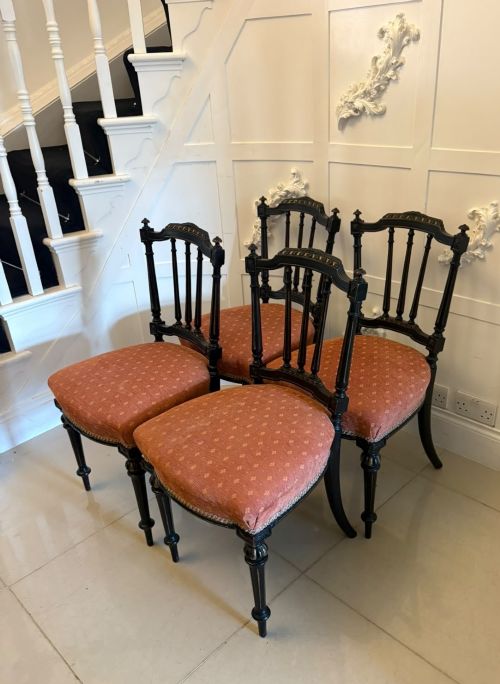
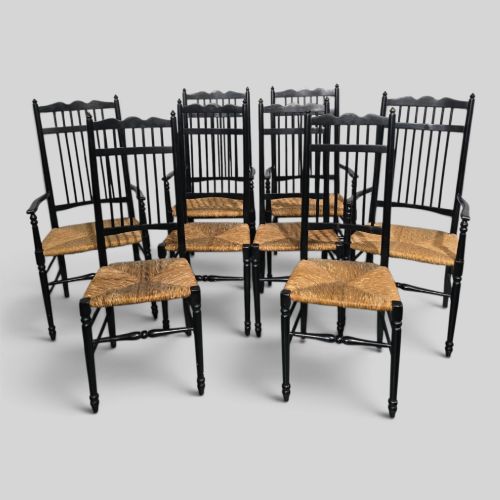
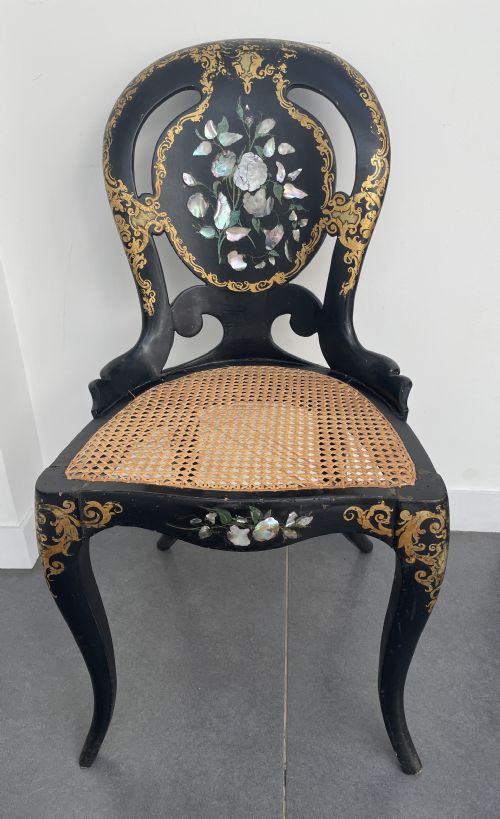
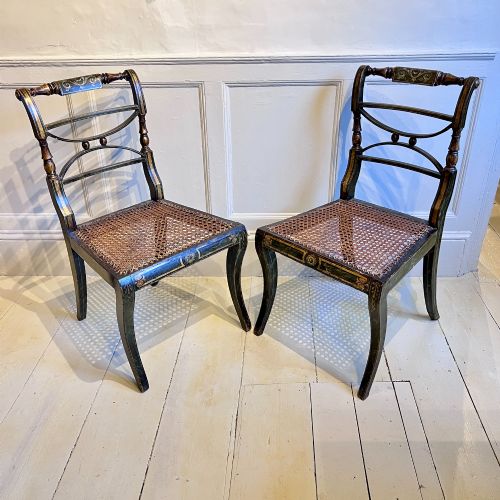
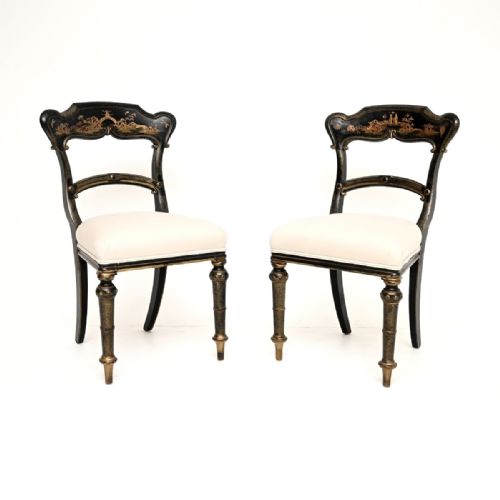
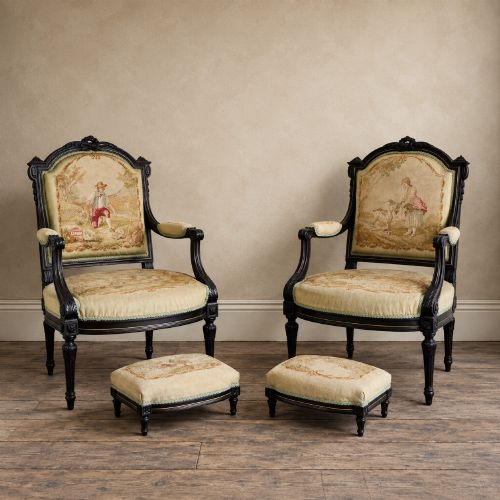
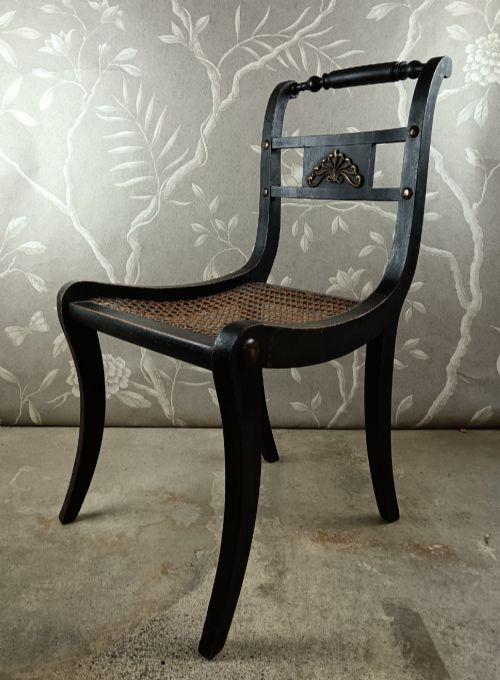
A black ebonised chair is a seating piece finished to resemble expensive ebony, taking many forms from library armchairs to delicate salon seats. Buyers searching this phrase encounter examples spanning the Regency period through the Victorian era and into the early twentieth century.
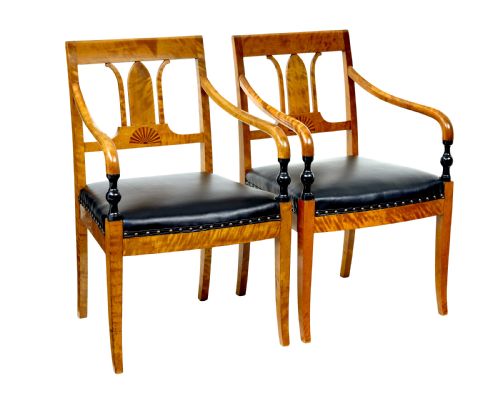
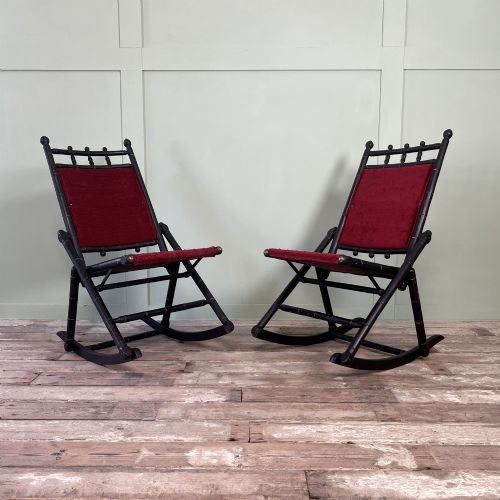
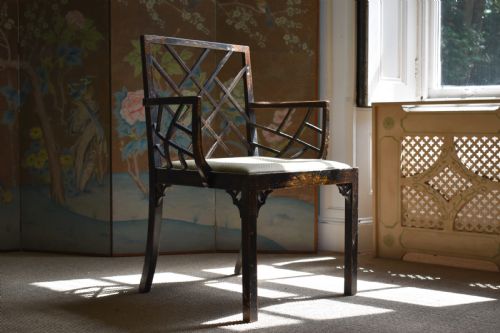
Dining chairs, side chairs, and armchairs dominate the selection, alongside rarer forms such as corner chairs, piano stools, and rocking chairs. The aesthetic ranges from austere Arts and Crafts designs to gilded Victorian revival pieces and Chinoiserie decoration.
Origin points stretch across British workshops, French salons, and Scandinavian studios, reflecting broad nineteenth-century enthusiasm for dark wood finishes. Most pieces emerge from the nineteenth century, utilising traditional turning, joinery, and applied surface treatments.
What varies in quality
The sophistication of the turning and the crispness of any carved detailing distinguish finer examples from standard production pieces. Hand-applied surface finishes that retain depth and subtlety outperform flat, uniform modern paints.
Original seating materials, such as intact cane work or period upholstery textiles, elevate the integrity of a piece compared to later replacements. The quality of the underlying timber framework dictates whether a chair remains stable through generations of daily use.
Materials paired with ebonised wood include cane, rush, brass, velvet, mother of pearl, and painted lacquer.
William Morris·Philip Webb·Rossetti·Morris and Co·Collier and Plucknett·Bruce J Talbert·Gillows
The Black Ebonised Chair Glossary
- Ebonised
- Wood treated with stain, paint, or chemical processes to turn it jet black, imitating ebony. This technique gained immense popularity during the nineteenth century across various revival styles.
- Sussex Chair
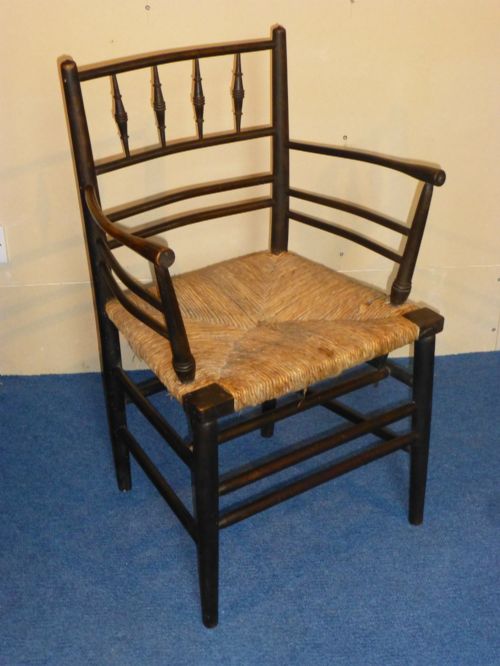
- A nineteenth-century vernacular chair type with turned wooden spindles, often associated with Morris and Co. These designs drew inspiration from traditional Sussex cottage seating.
- Aesthetic Movement
- A late nineteenth-century design style that prioritized visual beauty over narrative meaning, often featuring ebonised surfaces and Japanese-inspired motifs. Pieces from this movement frequently incorporate gilt highlights or faux bamboo turning.
- Regency
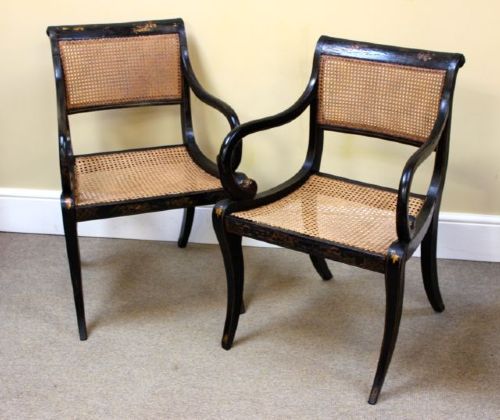
- An architectural and decorative style spanning the early nineteenth century, characterised by classical restraint and ancient Greek or Roman influences. Chairs from this period often display sabre legs or brass inlay.
- Cockpen
- A Chinese Chippendale chair design featuring an open latticework back. These chairs became popular in eighteenth-century British homes and saw revival production later.
- Bergère
- An enclosed upholstered armchair with exposed wooden framing, originating in France. The arms and back often incorporate cane panels.
Black Ebonised Chair: Frequently Asked Questions
How do I clean an ebonised wooden frame?
Dust the surface regularly with a soft, dry cloth to prevent grit accumulation.
Apply a microcrystalline wax sparingly if the finish appears dry, avoiding harsh chemical sprays.
Can I use an antique salon chair for daily dining?
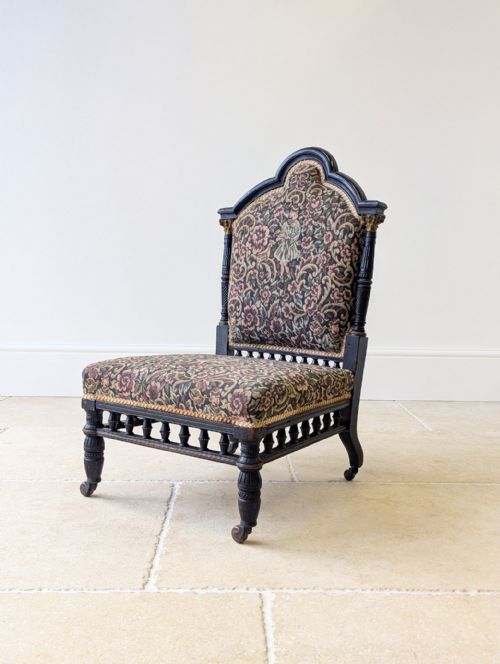
Salon and bedroom chairs were built for lighter duties and occasional sitting rather than heavy dining use.
Check the stability of the joints and frame before subjecting older seating to regular pressure.
Are cane seats difficult to maintain?
Natural cane requires occasional damp wiping to keep the fibres supple and prevent snapping.
Keep woven seats away from direct heat sources that dry out the material.
How do I distinguish Regency styles from Victorian pieces?
Regency designs favour clean classical lines, sabre legs, and restraint, referencing antiquity.
Victorian pieces lean towards heavier ornamentation, applied gilding, and eclectic revivalism.