





Colonial Plantation Chair
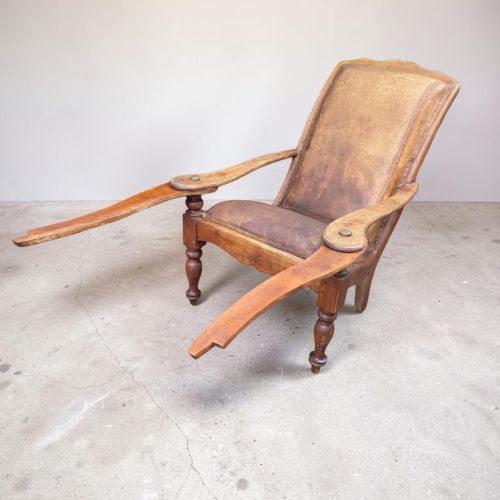
These colonial plantation chair pieces offer deep reclining seats and extended arms designed for warm climates.
Colonial Plantation Chair
The evidence shows forms spanning armchairs, accent chairs, chaise longue seating, and side chairs across various regional styles. Pieces frequently align with Anglo Indian, Ceylonese, and British colonial traditions recorded across the nineteenth and early twentieth centuries.
Materials and construction
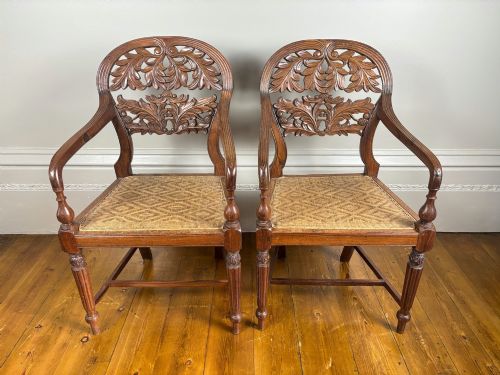
Construction relies heavily on dense tropical hardwoods such as teak, solid ebony, and rosewood, paired with woven cane or rattan. These enduring materials provide structural integrity suited to humid environments.
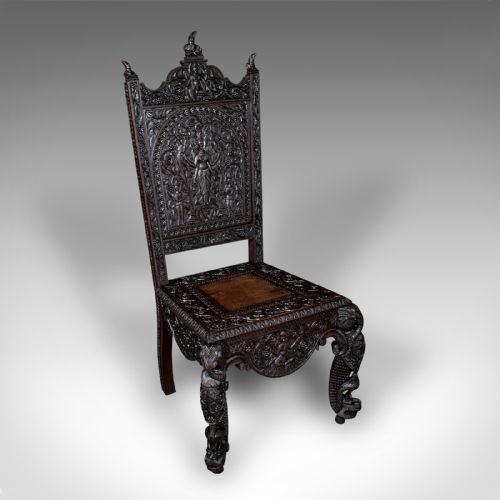
Many examples incorporate leather upholstery alongside brass fittings and intricate carved woodwork. Extending arms and reclining mechanisms require precise joinery to function smoothly within the heavy timber frames.
Colonial Plantation Chair Retail Price Guide 2026
Typical asking prices for colonial plantation chair among the pieces listed under this phrase on Sellingantiques today, from the lower quarter to the upper quarter. They describe what is for sale here now, not the wider market.
Extending arms double as makeshift desks when you cannot be bothered to stand up for your tea.
Assessing quality in these chairs
Quality rests upon the crispness of carved details in woods like ebony and teak, as well as the tightness of cane or leather work. Superior examples demonstrate balanced proportions and fully functioning extending arms without structural slack.
Finer pieces exhibit dense grain selection and sophisticated regional styling such as Anglo Indian Regency or Ceylonese carving. Lesser examples show simpler execution in secondary timbers and coarser surface finishing.
The Colonial Plantation Chair Glossary
- Bergere
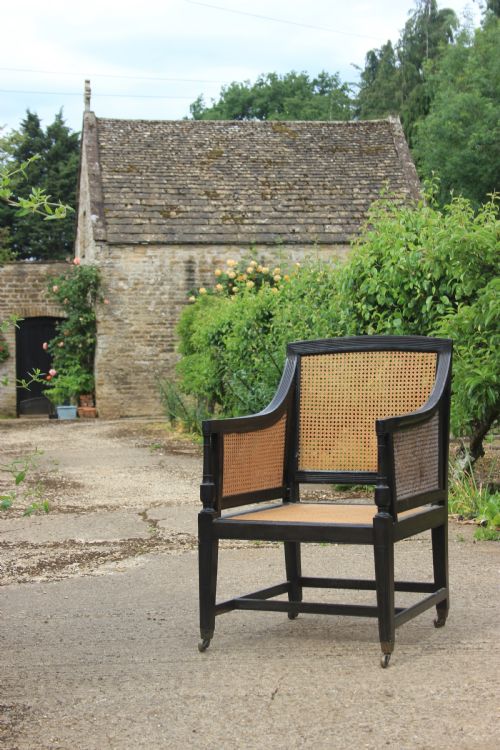
- An upholstered armchair with an enclosed back and sides, often featuring cane panels. This form appears frequently in nineteenth century seating.
- Cane
- Woven rattan material used for seats and backs to provide ventilation in warm climates. It requires careful tensioning across hardwood frames.
- Extending arms
- Pivoting or pull out wooden armrests designed to support the legs of a seated person in a reclined position. They are a defining characteristic of planter chairs.
- Chaise longue
- An elongated upholstered chair designed for reclining, appearing in Victorian colonial variations. This form combines seating with extended leg support.
Colonial Plantation Chair: Frequently Asked Questions
What is a plantation chair?
A colonial plantation chair is a large reclining armchair featuring long extending arms designed for resting the legs. These seats originate from nineteenth century colonial regions including India and Ceylon.
They were built using dense hardwoods and ventilated cane or leather to provide comfort in hot climates. The distinctive extending arms pull out or rotate to support a fully reclined posture.
How do you date these chairs?
Dating relies on timber choices, carving styles, and structural hardware evident in the piece. Nineteenth century examples often employ solid ebony, teak, or rosewood with elaborate regional motifs.
Later pieces from the early twentieth century shift toward simpler forms or folding mechanisms. Comparing the joinery and upholstery style against documented periods helps establish the age.
Where were these chairs made?
These chairs were produced across British colonial territories including India, Ceylon, and Burma. Local workshops adapted traditional European seating forms to suit tropical conditions.
Cabinetmakers utilised native timbers such as teak and ebony, incorporating regional carving traditions into British colonial designs.
How do you use extending arms?
The extending arms swing outward or pull forward from the main frame to create leg rests. This mechanism allows the user to recline fully with support beneath the lower limbs.
When not in use, the arms slide back into alignment with the armrests. They require careful handling to preserve the historic wooden pivots.