


Victorian Cane Armchair
A victorian cane armchair offers woven seating alongside solid timber framing, bringing tactile comfort and nineteenth-century craftsmanship into a room.
Victorian Cane Armchair
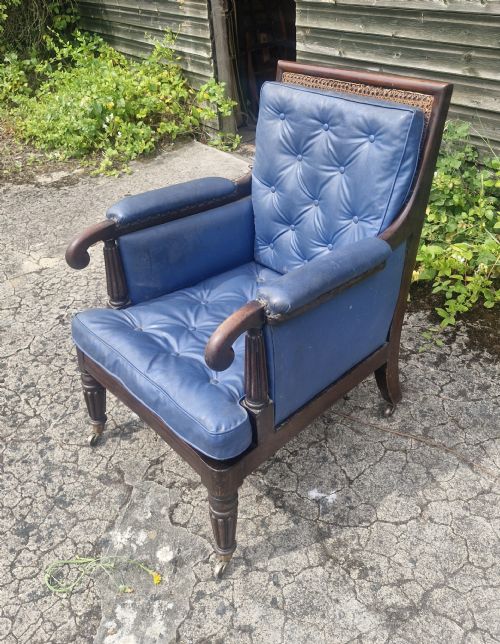
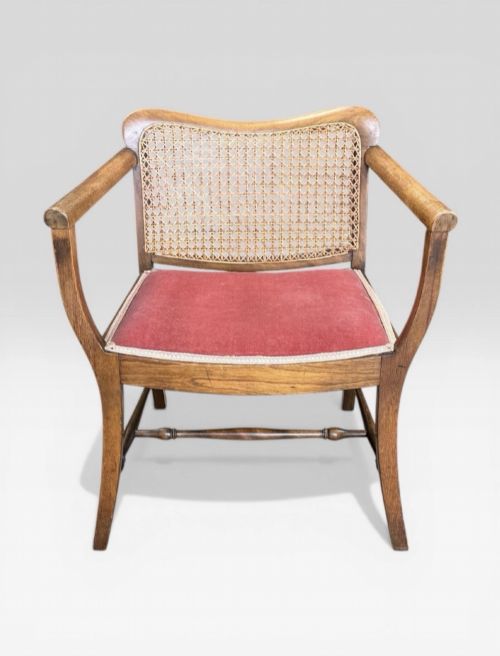
A victorian cane armchair is a seating form defined by a woven cane panel set within a rigid wooden frame, spanning library chairs, office swivels, and low parlour seats. The pieces on this page originate predominantly from the nineteenth century, with examples stretching from the Regency era through to the Edwardian period.
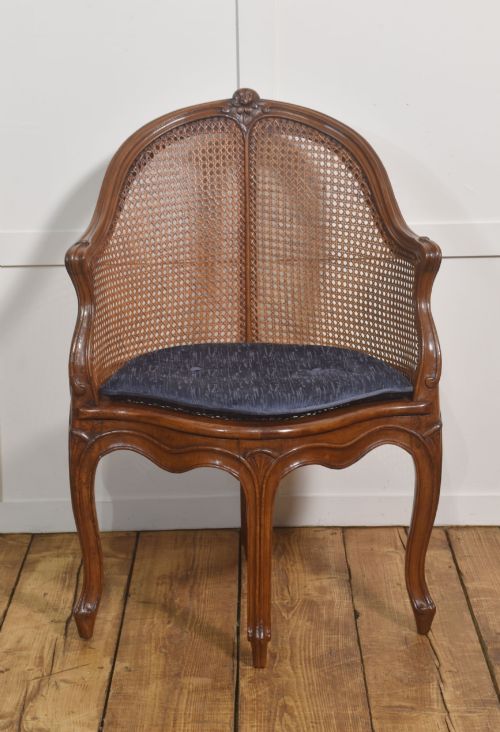
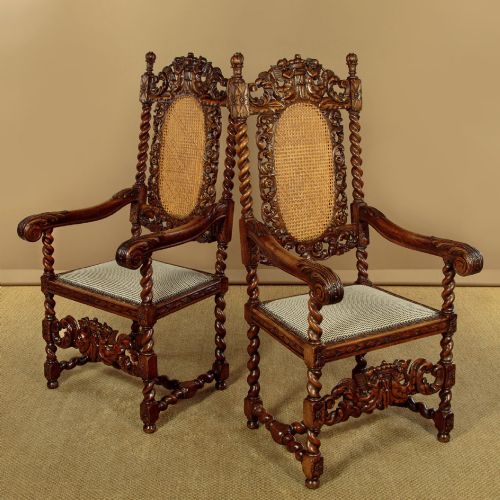
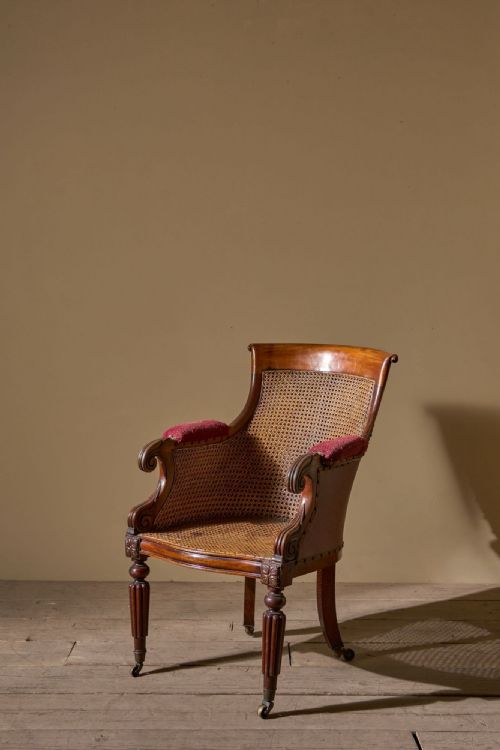
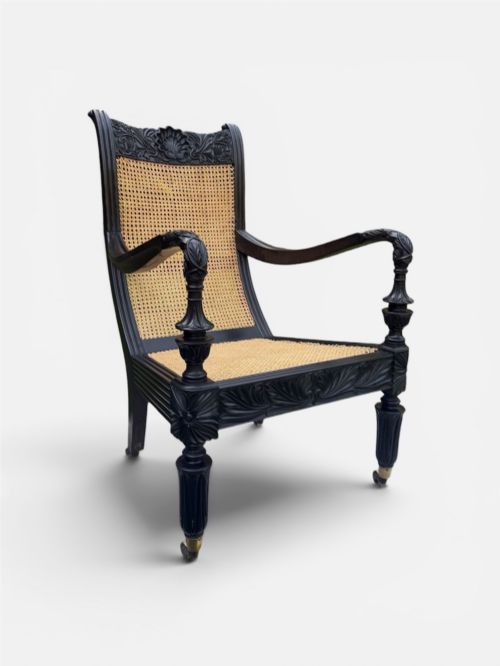
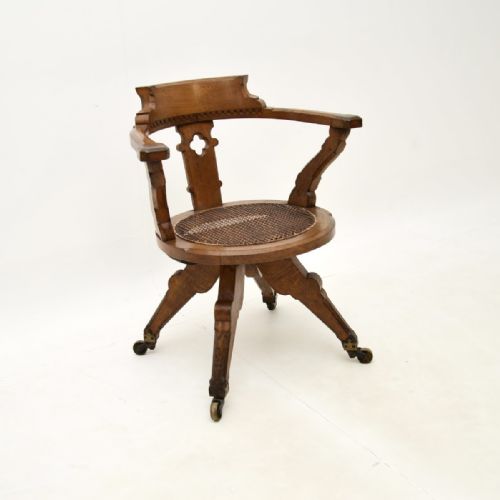
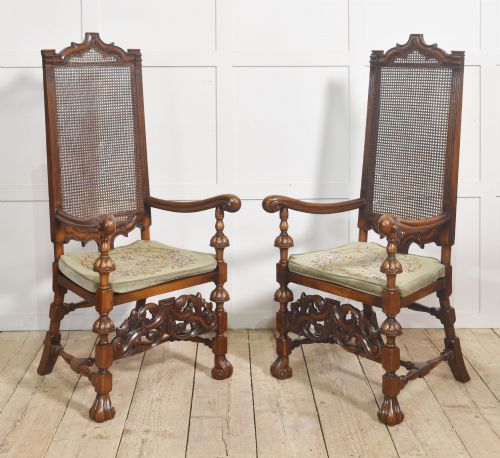
Makers utilised various regional interpretations, yielding styles from English country house seating and Carolean revivals to French Louis XV designs and Anglo-Indian colonial pieces. The primary formats include open armchairs, library bergères with rounded backs, and functional swivel desk chairs fitted with cane seats.
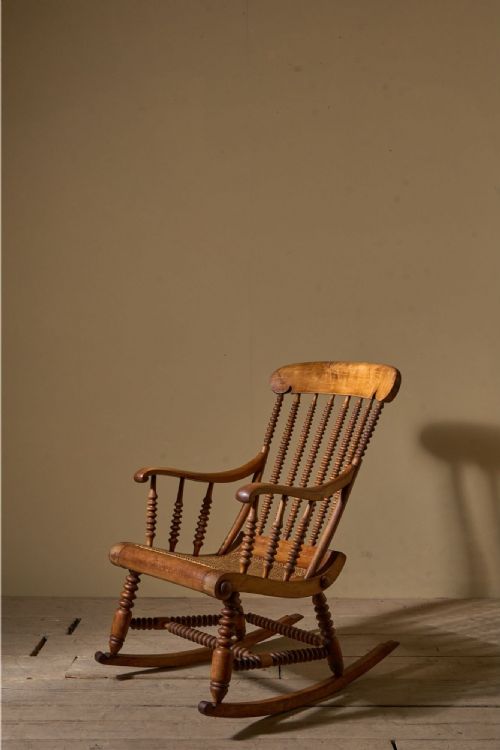
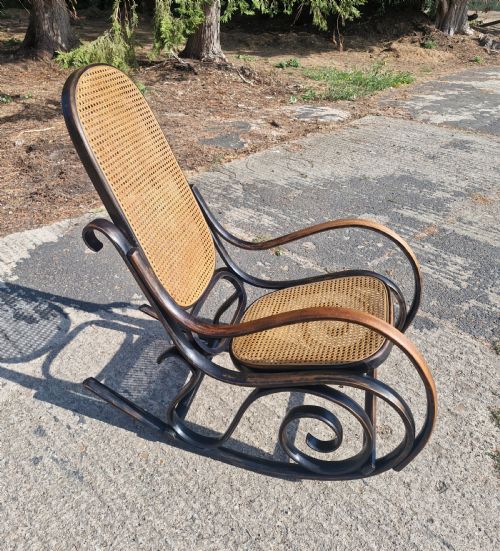
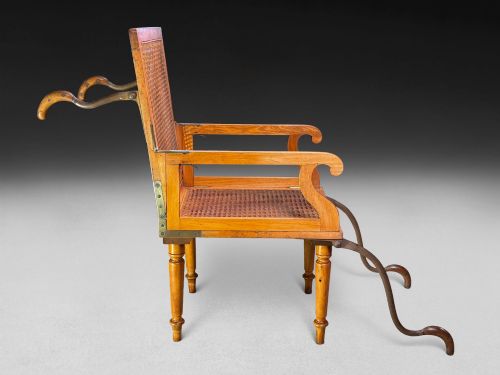
Buyers encounter traditional rocking versions alongside folding steamer chairs and robust oak throne chairs. The common thread across these diverse regional styles remains the combination of supportive wooden structures and resilient woven plant fibres.
How They Were Made
Frames rely on dense hardwoods such as mahogany, walnut, oak, and ebony, shaped through traditional joinery and often enriched with elaborate hand-carving or bobbin-turned detailing. Cabinetmakers constructed the structural skeletons to bear weight while presenting refined profiles in public rooms and libraries.
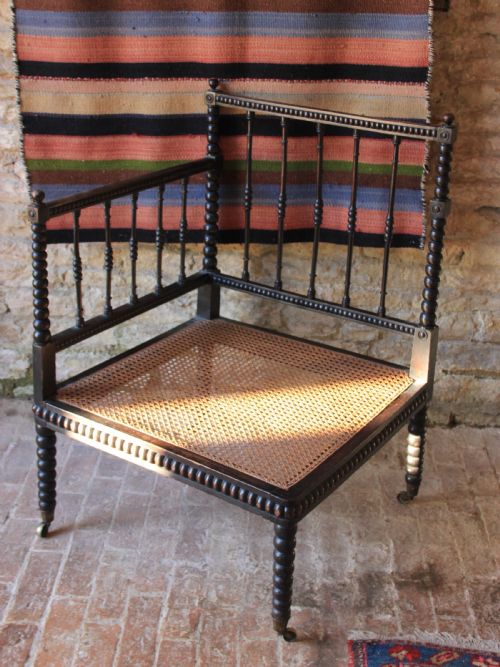
The characteristic seating panels use peeled rattan cane, threaded by hand through drilled holes in the wooden rail or pressed into grooves using a spline. This woven mesh provides natural spring and ventilation, occasionally complemented by loose cushions upholstered in leather, velvet, or fabric.
The archive records versatile formats ranging from swivel desk chairs to folding steamer deck chairs.
What Varies in Quality
Quality rests upon the structural integrity of the timber frame and the precision of the hand-woven cane work. Superior pieces display tight, uniform cane patterning that maintains tension across the seat or back without sagging, paired with robust joinery that resists movement under daily use.
The refinement of the timber carving and the choice of cabinet wood elevate certain examples above standard utility seating. Maker attribution, through stamps or known workshop designs, distinguishes high-end commercial output from simpler regional vernacular pieces.
James Shoolbred·Howard And Sons·Thonet
The Victorian Cane Armchair Glossary
- Bergère
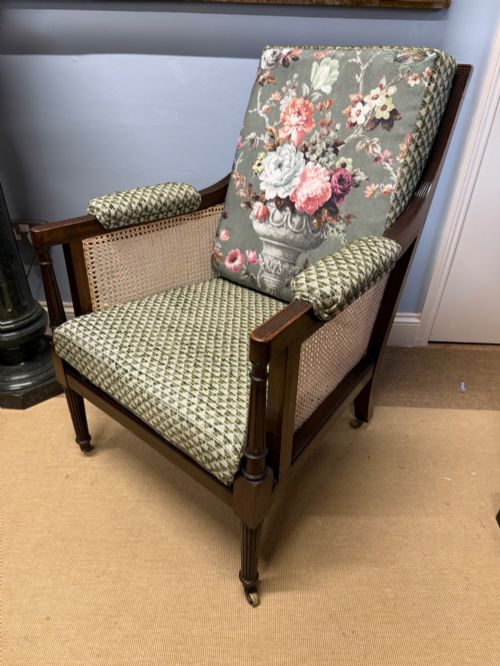
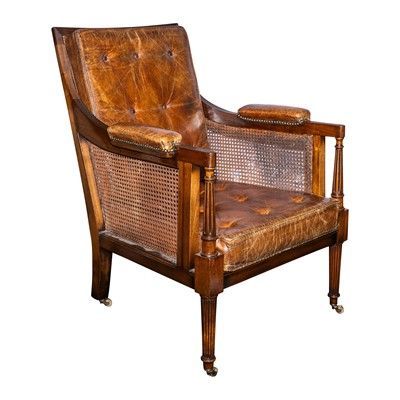
- An enclosed upholstered armchair featuring cane sides and back panels. It typically includes a loose down or feather seat cushion for added comfort.
- Bobbin turned
- A method of turning wood on a lathe to create a series of rounded, spool-like spheres along the length of a leg or stretcher. This decorative technique appears frequently on nineteenth-century vernacular seating.
- Cane
- The peeled bark of the rattan palm, split and woven into a porous mesh. It provides a durable, flexible surface for chair seats and backs.
- Campaign armchair
- Portable furniture designed for officers on military campaigns, often featuring folding or dismantling frames. Walnut and mahogany were common materials for these functional travels.
- Tub chair
- A seating form with a continuous curved back and arms flowing into a single rounded unit. They frequently incorporate cane panels and low profiles.
Victorian Cane Armchair: Frequently Asked Questions
How do I care for cane seats?
Keep cane work hydrated by wiping it lightly with a damp cloth every few months to prevent the natural rattan fibres from becoming brittle. Avoid placing these chairs near direct heat sources or strong sunlight.
Weight distribution matters during daily use. Adding a loose cushion helps protect the woven surface from concentrated pressure while maintaining the historical character of the chair.
Are these chairs comfortable for daily sitting?
The woven cane provides a surprisingly springy and supportive surface that yields gently to the body. Many library and desk variants were specifically designed for long hours of reading or writing.
Many examples were originally paired with squab cushions upholstered in leather or velvet. Introducing a well-fitted cushion enhances comfort for modern living without altering the wooden structure.
How can I tell a Victorian cane chair from an Edwardian one?
Victorian framing often employs heavier timbers like carved oak or dense mahogany, frequently displaying darker finishes and elaborate decorative turnings. The proportions tend to be robust and grounded.
Edwardian adaptations generally shift toward lighter woods such as satinwood or lighter walnut finishes, with simpler, more streamlined profiles. Woven panels in later pieces can also reflect evolving industrial weaving widths.
What is a bergere chair?
A bergère is a French-inspired armchair style featuring enclosed wooden sides filled with cane mesh. The design creates a cocoon-like shape that offers both structural support and aesthetic lightness.
These pieces typically include a upholstered seat base beneath a loose cushion. They served primarily as reading or parlour chairs in nineteenth-century drawing rooms.