


Antique Victorian Tub Chair
An antique Victorian tub chair offers rounded comfort and sturdy framing, turning any corner or desk into a proper place to sit.
Antique Victorian Tub Chair
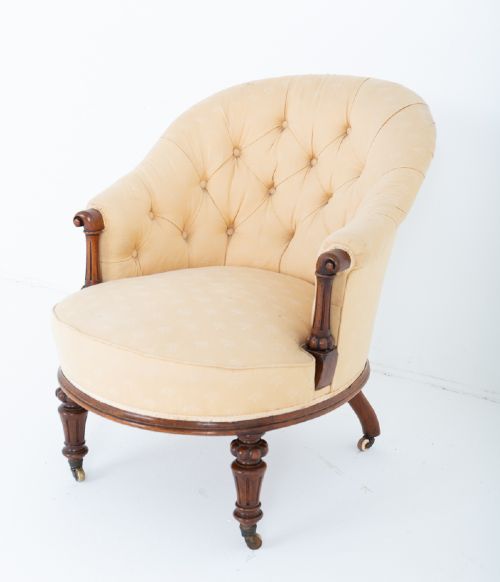
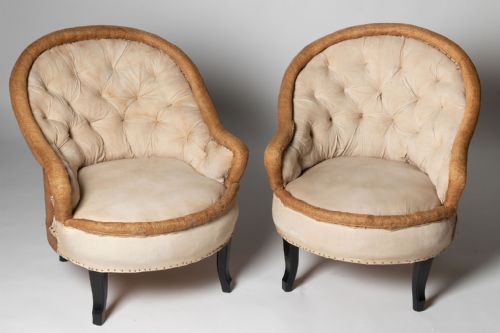
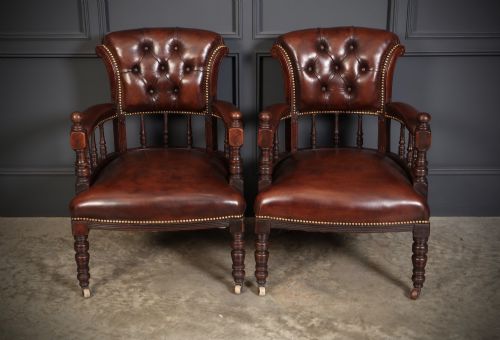
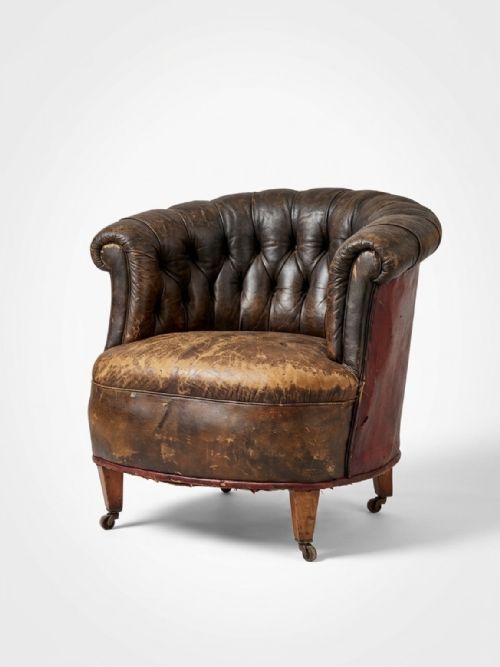
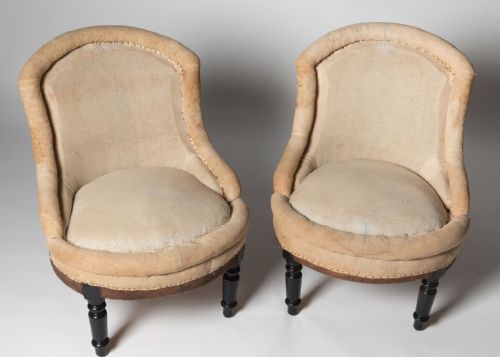
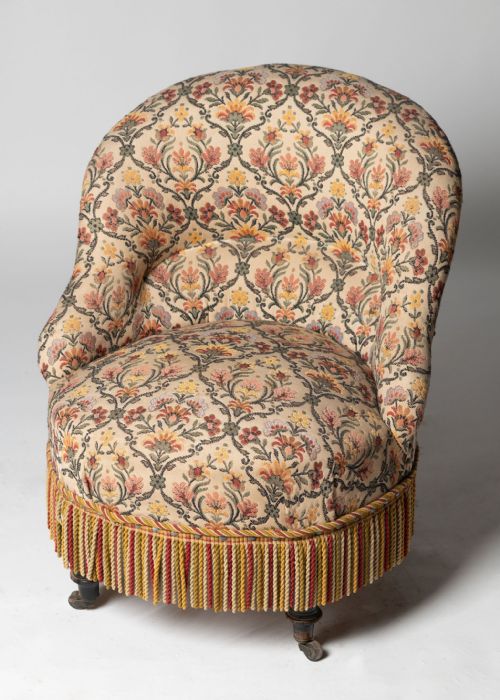
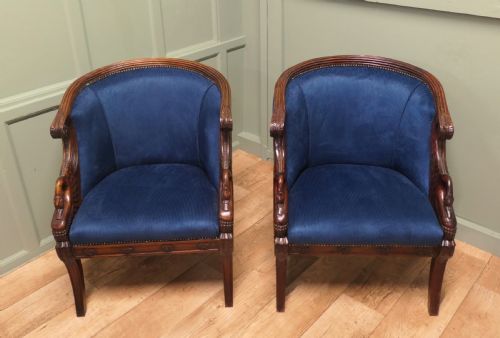
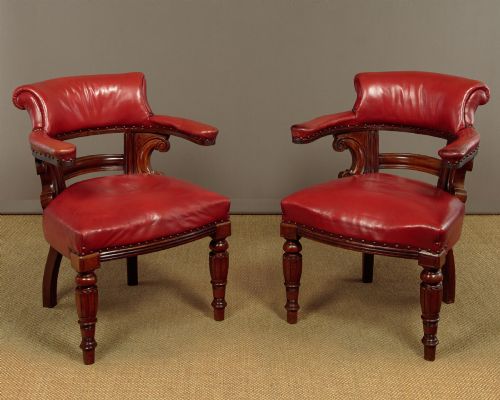
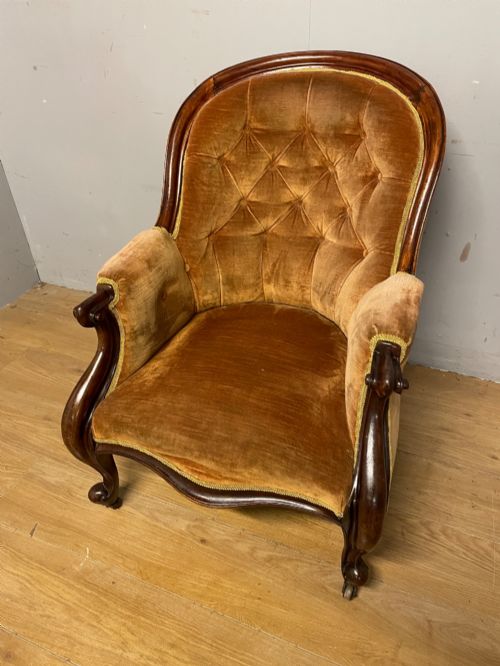
An antique Victorian tub chair is defined by its rounded, enveloping backrest that flows seamlessly into low arms, providing a secure and comfortable seat. You will frequently find these pieces rendered in mahogany or walnut, often featuring deep buttoned upholstery or supple leather.
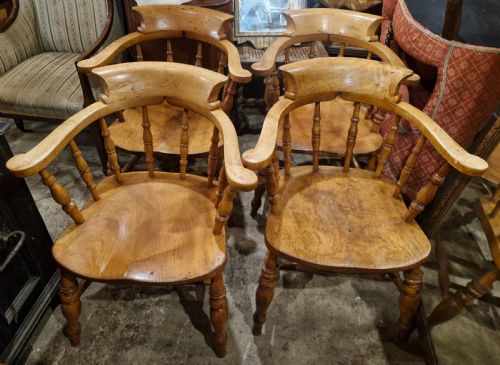
The selections span from solid oak library chairs and revolving desk models to occasional parlour pieces originating across the nineteenth century. Alongside standard Victorian forms, variations emerge in English country styles, French Louis XV designs, and Gothic Revival frameworks.
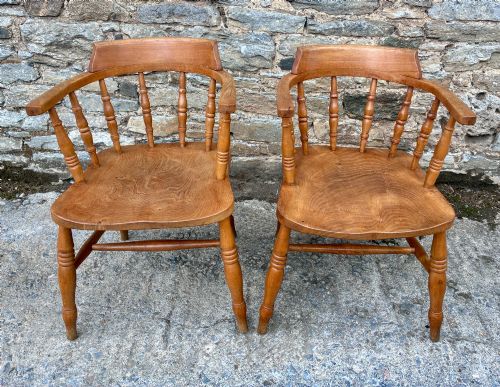
Many examples incorporate mixed timbers such as elm and ash within their construction, pointing to traditional regional craftsmanship. Whether you seek a low corner chair or a leather-faced desk armchair, the overarching form remains distinct for its curved embrace.
How they were made
Cabinetmakers and joiners constructed these frames using solid hardwoods like mahogany, oak, beech, and walnut, frequently combining native timbers such as elm and ash for seats and spindles. Brass components appear in castors and swivel mechanisms, while bone and boxwood provide subtle inlay details.
Upholstered versions rely on traditional stuffing and springing techniques beneath leather or fabric coverings, secured with meticulous buttoning. Timber sections are shaped, turned, and joined to support the characteristic curved profiles without relying on modern adhesives.
Antique Victorian Tub Chair Retail Price Guide 2026
Typical asking prices for victorian tub chair among the pieces listed under this phrase on Sellingantiques today, from the lower quarter to the upper quarter. They describe what is for sale here now, not the wider market.
Materials span solid hardwoods such as mahogany, oak, walnut, beech, elm, and ash.
What varies in quality
The calibre of an antique Victorian tub chair depends on the crispness of its turned woodwork and the integrity of its timber frame. Heavier, denser hardwoods and well-executed joinery separate robust library and desk chairs from lighter occasional seating.
Another distinction lies in the execution of the upholstery, where traditional hand-stitched buttoning and superior leather or fabric grades elevate the finish. The preservation of original patination on both wood and leather determines the visual depth of the piece.
C. Hindley & Sons·Howard & Sons
The Antique Victorian Tub Chair Glossary
- Tub chair
- A low-backed armchair with a continuous curved back and arms forming an enclosed, rounded shape. This design provides snug lateral support.
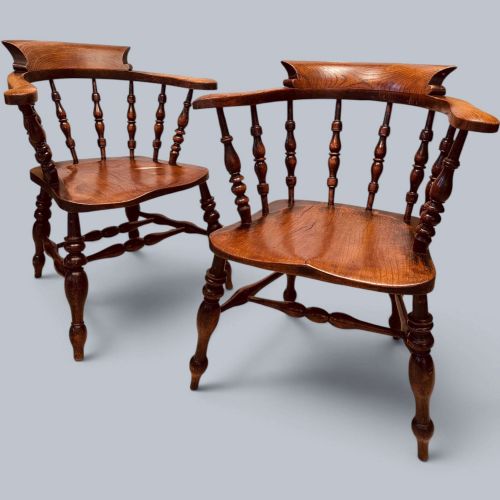
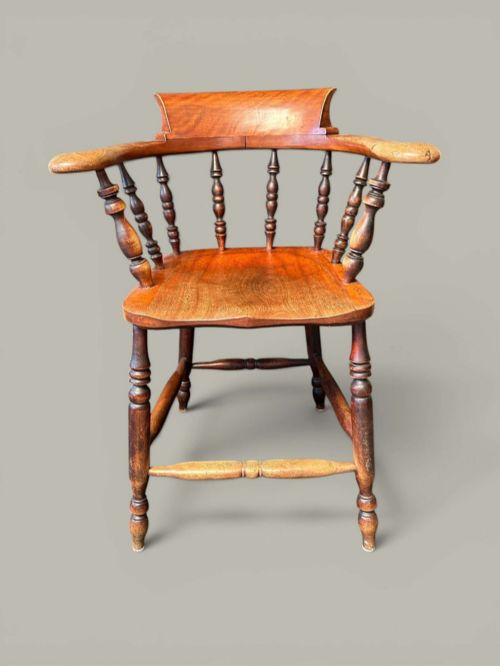
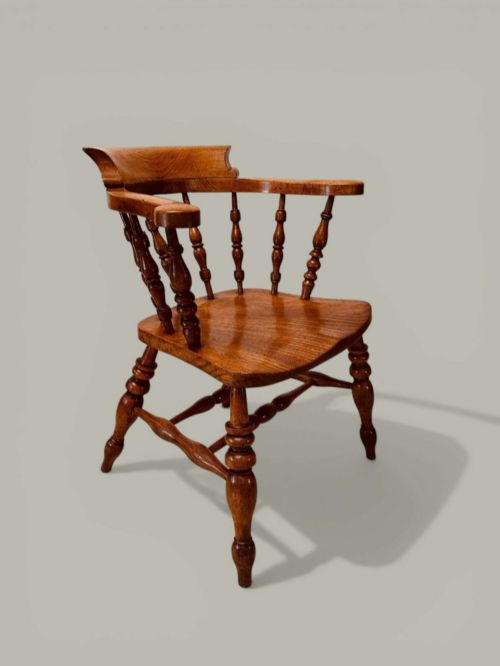
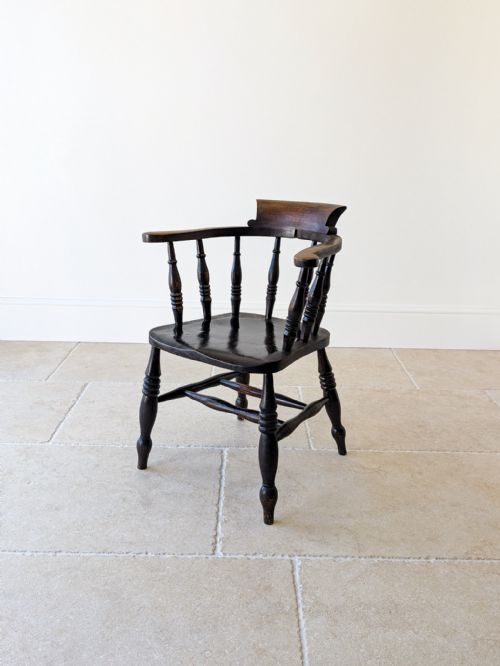
- Smoker's bow
- A sturdy wooden armchair with a low, rounded back rail supported by turned spindles, closely related to Windsor chair traditions. It is typically constructed from elm and beech.
- Deep buttoning
- An upholstery technique where stitches are pulled tight through the padding to form a geometric pattern of indentations. Buttons are secured firmly in place to create padded recesses.
- Revolving desk chair
- A swiveling armchair fitted to a central pedestal or castor base, designed for office or library use. It allows movement without repositioning the heavy timber frame.
Antique Victorian Tub Chair: Frequently Asked Questions
What is a tub chair?
A tub chair is an armchair featuring a low, continuous curved back and arms that wrap around the sitter in a rounded enclosure.
This form originated to keep drafts away from the body in cooler rooms, providing a sheltered and supportive seat.
How were desk chairs used?
Desk chairs served writers, readers, and professionals seated at library tables or writing desks throughout the nineteenth century.
Many incorporated revolving mechanisms or leather pads to ensure comfort during long hours of work.
Are these chairs comfortable?
Victorian tub chairs were built for sustained support, using sprung seats, stuffed backs, and ergonomic curved timbers.
Their enclosed design naturally cradles the body, making them suitable for reading or desk work.
How do I identify a Victorian piece?
Victorian seating is identified through period timbers like golden mahogany, walnut, and oak, alongside distinct revival styles.
Construction methods typically involve traditional joinery, turned wooden components, and period upholstery techniques such as deep buttoning.