







British Colonial Furniture
British colonial furniture encompasses robust campaign chests and plantation chairs designed for officers and travellers across the empire.

British Colonial Furniture
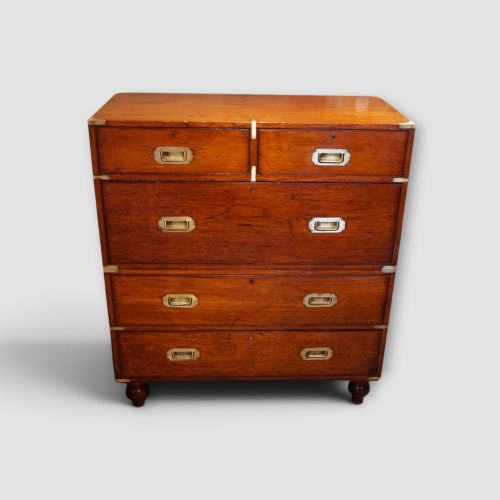
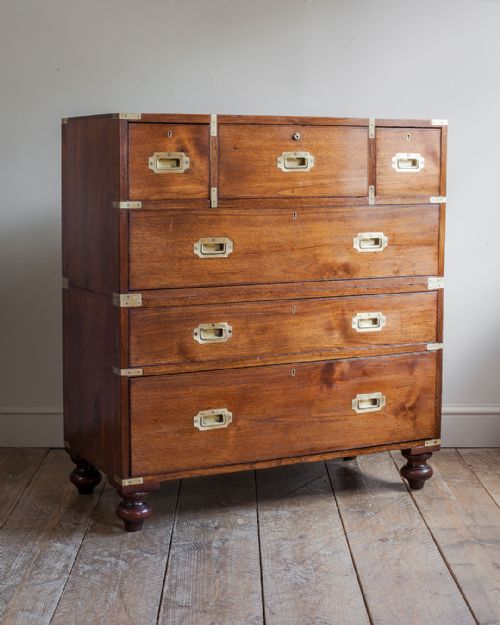
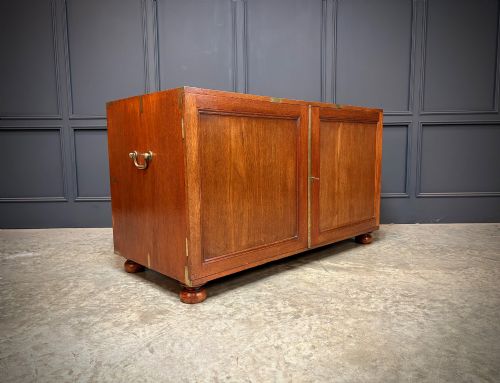
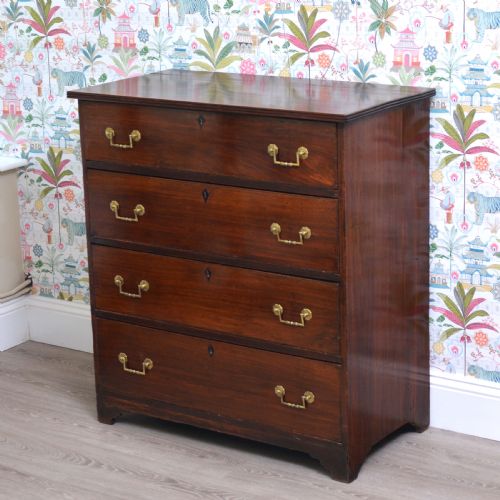
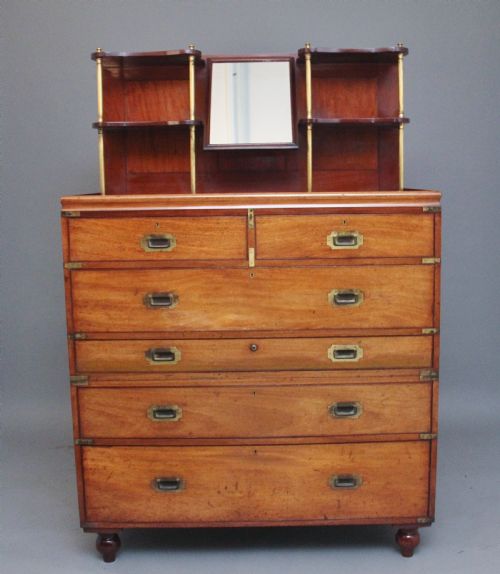
When you search for british colonial furniture, you encounter practical utilitarian pieces built to withstand long journeys across the seas. The selection on this page is dominated by nineteenth century camphorwood, teak, and mahogany chests of drawers, often configured in two separate sections for ease of transport.
Beyond the modular chests, you will find seating designed for warmer climates, including colonial reclining plantation chairs and chaise longues from the Victorian era. These pieces reflect the pragmatic requirements of British administration overseas, blending utility with durable native hardwoods.
Materials and construction
Carpenters constructed these items using dense timbers capable of resisting tropical humidity and insects. Teak, mahogany, camphorwood, and padauk wood provide the structural foundation for the chests and seating recorded in the evidence.
Metal fittings reinforced the corners and joints against the rigours of transit. Brass hardware and cast iron carrying handles appear frequently on the campaign chests, secured firmly into the timber alongside leather and fabric elements.
British Colonial Furniture Retail Price Guide 2026
Typical asking prices for british colonial furniture among the pieces listed under this phrase on Sellingantiques today, from the lower quarter to the upper quarter. They describe what is for sale here now, not the wider market.
The recorded styles include Victorian military campaign, Anglo-Indian colonial, and plantation designs.
Quality differences
The degree of refinement in the joinery and the selection of timber dictate the standing of an individual piece. Dense grains in the teak or padauk wood and the precise fitting of brass corners distinguish the finer items.
Completeness of original hardware and the retention of working secretaire drawers or folding mechanisms also influence the character of the object, separating standard utility items from more elaborate examples.
The British Colonial Furniture Glossary
- Campaign chest
- A modular chest of drawers built in two separate sections with recessed brass handles to facilitate transport by ship or wagon. These units allowed officers to pack their belongings securely.
- Secretaire chest
- A chest of drawers featuring a fitted writing drawer with a drop-front desk surface and small interior compartments. It combined storage with a functional workspace.
- Plantation chair
- A wide-seated wooden chair equipped with extended armrests designed for resting the legs, suited to warm climates. They often feature reclining backs.
- Padauk wood
- A heavy, durable tropical hardwood with a rich reddish hue utilised extensively in Anglo-Indian cabinet making. It resists warping and decay.
- Camphorwood
- An aromatic timber valued for its distinct fragrance and natural insect-repelling properties, frequently chosen for storage chests.
British Colonial Furniture: Frequently Asked Questions
What is british colonial furniture?
British colonial furniture comprises portable and domestic pieces made for British officials and travellers stationed abroad during the eighteenth and nineteenth centuries.
These items prioritise modular construction, durability, and practical utility in distant climates.
How do campaign chests work?
Campaign chests divide into two stackable sections held together by metal brackets or flush pins. Recessed brass handles prevent snagging during transit.
This clever design allowed officers to dismantle their heavy wardrobes easily for military relocation.
What woods were used?
Cabinet makers utilised resilient tropical hardwoods imported or sourced locally in regions such as India. Teak, mahogany, camphorwood, and padauk wood appear consistently.
These timbers offered exceptional strength and stability despite changing humidity and temperatures.
How are plantation chairs identified?
Plantation chairs feature deep wooden seats and exceptionally long, flat armrests intended for resting feet. They often incorporate reclining backs to maximise comfort in tropical heat.
Their open construction encourages air circulation around the seated person.
Are these pieces purely military?
While many items served British military officers on campaign, others furnished permanent colonial residences, clubs, and plantation homesteads. The category covers both travel furniture and static domestic seating.
Both types share a sturdy aesthetic tailored to life overseas.