



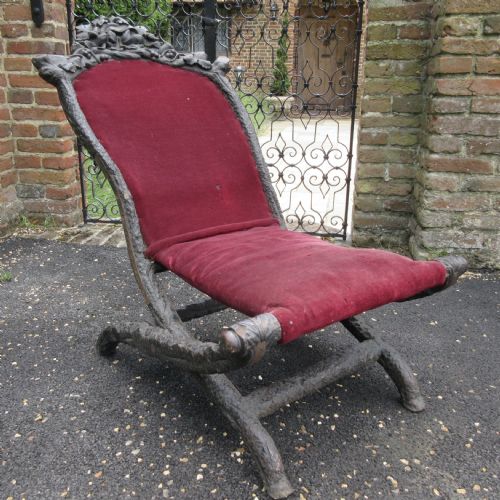


Folding Campaign Armchair
A folding campaign armchair offers portable seating built for travel, combining rigid support with a collapsing frame.
Folding Campaign Armchair
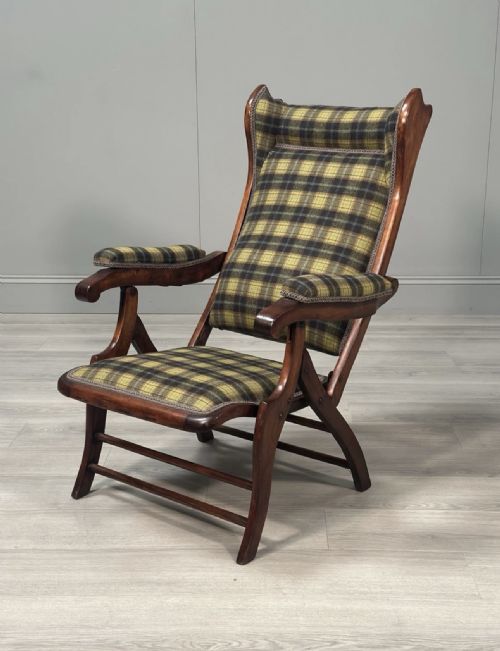
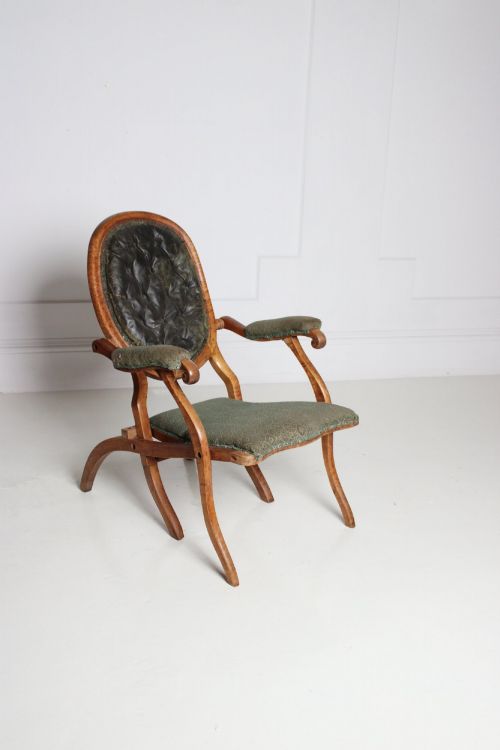
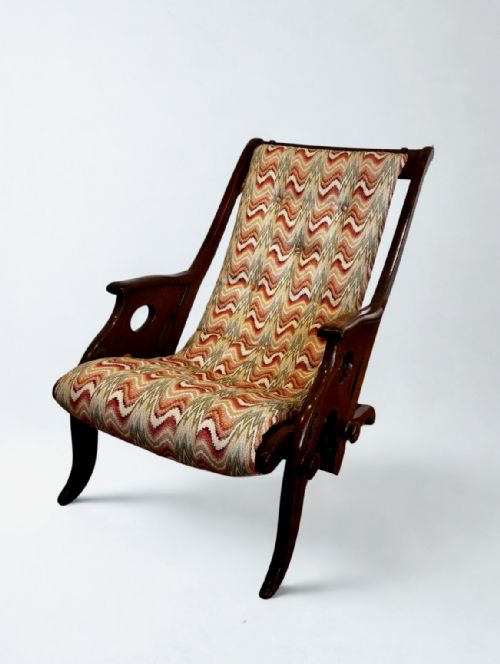
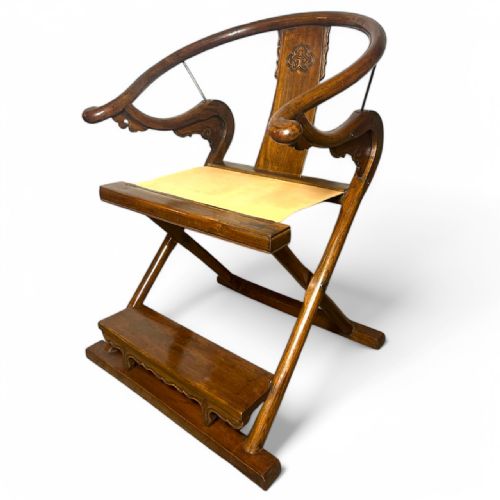
A folding campaign armchair is designed to pack down for easy transport while providing proper seating support in the field or at home. You will encounter various forms on this page, ranging from British military examples to French Louis Philippe designs and Chinese horseshoe-back throne chairs.
The pieces span the nineteenth century into the twentieth century, taking in Victorian, Edwardian, and Arts and Crafts influences alongside colonial and Black Forest styles. Many surviving examples use mechanisms that allow the timber frame and seat to fold flat.
Materials vary from solid rosewood, walnut, and mahogany to birds eye maple, hardwood, and cane, often fitted with brass hardware. Armchairs and loungers appear alongside steamer chairs and occasional chairs, showing diverse regional interpretations of the collapsible seat.
Materials and construction
Timbers such as walnut, mahogany, rosewood, and hardwood form the primary structural frames, shaped with turned supports, pierced carved crest rails, and fluting. Artisans incorporate bone button decorations and brass fittings to secure the folding joints.
Seating surfaces utilise leather, cane, textile, and upholstered panels that flex or detach when the chair collapses. Steamer deck chairs and lounge seats combine timber slats and hinged frames to achieve mobility without sacrificing strength.
Listings feature timber frames in walnut, mahogany, rosewood, and birds eye maple alongside cane, leather, and textile upholstery.
Assessing quality and execution
The calibre of a folding campaign armchair rests on the precision of its folding mechanism and the rigidity of the joints when assembled. Superior pieces maintain tight tolerances in the timber framing and brass hardware, ensuring the chair stays stable despite repeated folding.
Carving detail and material selection set finer examples apart, visible in crisp bone button decorations, pierced carved crest rails, and well-figured walnut, rosewood, or birds eye maple. The integration of high-grade leather, cane, or textile upholstery further distinguishes standard production from more ambitious workshop output.
J. Herbert McNair
The Folding Campaign Armchair Glossary
- Campaign chair
- Portable seating designed to fold or dismantle for transport by military officers or travellers. These chairs prioritise functional mobility alongside domestic comfort.
- Crest rail
- The top horizontal member of a chair back. It often receives decorative carving, piercing, or branding in higher-grade seating.
- Bergère
- An enclosed upholstered armchair with wooden framing exposed. The sides are typically filled with cane or upholstery.
- Horseshoe-back
- A chair back shaped in a continuous sweeping curve resembling a horseshoe. This form appears frequently in traditional Chinese hardwood seating.
Folding Campaign Armchair: Frequently Asked Questions
How do campaign armchairs fold?
These chairs use hinged wooden frames, pivoting X-frames, or removable components that allow the structure to collapse flat. The design lets officers and travellers pack seating into compact crates or saddlebags.
Brass pins, sliding joints, and folding rails secure the frame when open. This engineering ensures stability while maintaining quick assembly in the field.
Were these chairs used outdoors?
Many campaign chairs served outdoors on campaign, veranda use, or on ship decks as steamer chairs. Hardwoods and durable textiles like leather or cane handled changing weather conditions.
Victorian and Edwardian iterations often transitioned from military utility to domestic garden and conservatory seating. Their portability made them practical for travel and leisure alike.
How do I date a folding chair?
Dating relies on timber choice, hardware style, and prevailing design movements visible in the frame. Nineteenth-century examples often feature solid rosewood, mahogany, or walnut with traditional brass pins.
Later Victorian, Edwardian, and early twentieth-century pieces incorporate different upholstery techniques and lighter hardwoods. Comparing carved details and structural joints against known period styles helps narrow the date.
Are campaign chairs comfortable?
Despite their collapsible frames, campaign armchairs offer supportive seating through angled backs and upholstered or caned panels. Materials like leather and woven cane adapt to the body while maintaining firm support.
Adjustable mechanisms on certain models allow users to alter the recline angle for lounging. Their ergonomic design matched the needs of long journeys and field encampments.