



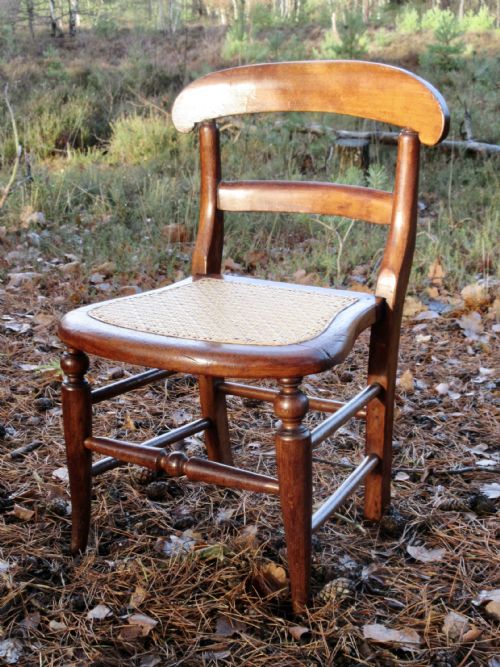


19th Century Cane Dining Chair
A 19th century cane dining chair brings woven texture and solid timber framing to the table.
19th Century Cane Dining Chair
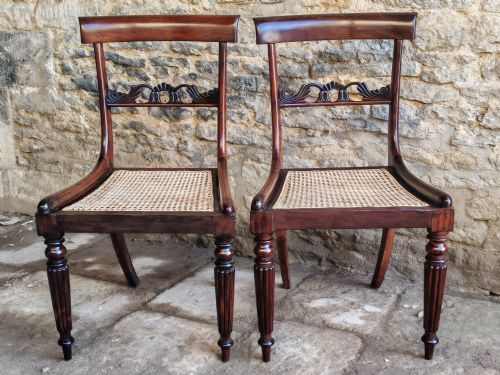
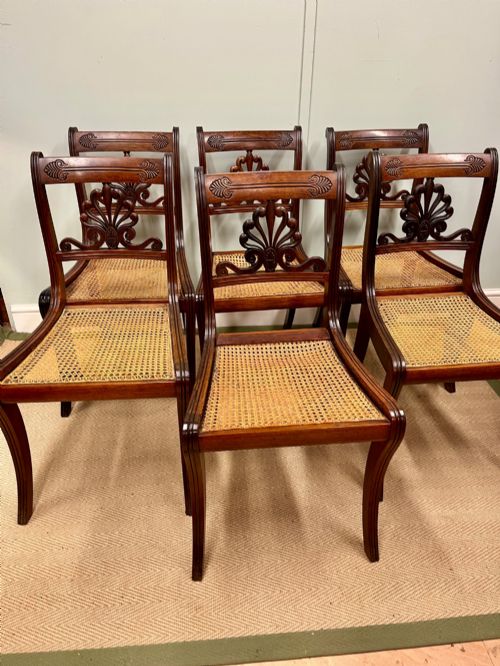
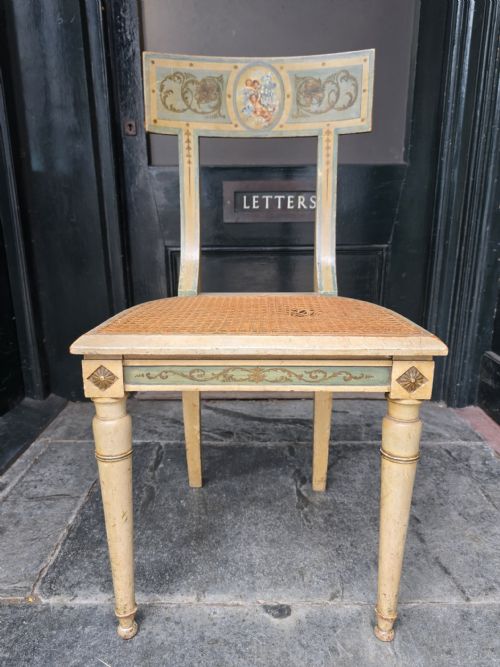
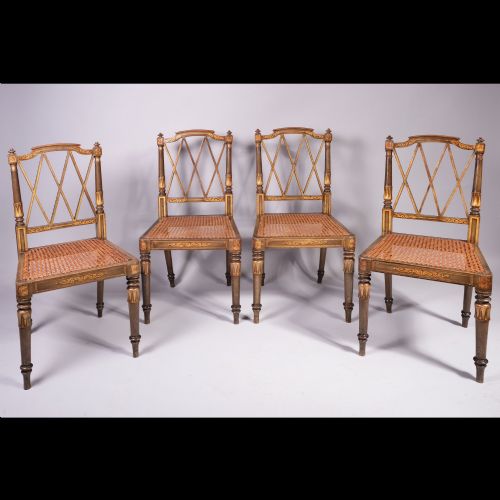
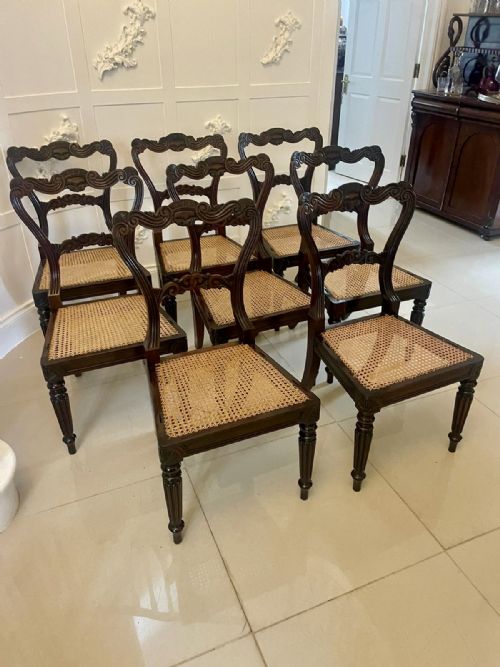
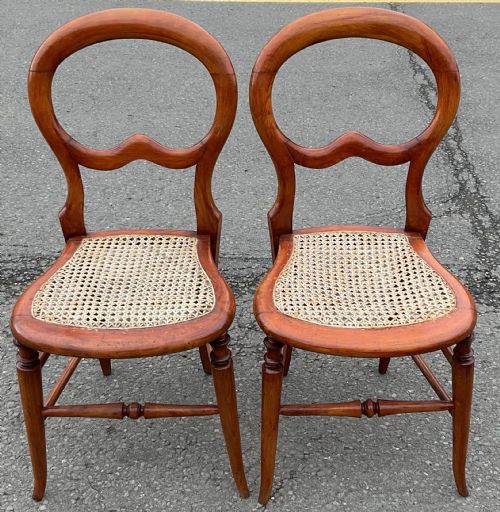
When you search for a 19th century cane dining chair, you encounter seating built across the Regency, Victorian, and William IV eras. These pieces appear as single side chairs, matched pairs, or larger sets intended for formal dining rooms and smaller parlours.
The inventory on this page spans simple country pieces alongside grander Regency and Louis XVI examples. Alongside standard dining chairs, the selection includes bedroom chairs, children's chairs, and occasional seating.
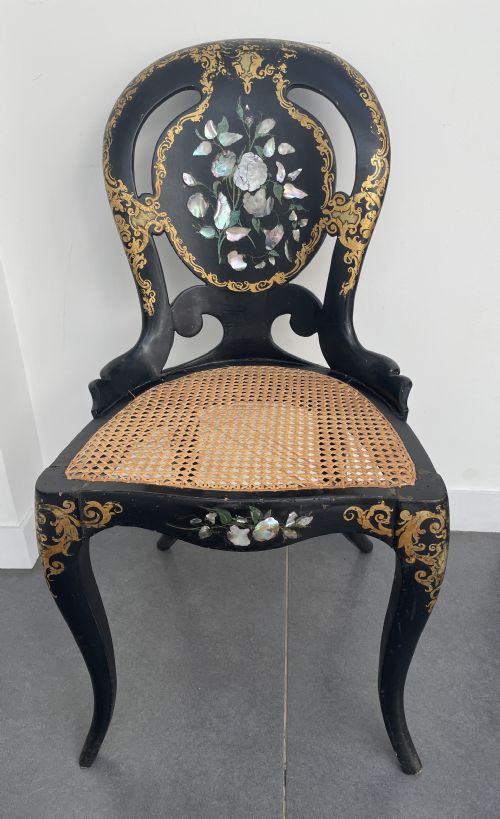
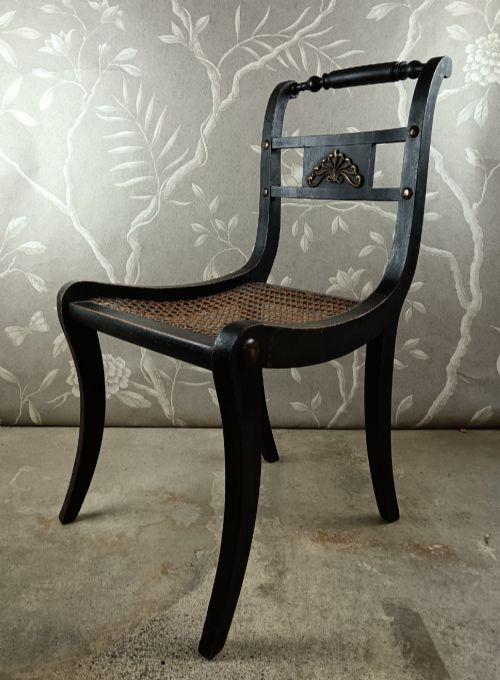
Origins vary from English workshops to French and Anglo-Indian makers, reflecting diverse stylistic influences such as Jacobean Revival and Grand Regency. Most examples retain their woven cane seats, paired with timber frames in rosewood, mahogany, oak, or ebonised wood.
How they were made
Frames are constructed from solid timbers including rosewood, mahogany, oak, and ebonised wood, sometimes enhanced with painted finishes, scumble paint, or parcel gilt details. Cabinetmakers shaped structural components through turning, carving, and steam bending to form sabre legs, rope twists, and bobbin turnings.
Seats and backs incorporate woven cane or rattan, threaded through drilled holes in the wooden framework. Decorative elements rely on brass accents, inlaid mother of pearl, and fine surface carving rather than applied plastics or modern synthetic materials.
Children get their own miniature seats too, with small children's chairs appearing alongside full-sized dining sets.
What varies in quality
The distinction between standard seating and exceptional items rests upon the choice of timber and the precision of the carving. Dense hardwoods like rosewood and ebony, handled by skilled cabinetmakers, command greater presence than plain painted softwoods.
Construction methods and decorative ambition divide the everyday chair from the distinguished set. Carved details, parcel gilt highlights, and intact original cane work demonstrate a higher level of workshop execution.
Gillows
The 19th Century Cane Dining Chair Glossary
- Cane
- A woven material derived from the peeled bark of rattan palms, utilised for flexible and breathable chair seats and backs. It provides a lightweight yet durable surface.
- Ebonised
- Wood treated with a dark stain or finish to imitate expensive ebony. This technique was popular in Regency and Victorian furniture design.
- Sabre leg
- A curved, outwardly tapering chair leg resembling a cavalry sabre. It is a defining feature of Regency seating design.
- Scumble paint
- A decorative paint technique where a translucent top layer is manipulated over a base coat to simulate wood grain or texture. It appears frequently on country and vernacular furniture.
- Parcel gilt
- A surface treatment where selected carved details or mouldings are partially covered in gold leaf. It creates contrast against a painted or dark wood ground.
19th Century Cane Dining Chair: Frequently Asked Questions
How do I identify a Regency cane chair?
Regency chairs typically feature saber legs, rope twist rails, or classical proportions inspired by Greek and Roman designs. They often utilise simulated rosewood or ebonised finishes.
Look for refined turning and precise joinery that distinguish the period from later Victorian revivals.
Are cane seats original?
Many chairs retain their original woven cane work, particularly when the tension and colour show consistent ageing. However, fragile cane frequently requires professional re-weaving over the decades.
Examine the mounting holes in the wooden frame to see if they align with historical drilling practices.
Can I use these chairs for daily dining?
These chairs served as functional dining furniture in the nineteenth century and remain suitable for regular use when structurally sound. Solid timber frames offer robust support for everyday sitting.
Avoid placing antique cane seats in overly dry environments or direct sunlight to preserve the natural flexibility of the rattan.
What is the difference between side chairs and dining chairs?
Dining chairs were built specifically to accompany a dining table, often forming part of a larger matched set. Side chairs generally lack arms and served multiple purposes around the home, including parlours and bedrooms.
Both forms utilise cane seats and similar timber frames within the listings.