


Victorian Ebonised Desk Chair
A victorian ebonised desk chair brings dark, polished wood and nineteenth-century form to a modern workspace.
Victorian Ebonised Desk Chair
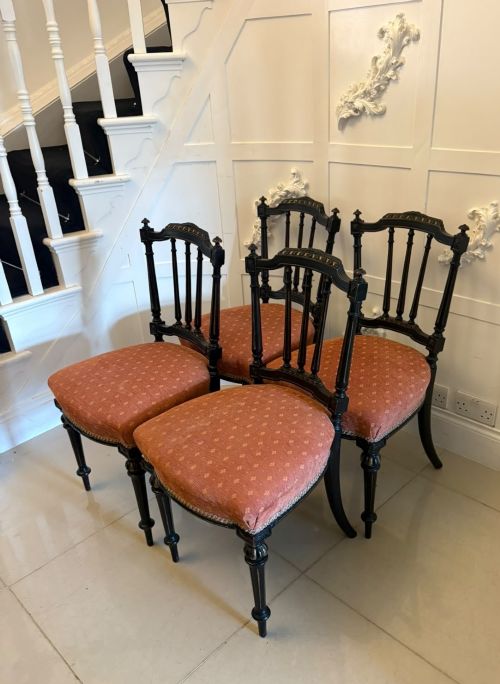
When you search for a victorian ebonised desk chair, you are looking at nineteenth-century seating finished to resemble ebony, spanning various forms from side chairs to revolving armchairs. These pieces emerge from periods including the Victorian era, spanning dates from eighteen-fifty to eighteen-eighty.
The version you are most likely to meet on this page is a Victorian or nineteenth-century example, often incorporating materials like brass, gilt, and upholstered fabric. Some pieces appear alongside styles such as the Aesthetic Movement, Arts and Crafts, and Gothic Revival.
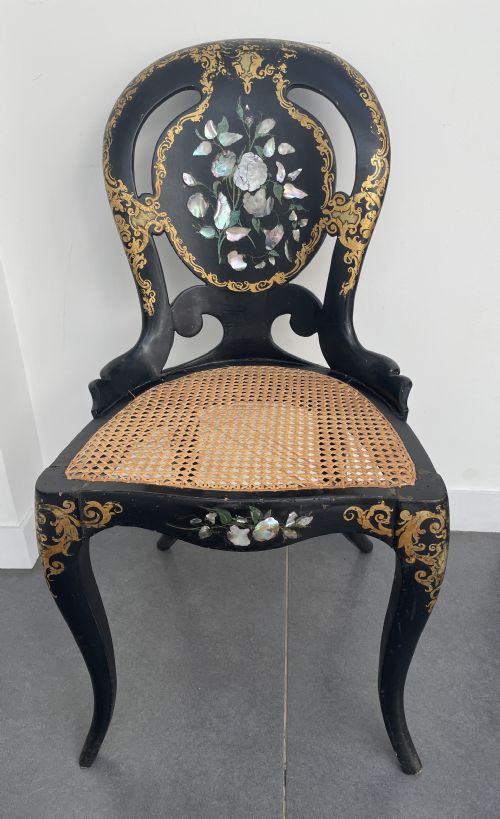
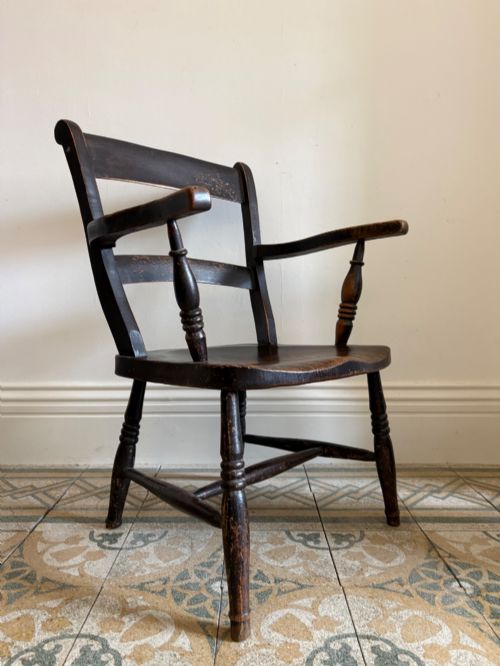
Makers and workshops of the period utilised distinct regional variations, including Thames Valley windsor designs and aesthetic movement armchairs. Forms range from simple side and desk chairs to elaborate library armchairs with mother of pearl inlay.
Materials and Construction
Craftsmen built these chairs primarily using ebonised wood, ash, and elm, applying black lacquer or ebonisation finishes to create a dark, uniform surface. Decoration often involved gilt highlights and mother of pearl inlay embedded into the timber.
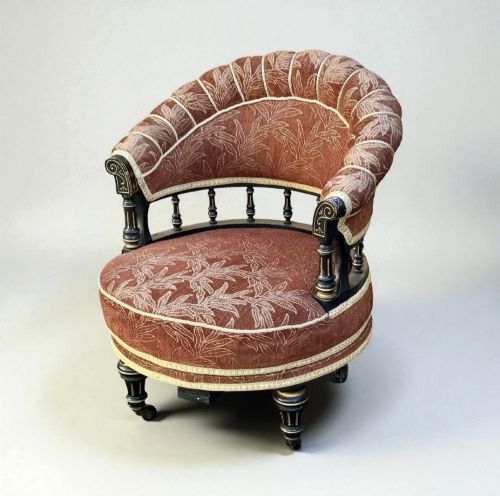
Seating areas featured upholstered fabric, cane, or bergere, supported by brass details and carved elements. Structural frames relied on traditional joinery suited to revolving mechanisms or sturdy open-arm library designs.
Some nineteenth-century desk chairs hide a revolving mechanism beneath traditional upholstery, letting nineteenth-century scholars spin in secret.
Judging Quality
The standard of a victorian ebonised desk chair depends on the crispness of its carving, the integrity of the ebonised finish, and the quality of any mother of pearl inlay or gilt work. Pieces with documented maker attribution or sophisticated aesthetic movement design typically represent the finer tier of the range.
Differences also lie in the complexity of the form, such as revolving mechanisms, shield backs, or robust library frames, compared to simpler side chair configurations.
Collier and Plucknett·Morris and Co·Philip Webb·Marsh Jones of Leeds
The Victorian Ebonised Desk Chair Glossary
- Ebonised wood
- Timber treated with stain, paint, or chemical processes to imitate costly ebony wood. This finish became especially popular during the nineteenth century for furniture mimicking exotic hardwoods.
- Bergere
- A type of enclosed upholstered armchair with a wooden frame and canework sides or back. These seats offer a lighter visual weight while maintaining structural support.
- Revolving armchair
- A swivel seat designed for office or library use, allowing movement while seated. Nineteenth-century examples often feature upholstered fabric and robust wooden bases.
- Gilt
- A thin layer of gold leaf or gold paint applied to wood surfaces. It provides contrast against dark ebonised timber on Victorian seating.
Victorian Ebonised Desk Chair: Frequently Asked Questions
How do I identify a Victorian ebonised chair?
Look for nineteenth-century timber finishes designed to imitate ebony, often paired with period upholstery, gilt, or mother of pearl inlay. Construction methods and stylistic cues like Gothic Revival or Aesthetic Movement details help confirm the era.
Examine the turning, carving, and structural wear to understand how the chair was assembled during the Victorian period.
Were these chairs originally used at desks?
Many examples served in libraries, studies, and writing rooms as revolving armchairs, side chairs, or dedicated desk seating. Their sturdy frames and support structures were suited for working environments.
Over time, forms evolved from simple side chairs to more complex swivel designs with upholstered seats.
How do I care for ebonised wood?
Keep the wood away from direct sunlight and excessive moisture to protect the dark finish and any gilt highlights. Dust gently with a soft cloth rather than using harsh liquid cleaners.
Maintaining a stable indoor climate prevents the timber from drying out and preserves the integrity of the ebonised surface.
What is the difference between an Aesthetic chair and a standard Victorian chair?
Aesthetic Movement pieces focus on artistic design and simple lines, often featuring ebonised wood and subtle gilt decoration. Standard Victorian chairs might lean towards heavier carvings or specific revivals like Gothic or Hepplewhite.
Makers associated with the Aesthetic Movement brought distinct artistic philosophies to furniture construction during the nineteenth century.