
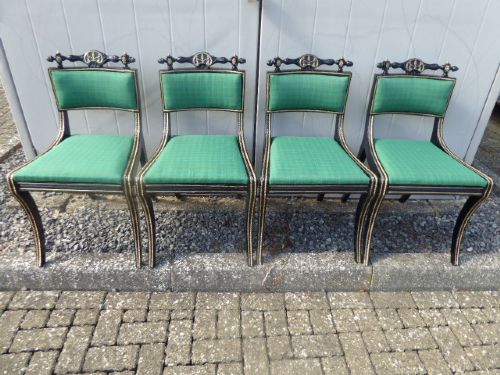
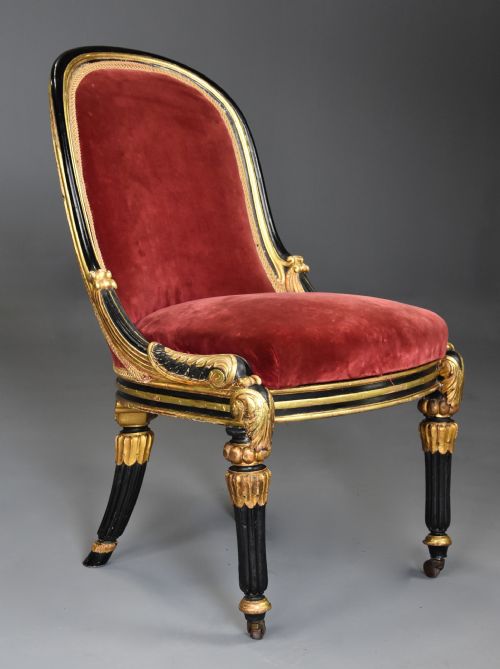
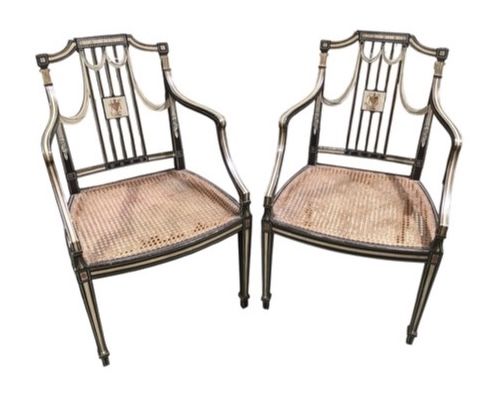


Ebonised Gilt Side Chairs
These ebonised gilt side chairs bring dark elegance and bright metallic highlights to any room.
Ebonised Gilt Side Chairs
Ebonised gilt side chairs are decorative seating options that combine dark wood finishes with metallic gilding. When you search for ebonised gilt side chairs, you enter a field dominated by nineteenth-century pieces alongside later revivals.
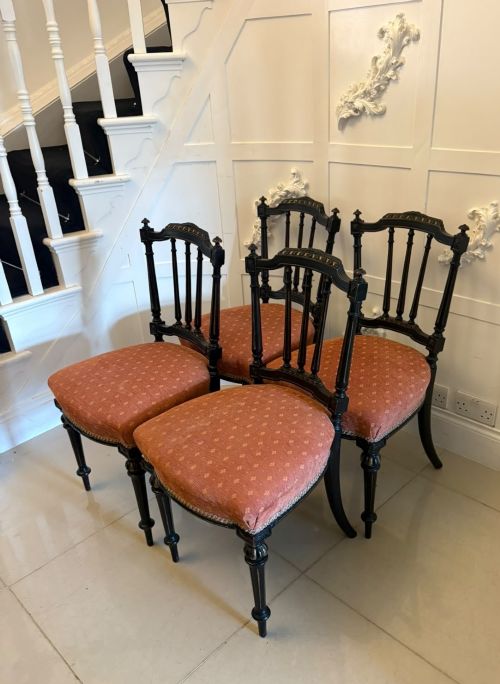
The selections here span periods from the Regency era through the Victorian age and into the early twentieth century. Side chairs form the core of the offerings, accompanied by occasional armchairs, nursing chairs and child chairs.
How they were made
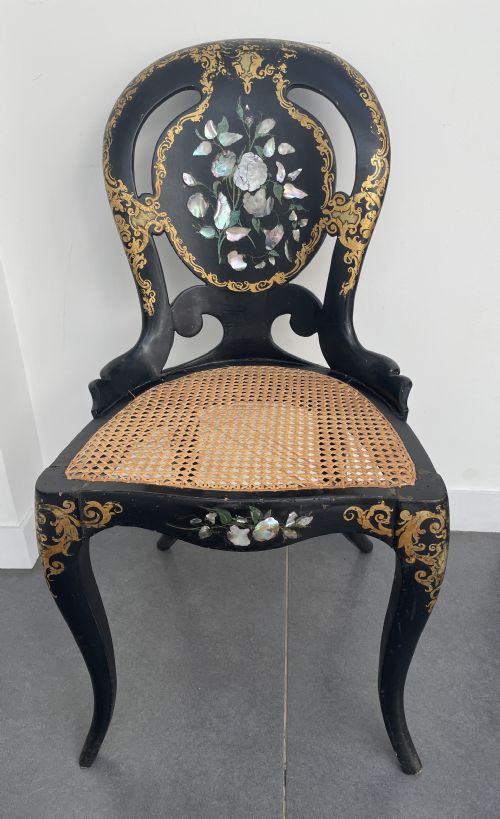
Maker's workshops built these chairs using woods treated with dark finishes to imitate ebony, often applying paint or lacquer. Artisans then highlighted carved details and frames with gilt and parcel gilt applications.
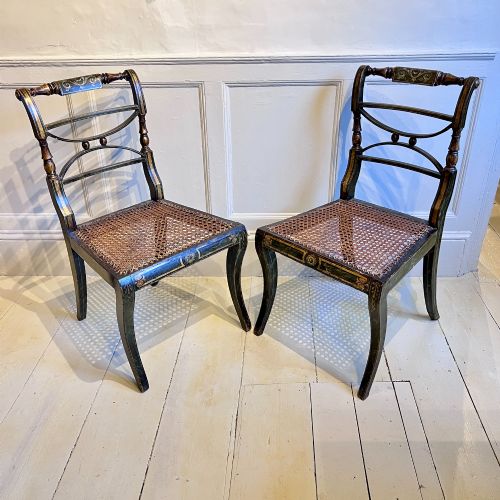
Seating surfaces utilised materials such as cane and fabric upholstery, while structural decoration occasionally incorporated brass details or mother of pearl inlay.
Listings feature periods from the Regency era through the Victorian age and into the early twentieth century.
What varies in quality
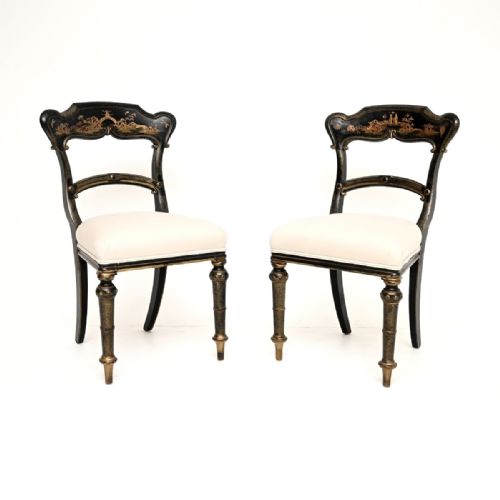
Quality rests in the precision of the ebonised finish and the crispness of the gilt work upon the wood frame. Pieces with integrated motifs, such as inlay or painted Chinoiserie decoration, display greater artisanal investment.
The integrity of the underlying structure and the survival of original surface treatments distinguish finer examples from later revivals.
The Ebonised Gilt Side Chairs Glossary
- Ebonised
- Wood treated to resemble dense, dark ebony. This dark finish creates a sharp contrast against gilt highlights.
- Gilt
- A thin layer of gold applied to surfaces. It catches the light on carved wooden details.
- Parcel Gilt
- A decorative technique where only specific parts of an object are gilded. This partial application emphasises particular carved motifs.
- Cane
- Woven plant material used for seat panels. It provides a lightweight and resilient seating surface.
- Aesthetic Movement
- A late nineteenth-century style focusing on visual beauty. Pieces from this period often emphasise artistic design over strict historical revival.
Ebonised Gilt Side Chairs: Frequently Asked Questions
Where should I place these chairs?
These chairs suit hallways, bedrooms and dining tables equally well. Their compact side chair proportions allow them to fit easily against walls or around tables without crowding a space.
Because of their decorative dark finishes and gilt details, they function effectively as standalone accent pieces in living areas.
How do I care for ebonised wood?
Maintain the dark finish by dusting regularly with a soft, dry cloth. Avoid placing the pieces in direct sunlight or near heat sources to protect the wood and gilt.
Keep moisture away from the surface to preserve the ebonised treatment and any delicate inlay work.
How do I tell Regency from Victorian?
Regency pieces often display classical restraint with clean lines and parcel gilt accents. Victorian examples tend to introduce heavier ornamentation, varied upholstery materials, or distinct movements like the Aesthetic style.
Examining the construction methods and decorative motifs helps clarify the period of origin.
Were these used for dining?
Many of these pieces served as dining chairs, particularly within larger sets found in period homes. Other variants functioned as hall chairs, nursing chairs or bedroom seating.
Their primary role depended on the room they inhabited and the specific demands of the household.