


Ebonised Turned Spindle Chairs
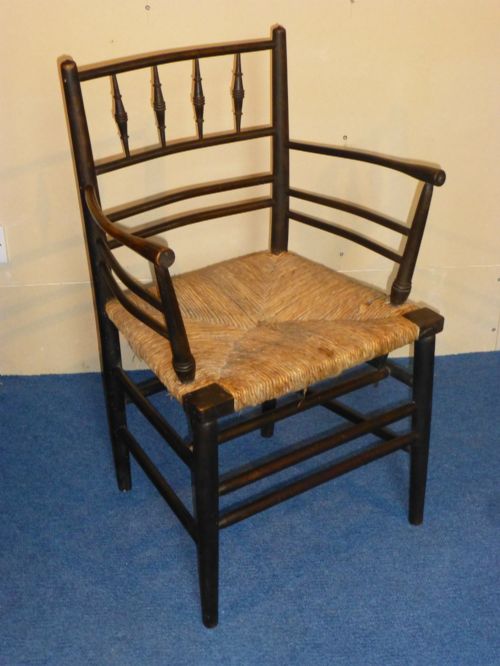
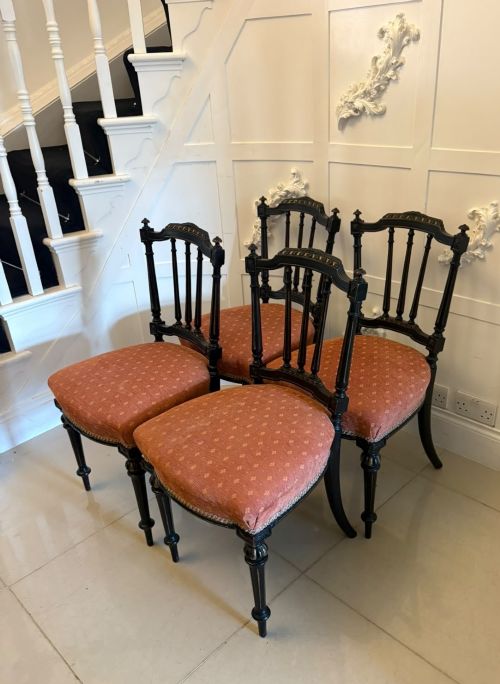
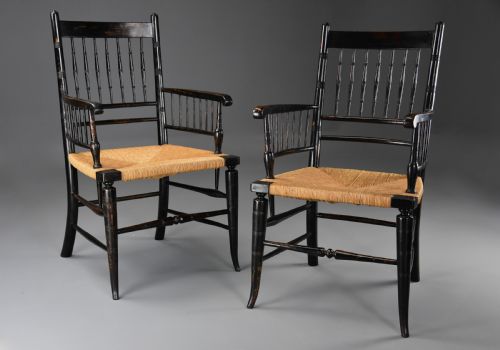
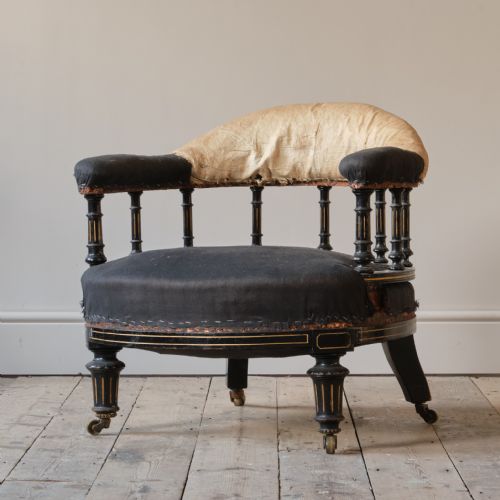
These ebonised turned spindle chairs bring dark, rhythmic timber frames and rush or upholstered seats straight into a traditional or modern interior.
Ebonised Turned Spindle Chairs
When you search for ebonised turned spindle chairs, you encounter a distinct group of seating shaped by nineteenth-century revivalism and earlier vernacular traditions. The pieces here span the Victorian era, the Aesthetic Movement, and the Arts and Crafts period, alongside earlier eighteenth-century examples.
The most common forms on this page are dining chairs, armchairs, nursing chairs, and child chairs. They draw on vernacular Welsh designs and sophisticated London workshop productions alike, offering upright postures and turned uprights.
Makers such as Morris and Co, Gillows, and Liberty of London feature alongside attributed pieces and Swedish armchairs. This mix ranges from simple rush-seated utility models to elaborate gilt-accented drawing room seating.
How they were made
The framework relies on ebonised wood and ebonised timber, stained or painted black to emulate expensive ebony. Lathe-turned spindles form the backs and structural supports, creating repetitive geometric patterns across the frame.
Seats are constructed using woven rush or upholstered pads covered in fabric, velvet, or brass-studded materials. Gilt highlights, ceramic elements, and brass details occasionally accent the dark timber surfaces.
His and Hers matching spindle armchairs prove that nineteenth-century couples liked to coordinate their sitting posture down to the very last turned bead.
What varies in quality
Quality rests on the crispness of the lathe turning and the integrity of the ebonised finish. Superior examples show precise joinery and well-balanced proportions that maintain their structural rigidity over generations.
The grade of the secondary materials, from tightly woven rush to rich velvet and upholstery fabrics, separates standard utility seating from high-end artistic workshop productions.
Morris & Co·Philip Webb·Gillows·Liberty of London·Ford Maddox Brown
The Ebonised Turned Spindle Chairs Glossary
- Ebonised
- Wood treated with stain or paint to achieve a deep black finish that mimics ebony. This technique gained immense popularity during the Victorian and Aesthetic periods.
- Spindle
- A slender, turned rod of wood shaped on a lathe to form decorative vertical supports in chair backs. These elements provide both structural strength and visual rhythm.
- Rush
- A pliable marsh plant woven into durable, textured seat pads. It remains a defining feature of vernacular and Arts and Crafts seating.
- Aesthetic Movement
- A late nineteenth-century design style emphasising visual beauty above narrative or moral function. Pieces from this movement often utilise ebonised finishes and stark, elegant lines.
Ebonised Turned Spindle Chairs: Frequently Asked Questions
How do I care for ebonised wood?
Dust the timber gently with a soft, dry cloth to prevent scratching the dark surface. Avoid modern solvent-based polishes that can degrade the historic black finish over time.
Keep the chair away from direct sunlight and strong heat sources to prevent the wood from drying out or splitting.
Were these chairs used for dining?
Many of the side chairs and sets served formal dining rooms during the Victorian era. Their upright backs encouraged a proper posture suitable for long meals.
Other variants, such as nursing chairs and armchairs, were intended for bedrooms, parlours, or reading corners rather than the dining table.
Are rush seats strong?
Traditional rush seating is surprisingly robust and designed to support daily sitting when woven tightly over a sturdy wooden frame. Natural fibres do flex and breathe with use.
Protect the rush from excessive moisture and sharp point loads to ensure the weave lasts for decades without sagging.
How do I date an ebonised chair?
Examine the turning style, joinery methods, and upholstery tack types to establish the manufacturing period. Pieces linked to the Aesthetic Movement or Arts and Crafts typically date from the mid-to-late nineteenth century.
Compare the turnings against documented workshop designs from makers like Morris and Co to narrow down the decade of production.