


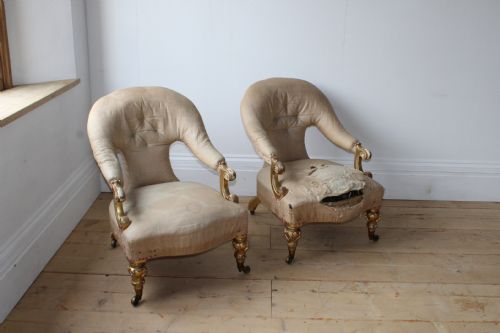
Victorian Gilt Salon Chair
These Victorian gilt salon chair pieces bring genuine period French Revival elegance to a room, offering gilded timber frames and historic upholstery.
Victorian Gilt Salon Chair
A victorian gilt salon chair is a seating form designed for formal reception rooms during the nineteenth century, often drawing heavily on continental aesthetic movements. The selection here spans the mid to late nineteenth century, including specific dates such as eighteen eighty and eighteen sixty, alongside general nineteenth century examples.
The physical forms include salon chairs, side chairs, dining chairs, and larger armchair variants like fauteuils and fireside seats. Many items appear as pairs or sets, reflecting the original arrangement of period drawing rooms where matching seating was essential for entertaining.
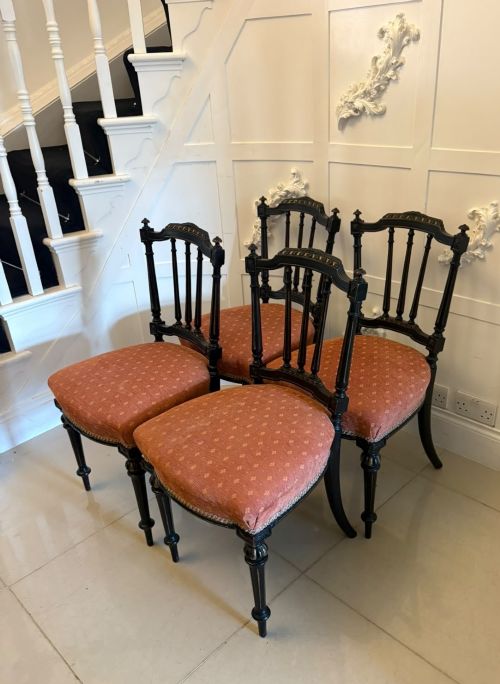
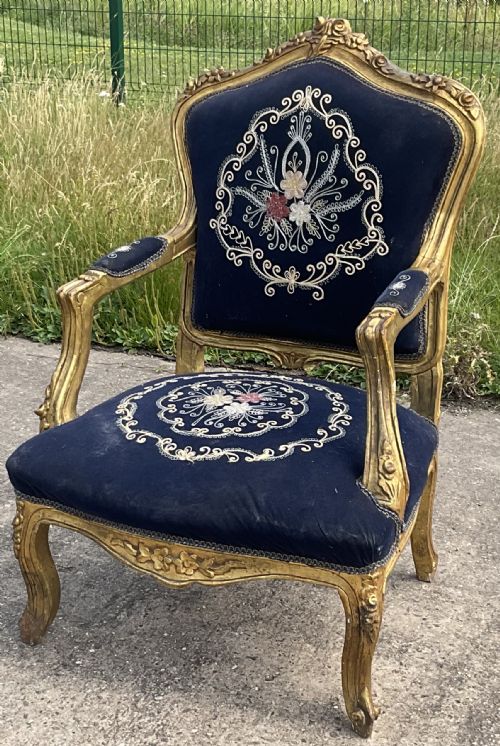
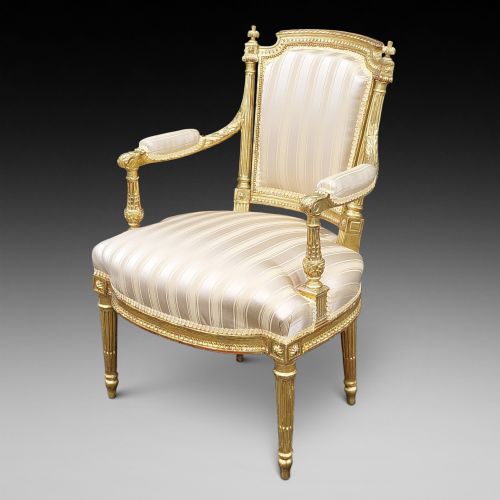
Makers and regional influences cross British and French traditions, ranging from English interpretations to French Rococo Revival and Louis XVI Revival designs. Buyers frequently encounter frames featuring carved giltwood, ebonised wood with gilt highlights, or painted finishes paired with silk and velvet upholstery.
How they were made
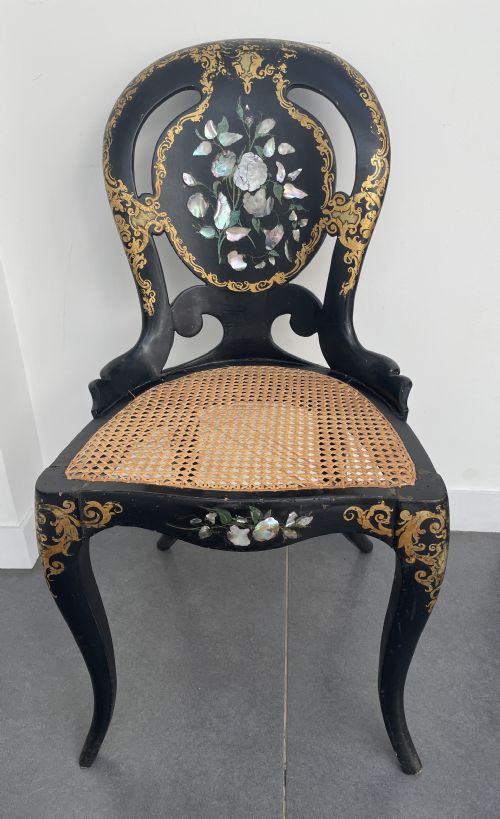
The construction of a victorian gilt salon chair relies upon timber framing shaped into curved rails and cabriole legs, typically finished in giltwood or gesso and gilt. Selected pieces incorporate ebonised wood or painted surfaces combined with silver gilt and mother of pearl inlay.
Upholstery materials recorded in the evidence include silk, velvet, and various decorative fabrics secured over traditional stuffing. Brass elements occasionally appear on frames and structural joints, supporting the carved wooden architecture.
Listings feature periods spanning the nineteenth century, including specific years like eighteen sixty, eighteen seventy, and eighteen eighty, alongside Regency items.
What varies in quality
The distinction between standard and superior pieces rests in the crispness of the wood carving and the depth of the gilding applied to the frame. Hand-carved details in styles such as Rococo Revival show a level of sculptural fluency that simpler turned or moulded components lack.
Material selection further defines the hierarchy, from standard giltwood frames to those employing ebonisation with intricate mother of pearl inlay or authentic period silk textiles. The presence of attributed workshops, such as Holland and Sons, elevates the standing of an individual chair.
Holland and Sons
The Victorian Gilt Salon Chair Glossary
- Giltwood
- Timber that has been coated with gold leaf or a gold-coloured metallic finish. This surface treatment defines the bright appearance of nineteenth century formal seating.
- Fauteuil
- An open-armed upholstered armchair with wooden armrests left exposed. Originating in France, the form became popular in British revival salons.
- Rococo Revival
- A nineteenth century design movement reviving the asymmetric curves, C-scrolls, and naturalistic ornamentation of the eighteenth century. It shapes the carved frames of many salon chairs.
- Ebonised wood
- Timber treated with a chemical stain or black finish to imitate ebony. It provides a dark contrast to gilt highlights.
- Louis XVI Revival
- A neoclassical style popular during the nineteenth century characterised by straight tapered legs and geometric framing. It contrasts with the flowing curves of earlier revivals.
Victorian Gilt Salon Chair: Frequently Asked Questions
What is a Victorian gilt salon chair?
A Victorian gilt salon chair is a formal nineteenth-century seat featuring a gilded wooden frame, designed for drawing rooms and reception spaces.
These pieces typically embrace revival aesthetics such as French Rococo or Louis XVI styles, combining decorative carved timber with upholstery like silk or velvet.
How were these chairs used historically?
Historically, these seats furnished formal reception rooms where guests gathered for conversation, music, and social calls.
Because they were meant for display and light entertaining rather than heavy lounging, many survive in relatively delicate structural condition.
How do I live with a gilt salon chair?
Living with a gilt salon chair involves placing it in low-traffic areas of a home where its delicate frame and historic upholstery face minimal physical wear.
Keep these chairs away from direct sunlight to protect fragile fabrics like silk and velvet from fading, and handle the gilded wooden surfaces with care.
How do I tell periods apart?
Distinguishing periods relies on observing stylistic details, such as the straight tapered legs of Louis XVI revival pieces versus the curved C-scrolls of Rococo revival.
Dates recorded on this page range from Regency through the mid and late nineteenth century, marked by shifts in carving depth and wood treatment like ebonisation.