


19th Century Pottery Jug
These 19th century pottery jugs span Georgian creamware through to Victorian majolica, offering practical service and commemorative display.
19th Century Pottery Jug
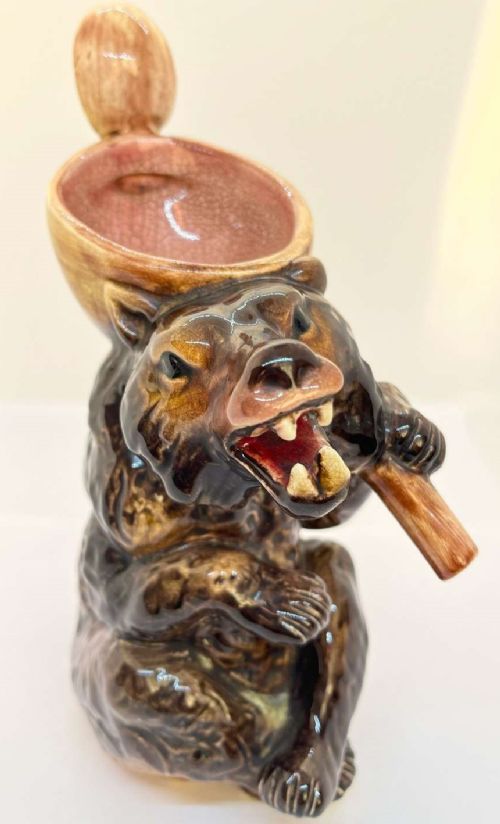
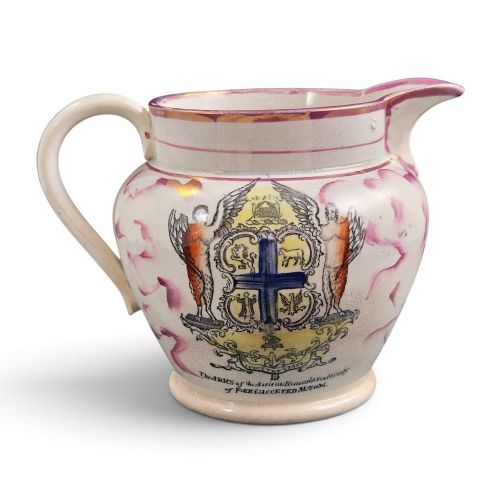
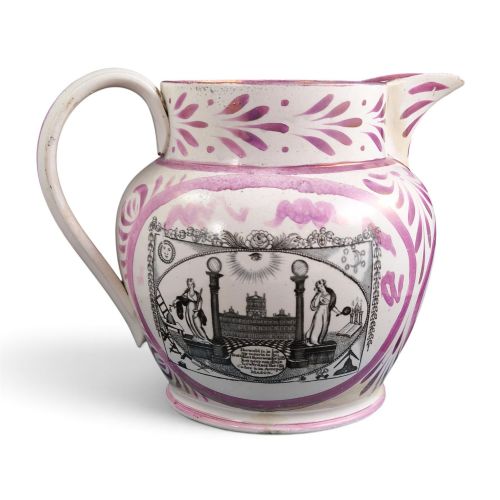
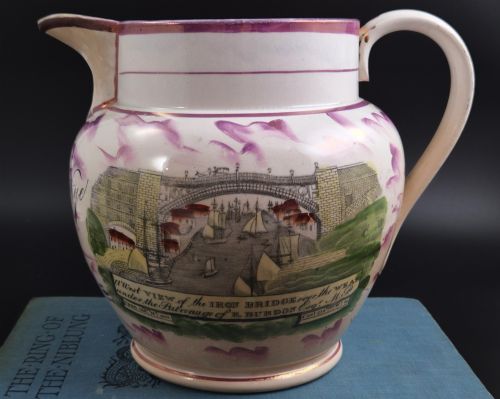
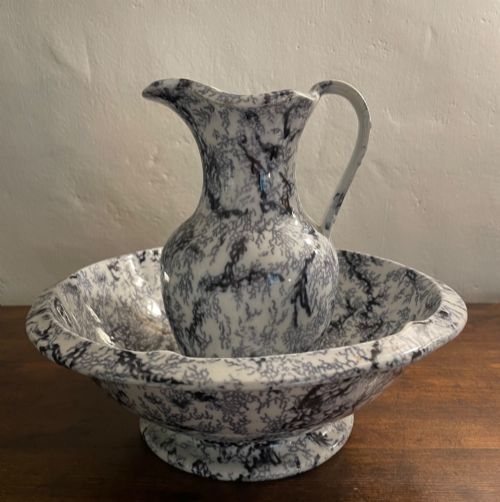
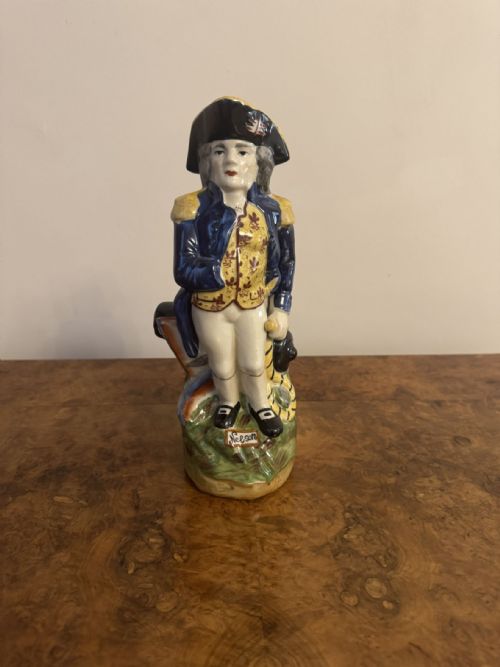
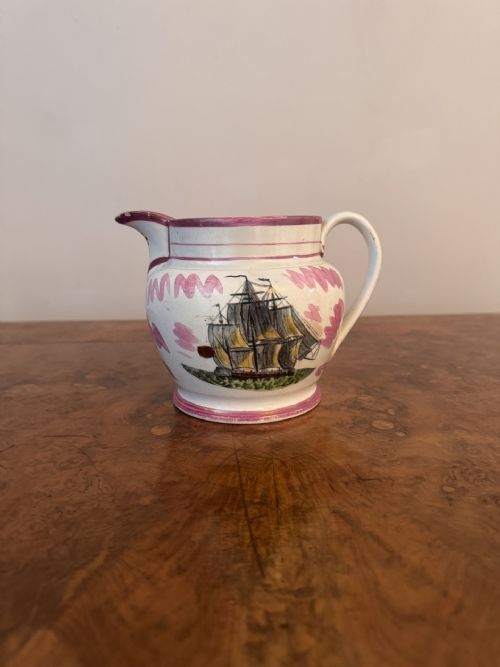
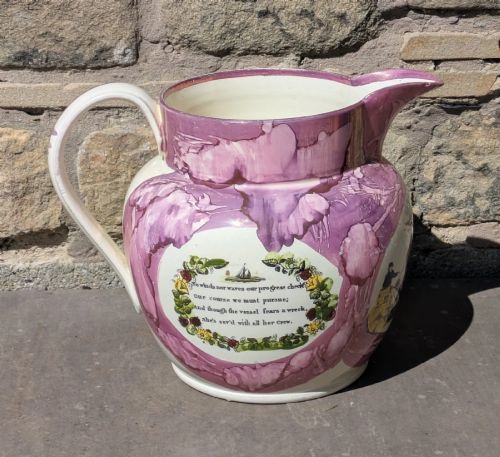
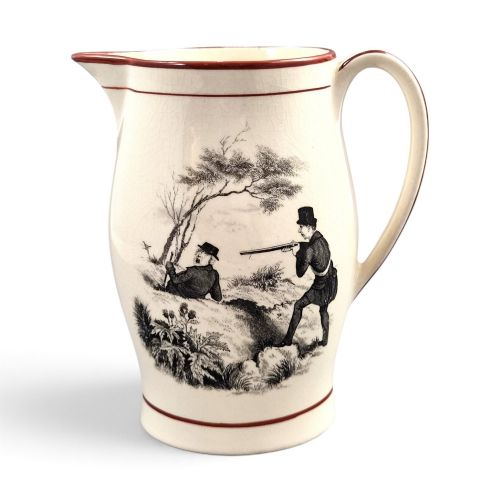
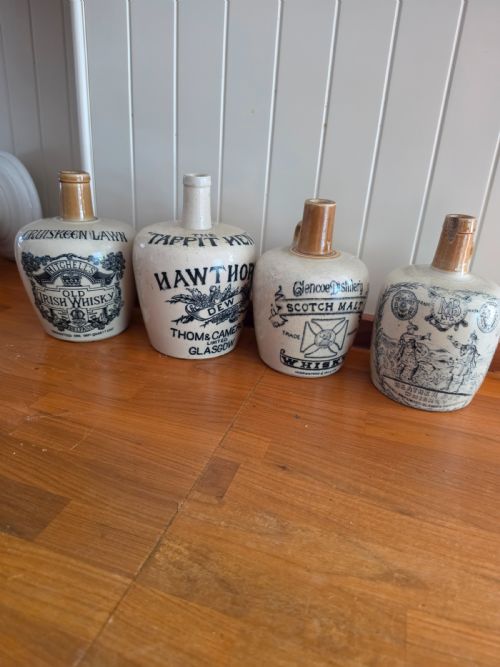
When searching for a 19th century pottery jug, buyers encounter a diverse array of utilitarian and decorative vessels made throughout the Georgian, Regency, and Victorian periods. These pieces include everyday creamware milk jugs, large Sunderland lustre vessels adorned with maritime transfers, and characterful Staffordshire toby jugs.
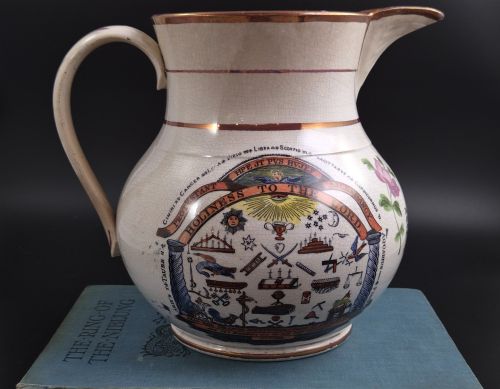
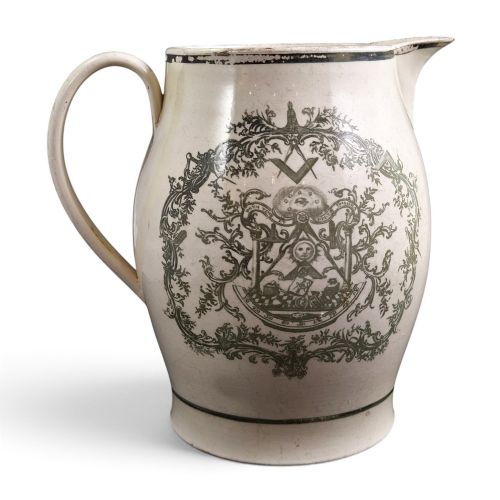
Many items record specific historical themes, trades, and communal societies, shifting the function of the vessel from a simple pourer to a commemorative object.
What Varies in Quality
Quality in these jugs rests upon the clarity of the transfer print, the crispness of relief moulding, and the richness of the glaze. Masterpieces display deep, even metallic lustres and sharply registered polychrome details without blurring or running.
The inventory records pieces from the Georgian, Regency, and Victorian periods, alongside specific dated examples from the nineteenth century.
Holdcroft·Cantagalli Florence·Mason's·Wedgwood·Royal Doulton
The 19th Century Pottery Jug Glossary
- Creamware
- A refined earthenware developed in the 18th century with a warm, pale yellow or cream-coloured lead glaze. It became a staple of Staffordshire production throughout the Georgian era.
- Lustreware
- Pottery decorated with a metallic film that produces an iridescent sheen. Sunderland and copper lustre varieties utilise gold or platinum elements to create reflective pink and metallic surfaces.
- Transfer printing
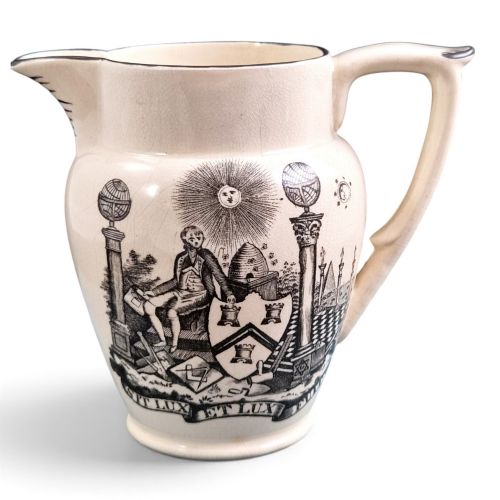
- A decoration technique where an engraved copper plate transfers a design onto paper, which is then stamped onto the ceramic body before firing. This allowed for intricate maritime, Masonic, and poetic scenes.
- Majolica
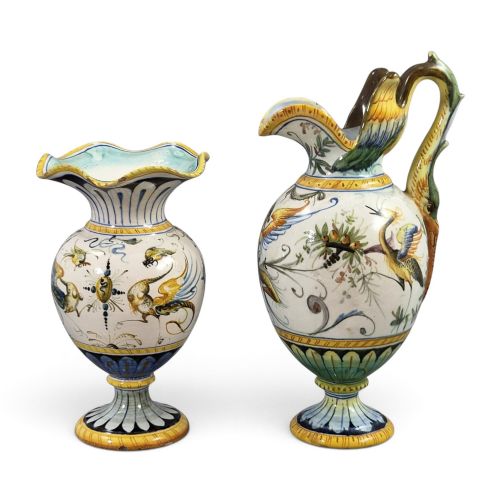
- A colourful, lead-glazed earthenware popular during the Victorian period, known for vivid polychrome palettes and botanical or sculptural relief decoration.
- Pearlware
- An improved earthenware introduced in the late 18th century featuring a bluish glaze that pooled in recesses, designed to mimic Chinese export porcelain.
19th Century Pottery Jug: Frequently Asked Questions
What is a Sunderland lustre jug?
Sunderland lustre jugs are distinctive ceramic vessels produced in the North East of England during the 19th century. They are easily recognised by their characteristic pink splash or mottled lustre glaze.
These pieces frequently feature transfer-printed views of the Iron Bridge over the Wear, maritime themes, or moral verses, making them popular mementoes for sailors and tradesmen.
How do I identify a Georgian jug?
Georgian jugs, produced roughly between 1714 and 1830, typically lean towards refined creamware or pearlware bodies. Their forms are often simpler and more restrained than later Victorian examples.
Look for early transfer printing in black or sepia, lightweight earthenware bodies, and classic neoclassical shapes or straightforward globular forms.
What are toby jugs used for?
Toby jugs represent stout, seated figures holding a mug of beer and a pipe, usually dressed in 18th-century attire. While modelled as sculptural drinking pitchers, many 19th-century examples served primarily as decorative mantelpiece ornaments.
They captured popular historical personalities, naval heroes like Lord Nelson, or satirical character types with hand-painted polychrome glazes.
What is Gaudy Welsh pottery?
Gaudy Welsh pottery consists of colourful earthenware and ironstone items decorated with bright cobalt blue, copper lustre, iron red, and green highlights. Despite the name, these domestic tablewares were manufactured in Staffordshire for the Welsh market.
Patterns often feature floral motifs like the Grape, Drape, and Pagoda designs, applied to sturdy jugs and teasets.