

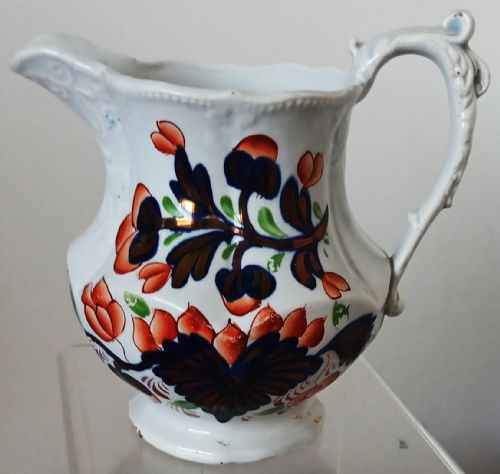
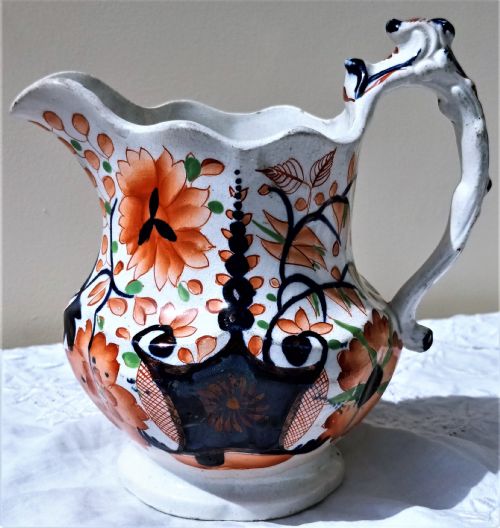
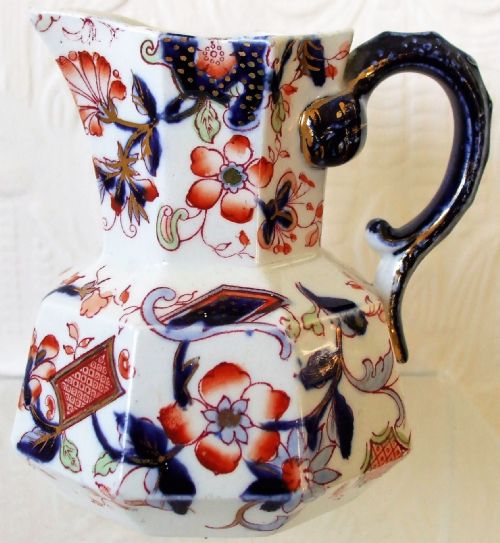
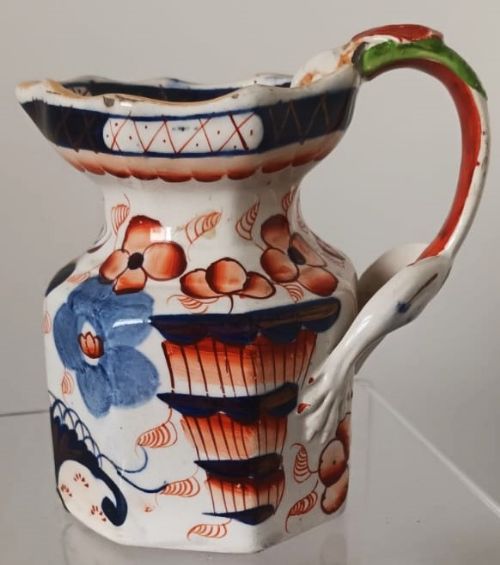
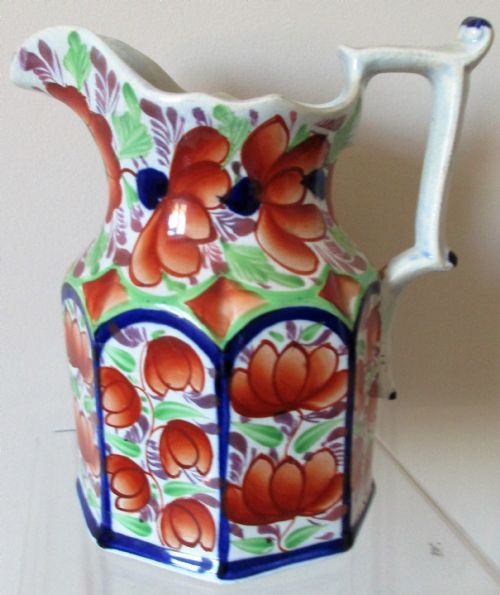
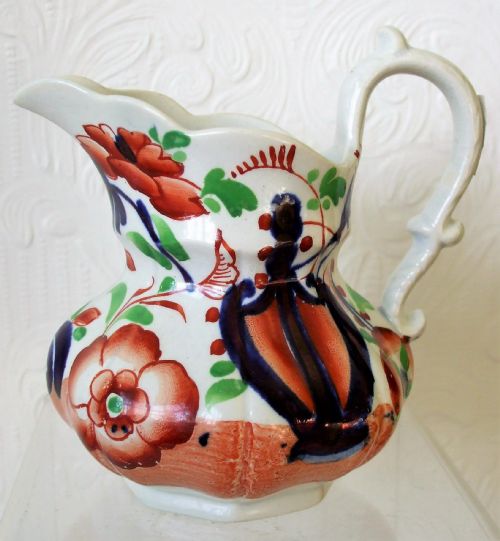


Welsh Imari Style Jug
These welsh imari style jug examples bring bold ceramic patterns and vibrant enamel colours straight to your table.

Welsh Imari Style Jug
A welsh imari style jug brings together striking hand-painted motifs and rich glazed surfaces from the nineteenth century. These vessels appear in forms such as pottery jugs, pouch jugs, and pitchers that reflect Georgian and Victorian domestic life.
Most examples found here belong to the nineteenth century and carry traditional patterns like Bethesda, Grape, Pagoda, and Gwent. Makers created these pieces in earthenware, ironstone, and porcelain to serve everyday households while displaying decorative flair.
Materials and construction
Potters shaped these vessels from ironstone, earthenware, and porcelain before applying detailed enamel glaze decoration. Artisans then used gilding and cobalt colours to highlight distinct patterns across the body of each piece.
Firing techniques allowed ceramic bodies to take sturdy shapes like the hydra jug or standard pitcher. Skilled hands painted patterns such as Pagoda and Bethesda directly onto the glazed surface to achieve their final appearance.
Listings span the nineteenth century, featuring earthenware, ironstone, and porcelain decorated with enamel glaze and gilding.
Assessing quality and craftsmanship
Quality rests upon the precision of the hand-painted enamel work and the crispness of transfer-printed or brushed patterns. Finer pieces display careful alignment of colours like cobalt blue and iron-red within the design borders.
The choice of ceramic body also shapes the piece, with dense ironstone and fine porcelain offering greater durability than standard earthenware. Preservation of the original gilding and gloss on the glaze distinguishes superior examples.
The Welsh Imari Style Jug Glossary
- Ironstone
- A type of durable earthenware patented in the nineteenth century. It resists chipping better than traditional pottery.
- Gilding
- The application of gold leaf or gold paint to ceramic surfaces. This technique adds metallic highlights to patterned details.
- Hydra
- A classical jug shape featuring a scrolled handle and distinct spout. Staffordshire potteries adapted this classical form during the Victorian era.
- Enamel glaze
- A glossy, fused glass coating applied over pottery. It protects the underlying colours and provides a reflective finish.
Welsh Imari Style Jug: Frequently Asked Questions
What is a welsh imari style jug?
These ceramic vessels feature colourful patterns inspired by Japanese Imari wares, adapted by British potteries during the nineteenth century. They combine bright enamels and gilding on sturdy ironstone or earthenware bodies.
Such pieces range from standard pitchers to pouch jugs decorated with named patterns like Pagoda or Bethesda.
When were these jugs made?
The pieces available on this page date from the nineteenth century, spanning both the Georgian and Victorian periods. This era saw British potteries experiment heavily with vibrant, hand-painted Asiatic motifs.
Most examples reflect Victorian folk art traditions and domestic production methods of that time.
How were these jugs used?
Households utilised these pitchers for serving liquids at the table or displaying fresh flowers in the parlour. Their robust ironstone and earthenware construction made them practical for daily domestic duties.
Over time, their bright patterns also made them popular decorative display items in British homes.
How do I identify different patterns?
Potters often named their designs after places or motifs, such as Gwent, Conwy, Grape, or Bethesda. These titles usually describe the specific floral, architectural, or fruit arrangements painted on the ceramic body.
Examining the enamel colours and shape helps connect a vessel to its specific nineteenth-century pattern group.