



Gaudy Welsh Jug
A gaudy welsh jug brings bright ceramic colour and vibrant enamel decoration to the table, offering a striking piece of nineteenth-century folk art history.
Gaudy Welsh Jug
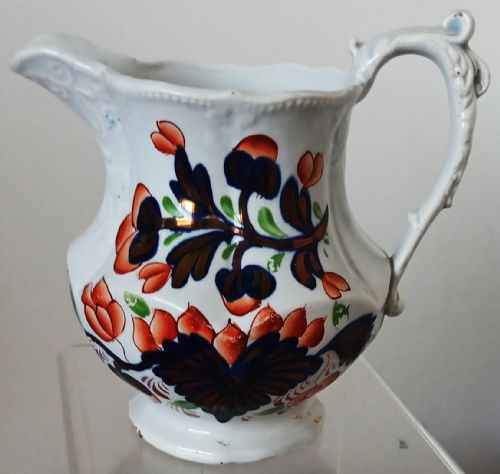
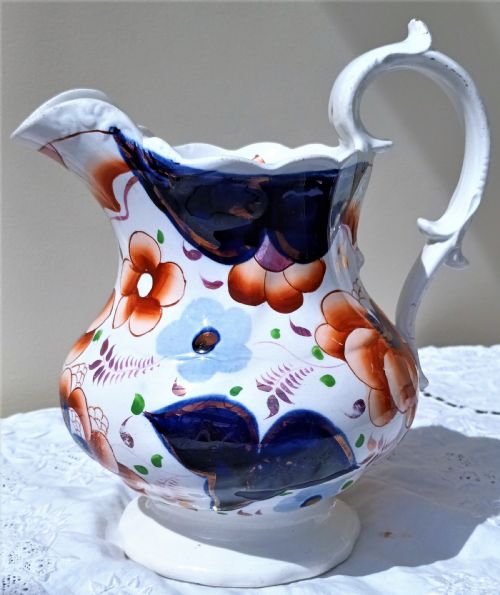
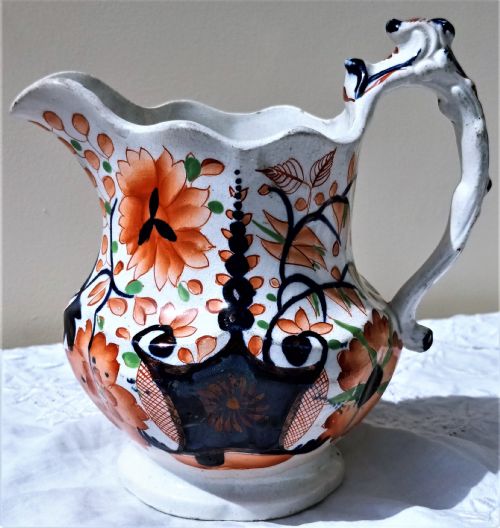
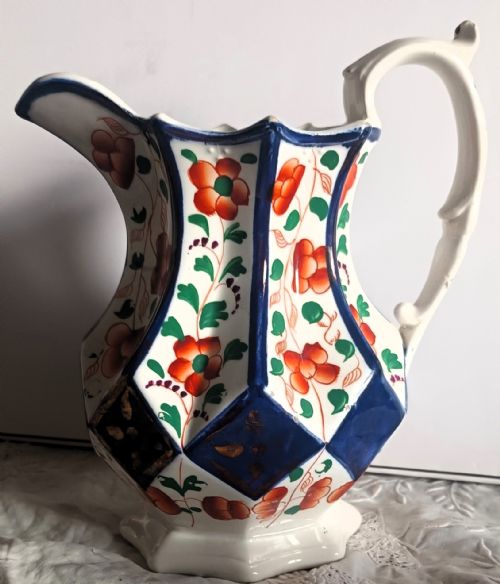
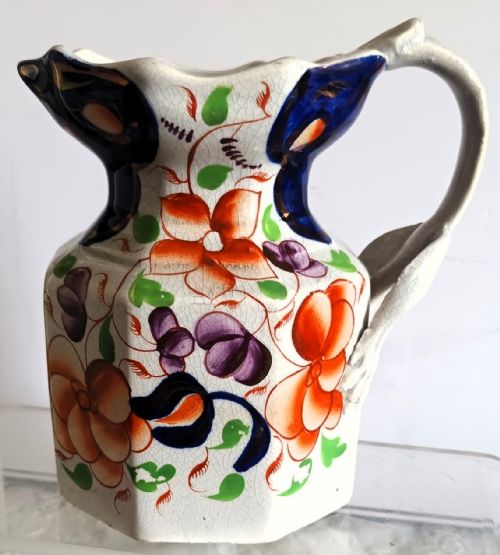
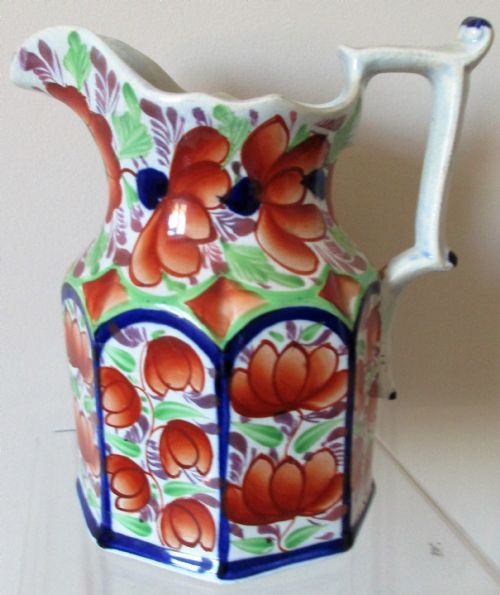
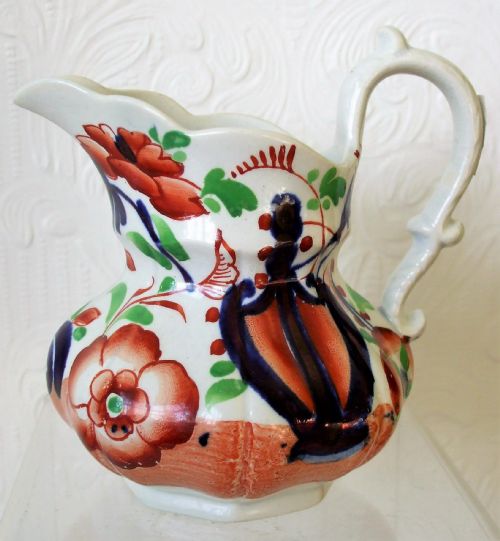
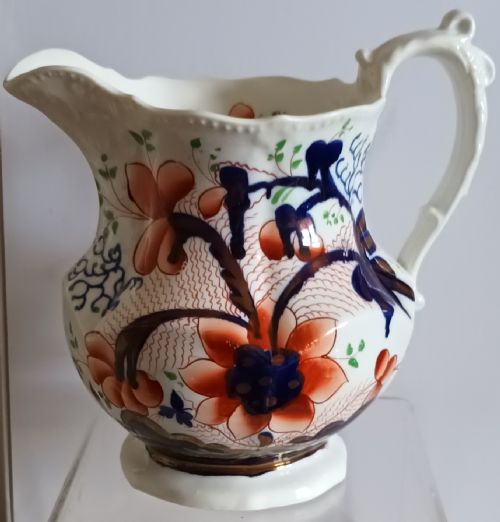
A gaudy welsh jug is a nineteenth-century earthenware, ironstone, or porcelain vessel decorated with hand-applied enamels. These pitchers typically display named patterns such as Bethesda, Pagoda, Harlech, and Grape, reflecting regional pottery traditions.
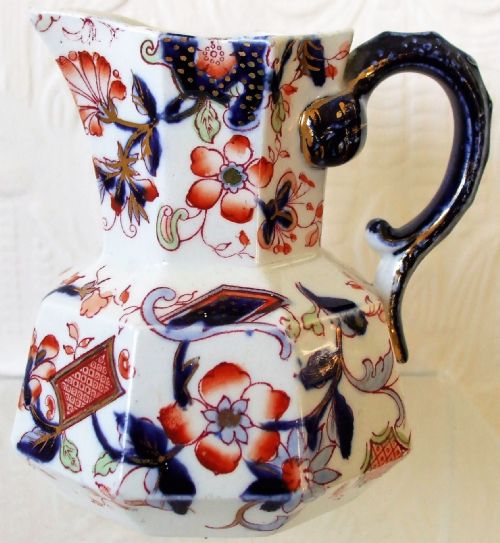
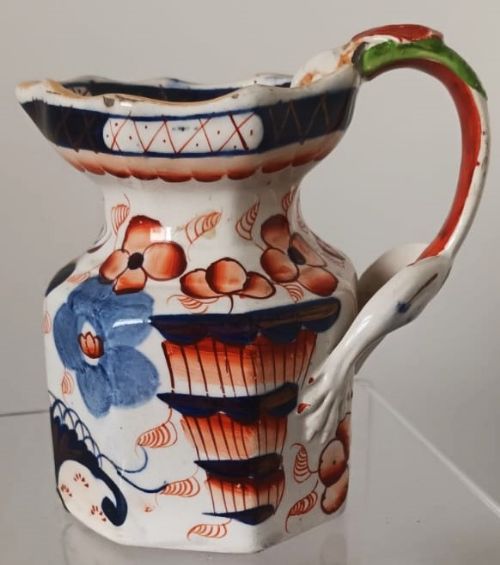
The nineteenth-century examples on this page span Georgian and Victorian periods, including Victorian Folk Art styles. Most pieces take the form of standard jugs and pitchers, though pouch jugs and snake handled forms also appear.
Collectors encounter named motifs like Gower, Gwent, Conwy, and Aberaeron alongside floral designs such as Cambrian Rose and Cherry Tree. These vessels served practical pouring functions while brightening domestic interiors with rich cobalt blue, iron red, and copper lustre.
How they were made
Potters shaped these vessels from earthenware, ironstone, or porcelain bodies before applying a protective glaze. The structural forms include standard jugs, pouch jugs, and pitchers with specialised handles such as snake handles.
Bright decoration relies on hand-painted enamels, often combining cobalt blue, pink lustre, and copper lustre highlights. Many wares adopt an Imari palette, superimposing rich metallic sheens over underglaze printed or painted outlines.
Some nineteenth-century potters gave hardworking pitchers fancy snake handles just to keep tea-time interesting.
What varies in quality
The crispness of the transfer-printed outline beneath the enamel painting differs across pieces, affecting the overall definition of motifs like Pagoda or Grape. Stronger examples maintain vibrant saturation in the copper lustre and pink enamel without fading or running.
The complexity of the form creates distinction, moving from straightforward pitcher shapes to moulded pouch jugs or specialised snake handled designs. Wares produced by documented firms like Keeling & Co., Bayley & Ball, or Allertons show variation in baseline ceramic body weight and finishing.
Keeling & Co.·Bayley & Ball·Allertons
The Gaudy Welsh Jug Glossary
- Gaudy Welsh
- A loose term for nineteenth-century British ceramics decorated with bright, saturated enamels and copper lustre, heavily produced for Welsh markets. These wares often feature architectural or floral motifs inspired by Imari porcelain.
- Copper Lustre
- A metallic glaze technique producing a warm, coppery sheen that reflects light across the surface of the jug. It is frequently applied to handles, rims, or as a primary accent band.
- Ironstone
- A heavy, durable type of earthenware patented in the nineteenth century to imitate Chinese porcelain. It provides a robust body well-suited for everyday kitchen and table use.
- Imari Palette
- A decorative colour scheme utilising underglaze cobalt blue, iron red, and gilt or metallic highlights, adapted by British potters for earthenware bodies. The style creates high-contrast visual depth on nineteenth-century jugs.
- Pouch Jug
- A pitcher featuring a rounded, bulbous body configuration that swells outward toward the base. This regional form provides increased liquid capacity while displaying botanical or architectural patterns.
Gaudy Welsh Jug: Frequently Asked Questions
How were these jugs used?
These pitchers served everyday functional roles in the nineteenth-century home for pouring liquids like milk, water, or beer at the table. Their bright palettes also made them decorative display items on Welsh dresser shelves.
Their sturdy earthenware and ironstone bodies allowed them to withstand daily domestic service while retaining their colourful enamel decoration.
How do I identify the pattern?
Many nineteenth-century patterns are traditional designs associated with specific motifs, such as the architectural Pagoda or the botanical Grape and Cherry Tree. Collectors often identify them by checking the central pictorial theme against documented nineteenth-century ceramic archives.
Some examples also carry printed or impressed names on the base or within the decorative field, indicating titles like Conwy or Aberaeron.
What ceramic materials were used?
Potters constructed these jugs from earthenware, ironstone, and occasionally porcelain bodies, finished with a smooth glaze. The choice of body influences the weight and durability of the individual pitcher.
Surface decoration combines ceramic glazes with overglaze enamel colours and copper lustre highlights, fired multiple times to fix the pigments.
How do I care for a gaudy welsh jug?
Display these nineteenth-century pieces away from direct sunlight to protect the stability of the hand-applied enamels and copper lustre. Gentle dusting and occasional hand washing with mild soap preserve the glazed ceramic surface.
Avoid automated dishwashers and harsh abrasive cleaners, which can wear away the historic enamel pigments and metallic sheens.