
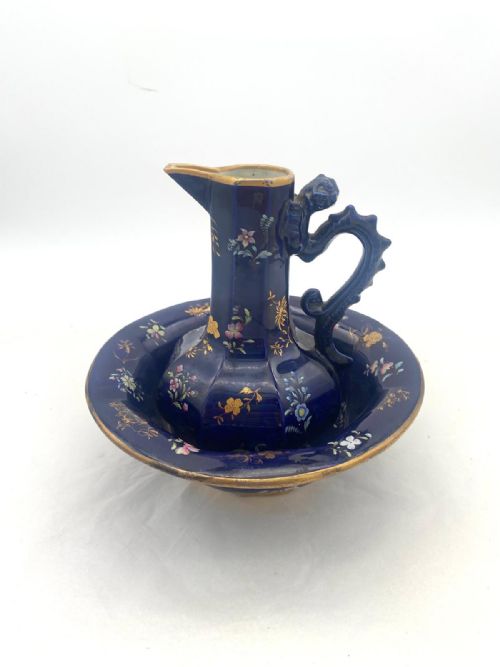
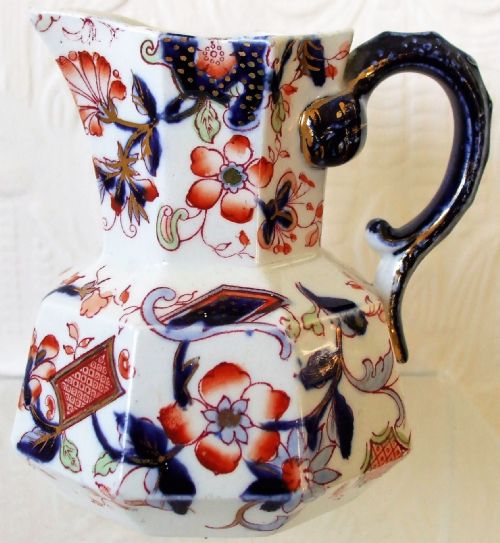
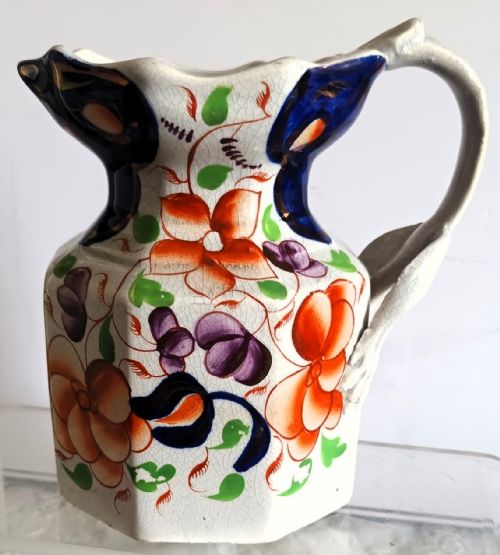


Octagonal Ceramic Jug
These octagonal ceramic jug examples span the Georgian, Regency, and Victorian periods, offering striking angular forms shaped by early potters.
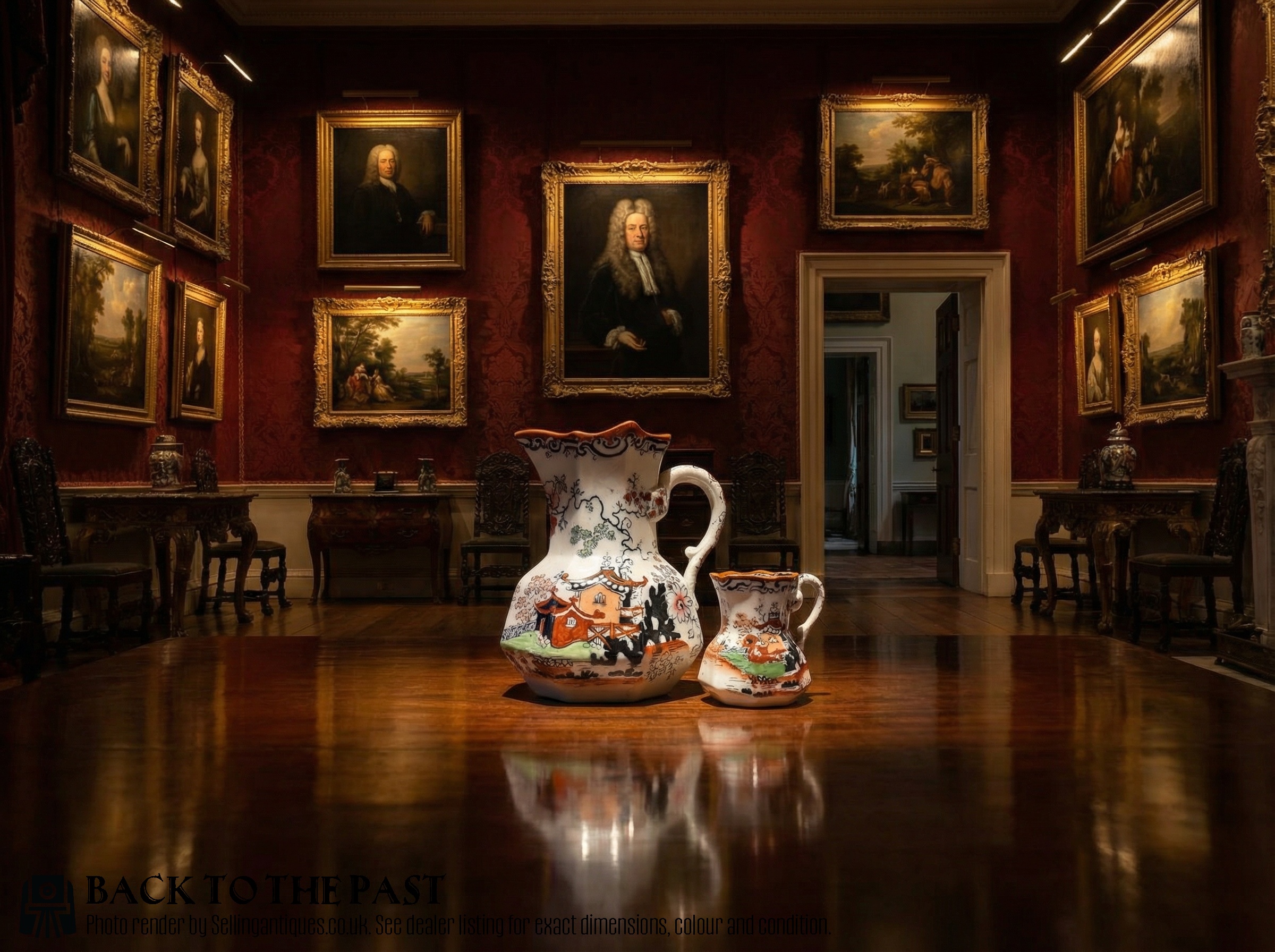
Octagonal Ceramic Jug
An octagonal ceramic jug presents a distinct multi-faceted body shape rather than a standard rounded silhouette. These pieces frequently appear in ironstone, earthenware, and porcelain formats originating across the Georgian, Regency, and Victorian eras.
The selection here includes individual pouring vessels alongside larger wash sets and matched sets of graduated sizes. Many examples display oriental-inspired decoration or patterns such as Gower and Gwent, reflecting the aesthetic tastes of nineteenth-century makers.
Buyers will encounter notable historical works including Mason's ironstone pieces alongside Davenport and Keeling and Co. productions. Such items demonstrate the practical utility of nineteenth-century wash stands and display tables alike.
Materials and construction
Potters built these vessels using durable ironstone and refined earthenware, often applying a protective glaze over the ceramic body. Ironstone provided the strength needed for large wash sets and heavy daily use.
Decoration relied upon hand-applied enamel colours and gilt details, including touches of gold leaf. Oriental-inspired motifs and patterns were painted onto the glazed ceramic before final firing.
The inventory includes individual pouring jugs as well as complete multi-piece wash sets with basins.
Judging quality and character
Quality rests in the crispness of the eight-sided moulding and the stability of the handle attachment. Sharply defined angles distinguish finer potting from softer, more rounded interpretations.
The preservation of hand-painted enamel and gilt decoration dictates the visual appeal of each vessel. Complete sets featuring graduated sizes demonstrate greater ambition from the original pottery.
Mason's Ironstone·Davenport·Keeling and Co.
The Octagonal Ceramic Jug Glossary
- Ironstone
- A patented heavy earthenware developed in the nineteenth century for durability. It offered a robust alternative to porcelain while accepting bright enamels.
- Hydra
- A classical serpentine handle style found on certain nineteenth-century jugs. The shape mimics mythological serpent forms.
- Gaudy Welsh
- A vibrant style of pottery decoration utilising cobalt blue, iron red, and copper lustre. It was produced largely for everyday domestic markets.
- Chinoiserie
- European artistic interpretation of Chinese and East Asian decorative motifs. This style heavily influenced nineteenth-century ceramic patterns.
Octagonal Ceramic Jug: Frequently Asked Questions
What were these jugs used for?
These vessels served practical washing and pouring duties in nineteenth-century households. Larger examples formed part of wash sets designed for bedroom use.
Smaller individual pitchers held water or milk for the table. Their robust ironstone bodies ensured they survived rigorous daily service.
How do I date an octagonal jug?
Dating relies on maker marks stamped into the ceramic base, alongside stylistic clues. Georgian and Regency examples often lean towards oriental-inspired palettes.
Victorian pieces frequently display registered design numbers or specific pattern names like Gower or Gwent. Material weight and glaze characteristics also help pinpoint the era.
Are these jugs waterproof?
Most pieces retain their original glazed ceramic integrity and hold liquids safely. Ironstone and porcelain bodies are non-porous once fired and glazed.
Users should check for hairline cracks that might compromise structural strength over time. Gentle hand washing preserves both the glaze and any surface gilding.
What does Hydra mean on a jug?
Hydra refers to the specific serpant-like form of the handle attached to the vessel. This classical revival shape mimics mythical creatures popular during the nineteenth century.
Potters like Mason utilised this handle style on robust ironstone jugs. It provides a secure grip while adding an architectural silhouette.