
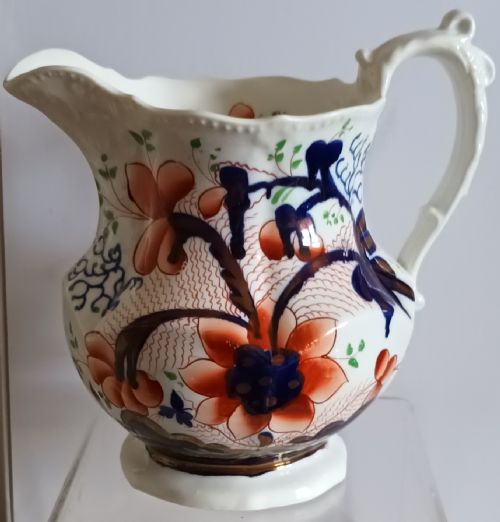


Cobalt Blue Floral Jug
A cobalt blue floral jug brings rich colour and botanical pattern to a room, drawing the eye with deep cobalt painting.
Cobalt Blue Floral Jug
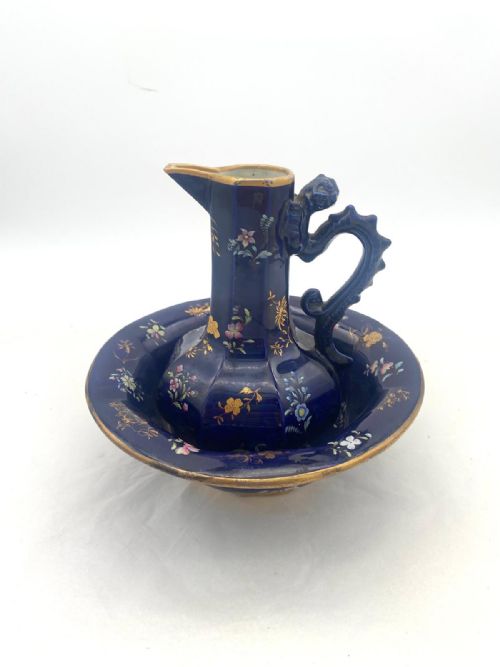
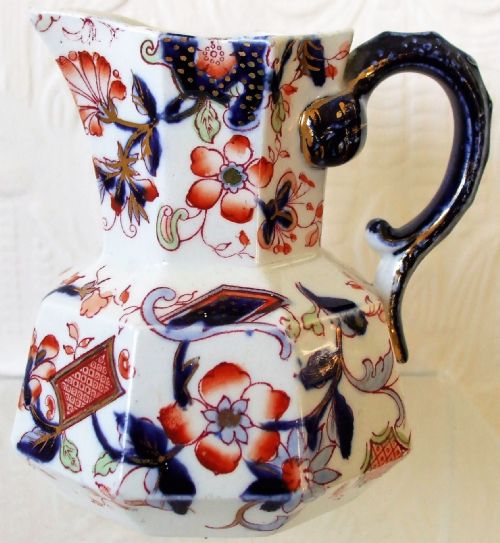
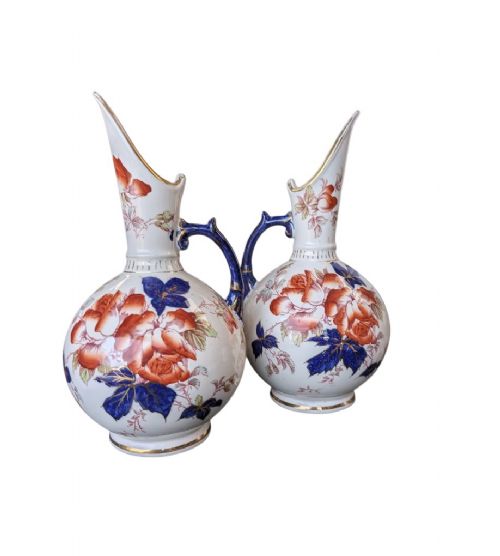
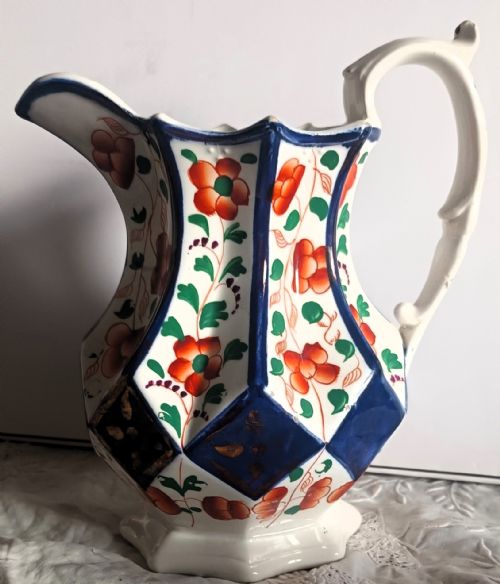
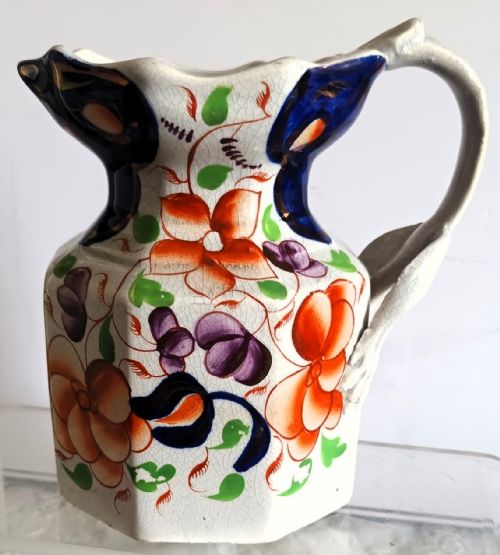
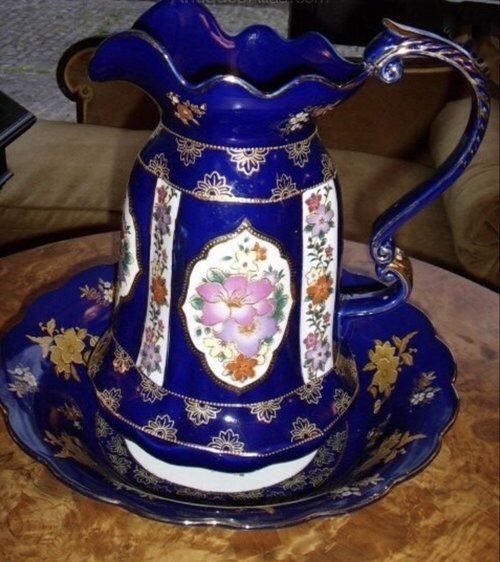
A cobalt blue floral jug is a ceramic vessel designed for pouring, typically decorated with floral motifs painted or printed in deep blue cobalt. The pieces on this page span several periods, from the eighteenth century through the Victorian era and into nineteen thirty.
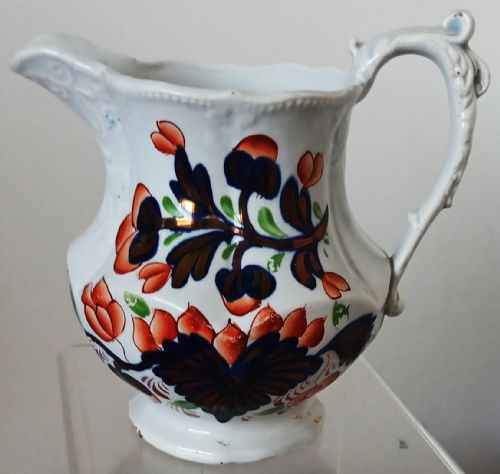
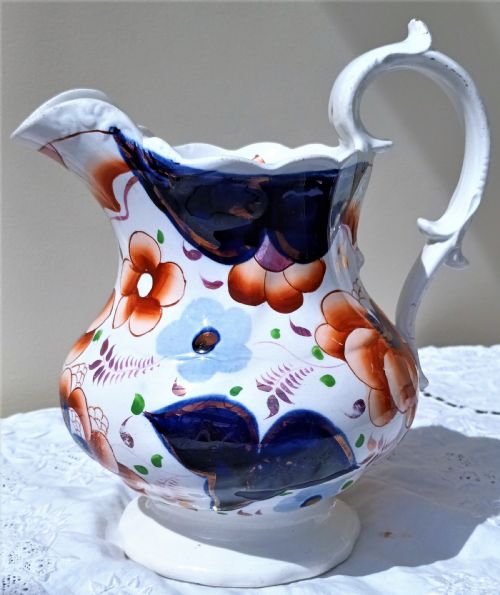
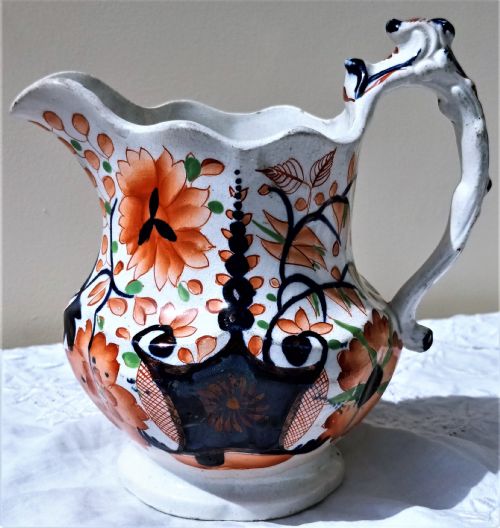
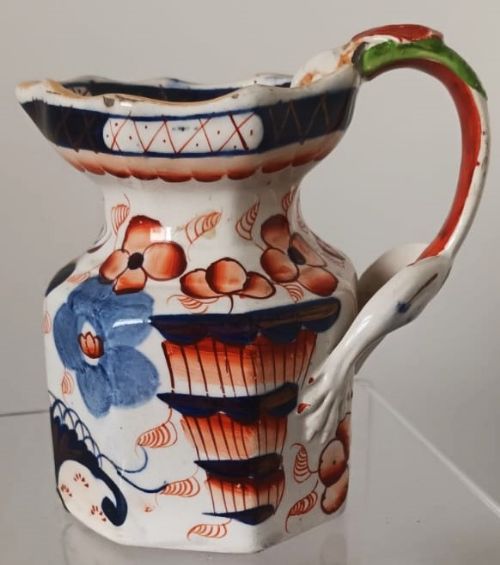
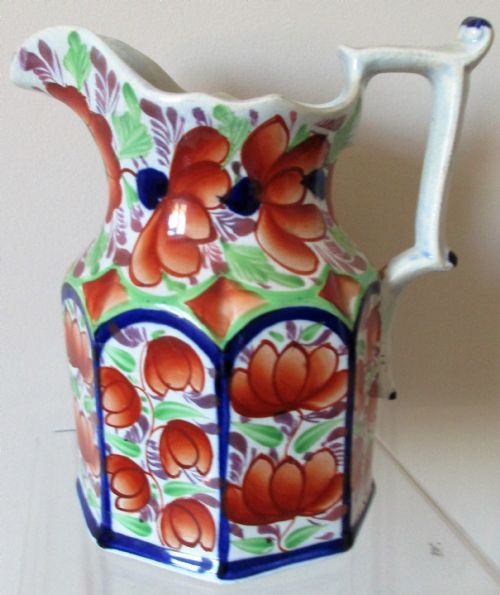
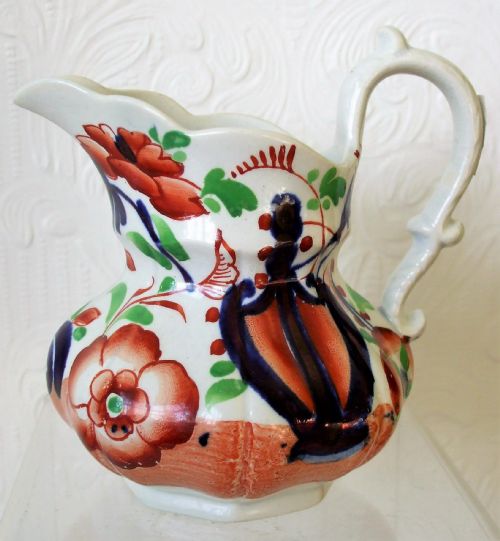
Most examples you encounter will be nineteenth century earthenware or ironstone pieces, particularly Gaudy Welsh patterns like Grape, Drape, Pagoda, and Harlech. You will also find porcelain hydra jugs, washstand sets, and mask head vessels from earlier periods.
Forms range from small cabinet pieces and miniature hydra jugs up to larger pitchers and full jug and basin sets. These items served functional roles in homes before being kept primarily for display.
Materials and methods
Potters shaped these vessels from earthenware, ironstone, porcelain, and English delftware, applying rich glazes to seal the ceramic body. Many pieces incorporate enamel colours, copper lustre, and gold leaf highlights over the cobalt blue decoration.
Moulding and throwing formed the distinct bodies, such as the octagonal shapes of Mason's ironstone or the serpentine handles of hydra jugs. Firing in kilns set the cobalt pigment beneath or within the glaze, producing deep and permanent blue tones.
Listings feature ceramics spanning the eighteenth century, the Victorian period, and nineteen thirty, using earthenware, porcelain, and ironstone.
Judging quality in cobalt blue floral jugs
Quality rests in the crispness of the transfer printing or hand painting and the depth of the cobalt blue glaze. Superior vessels display cleanly registered floral patterns and well-defined moulded details on handles and rims.
The sophistication of the ceramic body also dictates the tier of the piece, distinguishing robust ironstone and refined porcelain from simpler earthenware. Potteries known for high skill, such as Mason's or Caughley Coalport, achieve superior definition in their forms.
Masons Ironstone·Keeling And Co·Caughley Coalport·Doulton Burslem
The Cobalt Blue Floral Jug Glossary
- Ironstone
- A dense, durable type of earthenware patented in the nineteenth century to imitate porcelain. It provides a sturdy body for large jugs and basins.
- Hydra jug
- A ceramic pitcher featuring a serpentine handle and a flared rim reminiscent of classical forms. These vessels often display vibrant enamel and cobalt decoration.
- Gaudy Welsh
- A style of colourful pottery made in the nineteenth century featuring cobalt blue, copper lustre, and bright enamel flowers. Collectors prize these named patterns for their vibrant palette.
- Mask head jug
- A vessel moulded with a human or grotesque face beneath the spout. Eighteenth-century examples often combine this form with blue and white decoration.
- Delftware
- Tin-glazed earthenware produced in England during the eighteenth century. It typically carries hand-painted blue designs on a white opaque background.
Cobalt Blue Floral Jug: Frequently Asked Questions
How are cobalt blue floral jugs cleaned?
Wash these fragile ceramics gently by hand in warm water using mild soap. Avoid soaking older earthenware or pieces with delicate enamel and gold leaf.
Dry them thoroughly with a soft cloth to protect the glaze and prevent moisture damage to vulnerable ceramic bodies.
What periods do these jugs date from?
The pieces span from the eighteenth century up through the Victorian era and into the early twentieth century. Nineteenth-century examples form the majority of the selection.
Earlier items include eighteenth-century delftware and transitional porcelain pieces, while later examples reach into nineteen thirty.
Were these jugs used for water?
Many larger pitchers and jug and basin sets served functional washing roles in Victorian bedrooms. Smaller hydra jugs and decorative pieces were often made purely for display or table service.
Examining the scale and interior wear helps indicate whether a specific vessel saw daily service or remained a decorative cabinet item.
How do I identify Gaudy Welsh patterns?
Gaudy Welsh pieces feature distinctive cobalt blue alongside bright enamel colours and copper lustre highlights. Look for named patterns such as Pagoda, Grape, and Harlech stamped or painted on the base.
These nineteenth-century earthenware vessels are known for their striking contrast between deep blue and metallic copper sheens.