
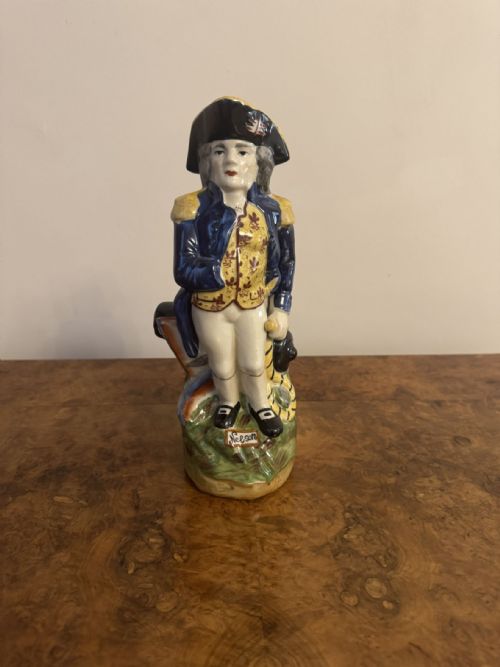
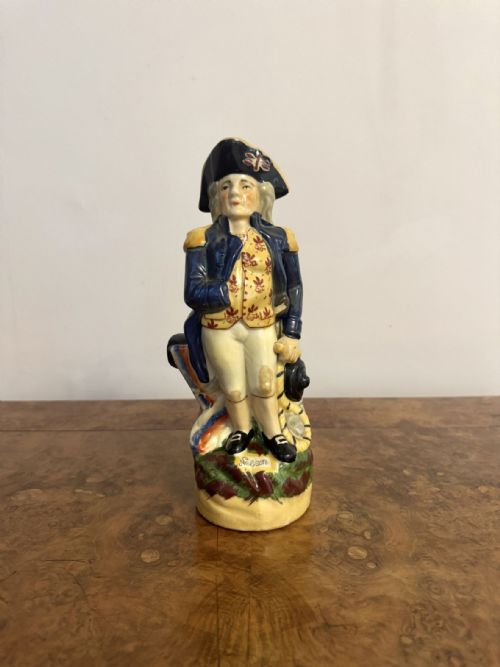
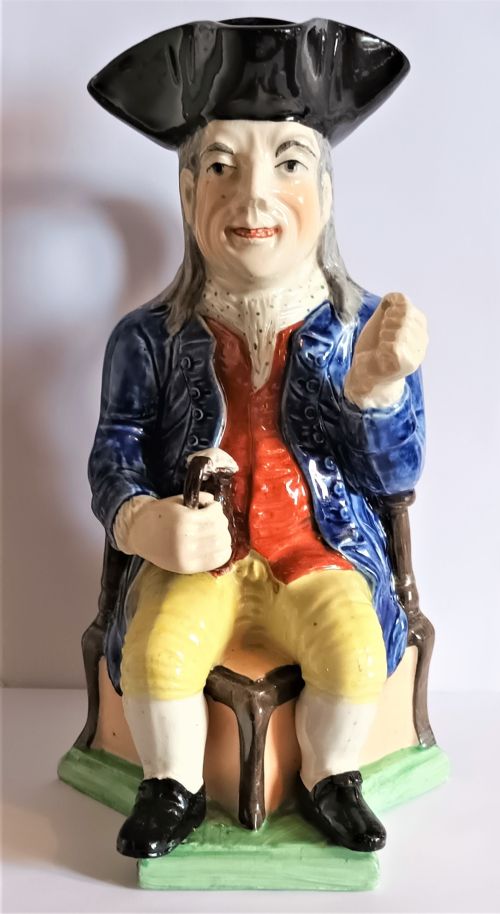


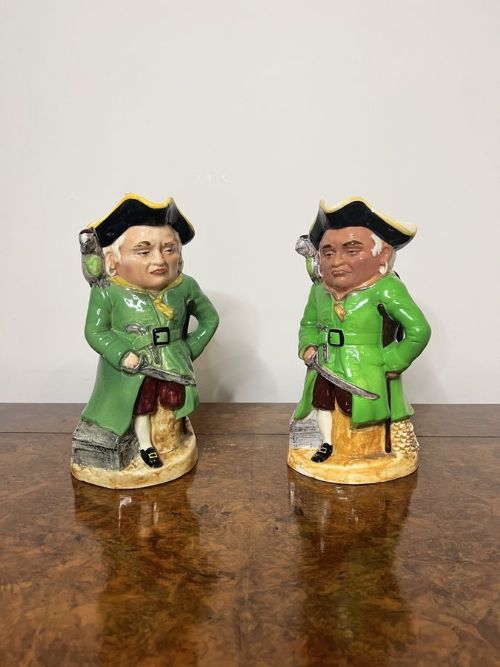
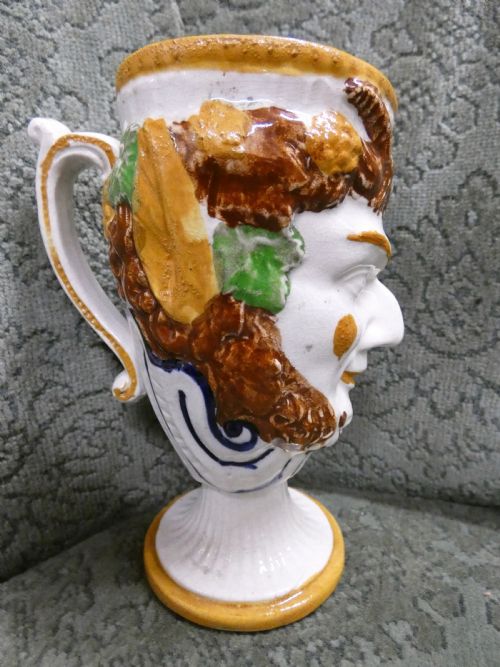


Staffordshire Character Jug
These Staffordshire character jug examples bring character and pottery history into a room, offering the appeal of traditional figures shaped into drinkware.

Staffordshire Character Jug
A staffordshire character jug takes the form of a modelled human or animal figure, functioning as a drinking vessel, water pitcher, pepperpot, or mug. The pieces span periods from the Georgian era through the nineteenth century, including specific Victorian examples.
Most items on this page present traditional figures such as Lord Nelson, Bacchus, Mr Snuff, squires, spaniels, or generic character subjects. Forms range from large water jugs to smaller pepperpot figures and mugs.
Makers in Staffordshire produced these earthenware vessels to serve functional roles while displaying distinct personalities. Buyers encounter varied depictions, from historical commanders to mythical figures and domestic animals.
Materials and methods of production
Potters shaped these vessels using earthenware and ceramic bodies, building up the forms through moulding and hand-finishing. The resulting pieces provide a sturdy base for the decorative layers applied afterwards.
Listings feature earthenware bodies decorated with lead glaze, enamel, and paint across the nineteenth century.
Distinguishing quality across the range
The sophistication of the character depiction separates standard production pieces from finer sculptural representations. The depth of the glaze and the preservation of the painted surface contribute to the overall visual strength of a vessel.
The Staffordshire Character Jug Glossary
- Earthenware
- A porous pottery body fired at lower temperatures, requiring a glaze to hold liquids. It serves as the primary material for nineteenth-century Staffordshire figures.
- Lead glaze
- A glossy coating containing lead oxide applied to pottery to create a smooth, shiny finish. This treatment protects the underlying earthenware from moisture.
- Enamel
- Opaque glass-like paint fused to the surface of glazed pottery during a low-temperature firing. It provides bright colour details on figures and jugs.
- Toby jug
- A pottery jug shaped as a full-bodied person, typically a stout man holding a mug and a jug of beer. These vessels form a major part of the Staffordshire tradition.
- Frog mug
- A drinking mug featuring a small ceramic frog modelled inside the base to surprise the drinker. These novelty items date back to the Georgian period and earlier.
Staffordshire Character Jug: Frequently Asked Questions
How were staffordshire character jugs used?
These vessels served primarily for serving ale, beer, or water at the table. Smaller items like pepperpots and mugs fulfilled specific dining table roles.
Beyond utility, they functioned as decorative mantelpiece items and display pieces in homes and inns.
How do I date a staffordshire character jug?
Dating relies on examining the glaze type, the style of the ceramic body, and the specific clothing or subject matter depicted. Victorian examples often show distinct moulding styles compared to earlier Georgian pieces.
Reference points include the transition from lead glazes to later ceramic finishes and the evolution of subject choices like Lord Nelson or Bacchus.
Are these jugs safe for drinking?
While originally designed for functional dining use, antique earthenware and lead glazes require careful consideration. Most collectors treat them as display objects rather than everyday kitchenware.
The age of the ceramic body and the composition of the early glazes make modern culinary use uncommon.
What subjects appear on these jugs?
Subjects range from historical military figures like Lord Nelson to mythological characters such as Bacchus. Local archetypes like squires and Mr Snuff also appear frequently.
Animal forms, including spaniels, and festive character figures complete the selection found across the nineteenth-century pieces.