





Collectable Staffordshire Pottery
Collectable staffordshire pottery brings character into a room through earthenware figures and jugs shaped by makers across the nineteenth century and beyond.

Collectable Staffordshire Pottery
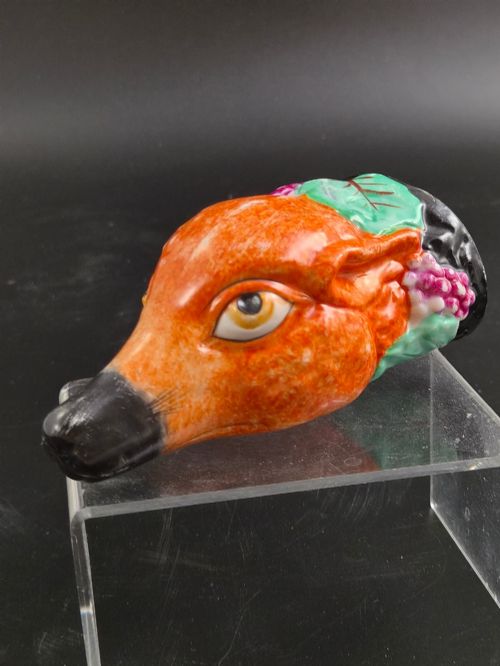
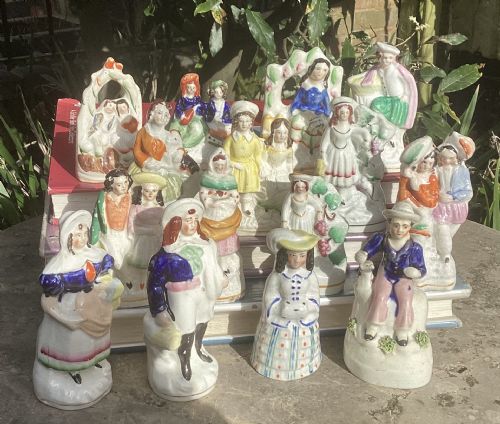
Collectable staffordshire pottery spans decorative figures, portrait subjects, and animal groups modelled in earthenware and pearlware. When exploring these listings, buyers encounter pieces ranging from early figures to Victorian portrait subjects and toby jugs.
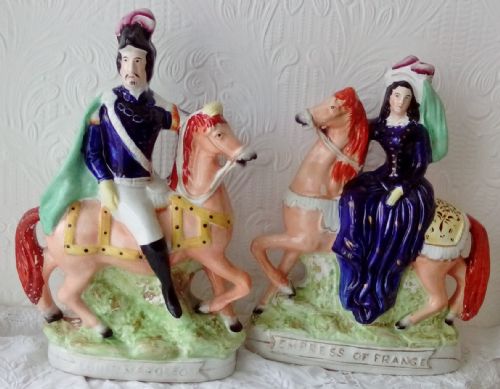
The selections include pairs of leopards, royal portrait figures such as Queen Victoria, and literary or historical character jugs. Animal forms and miniature figures represent common domestic table and mantel ceramics from the period.
Production extends across the nineteenth century into the Edwardian era, capturing changing domestic tastes in Staffordshire. Collectors find both utilitarian milk jugs and purely decorative shelf pieces.
Materials and manufacture
Potters shaped these figures primarily using earthenware, pearlware, and porcelain bodies, finished with coloured glazes and enamel details. Many Victorian pieces incorporate applied hand-painting over a white or tinted glaze ground.
Specialised finishes include the distinctive black glaze of Jackfield wares and touches of gilt highlights on portrait figures. Figures were slip-cast or pressed in moulds before firing and painting.
Listings feature earthenware, pearlware, and porcelain, spanning the Georgian, Victorian, and Edwardian periods.
Judging quality and modelling
Quality rests upon the crispness of the moulding and the delicacy of the hand-painted enamel decoration. Superior figures display distinct facial expressions and careful polychrome detailing rather than rushed mass-production brushwork.
The depth of the glaze and the preservation of original gilt highlights differentiate finer cabinet examples from standard utilitarian vessels. Consistency in the ceramic body and accurate historical portrait likeness elevate certain figures.
Wedgwood and Co Ltd
The Collectable Staffordshire Pottery Glossary
- Pearlware
- A refined earthenware developed in the eighteenth century with a bluish glaze that pooled in recesses to create a whiter appearance. It forms the base for many early nineteenth-century animal figures.
- Toby jug
- A pottery jug modelled as a robust drinking figure, usually seated and holding a mug or glass. These humorous forms date back to the Georgian era and continued through the Victorian period.
- Cow creamer
- A utilitarian ceramic vessel shaped as a cow, filled from a hole on the back and poured through the mouth. The Jackfield version uses a lustrous black glaze.
- Earthenware
- Porous pottery fired at lower temperatures, requiring a glaze to hold liquids. It serves as the primary body for the majority of Staffordshire figures.
- Staffordshire figure
- A decorative ceramic sculpture produced in the Potteries region of England. These figures depict animals, royals, and literary characters for domestic display.
Collectable Staffordshire Pottery: Frequently Asked Questions
What periods do these pieces cover?
The listings span from the Georgian era through the Victorian period into the Edwardian years.
Most items originate in the nineteenth century, capturing distinct aesthetic shifts over several decades.
How were staffordshire figures displayed?
These ceramic figures and animals were typically placed on mantelpieces, sideboards, and parlour shelves as domestic ornaments.
Pairs of animals and royal portrait figures formed standard decorative arrangements in Victorian homes.
What is a toby jug?
A toby jug depicts a jolly seated character holding a mug of beer and a pipe. They functioned as both functional table vessels and whimsical ornaments.
Mr Snuff is one such example recorded in the nineteenth-century listings.
What is pearlware?
Pearlware is a fine earthenware featuring a glaze containing a small amount of cobalt oxide. This gives the surface a subtle blueish tint.
Potters used it extensively for early figures like snow leopards before standard white glazes predominated.