


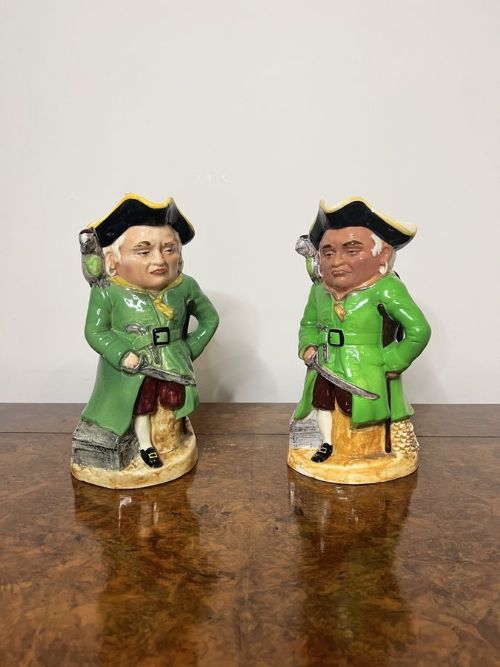


Earthenware Character Pitcher
These earthenware character pitchers are robust ceramic jugs modelled as seated figures, offering both domestic utility and spirited historical portraiture.

Earthenware Character Pitcher
An earthenware character pitcher takes the form of a seated human or animal figure, functioning simultaneously as a functional vessel and a decorative object. Buyers searching for an earthenware character pitcher encounter depictions ranging from historical commanders and literary squires to spaniels and festive characters.
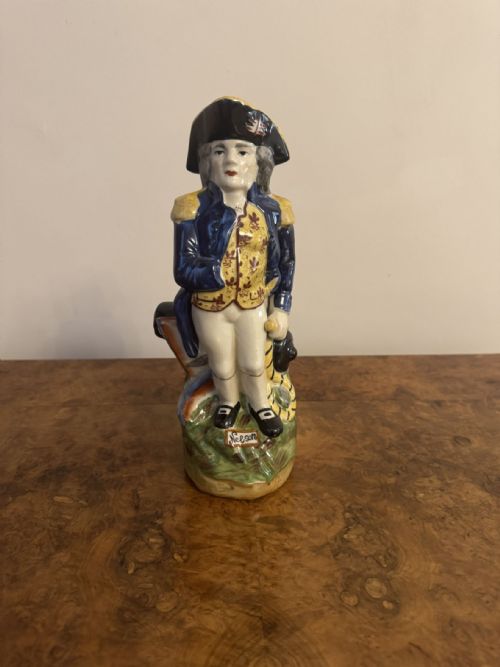
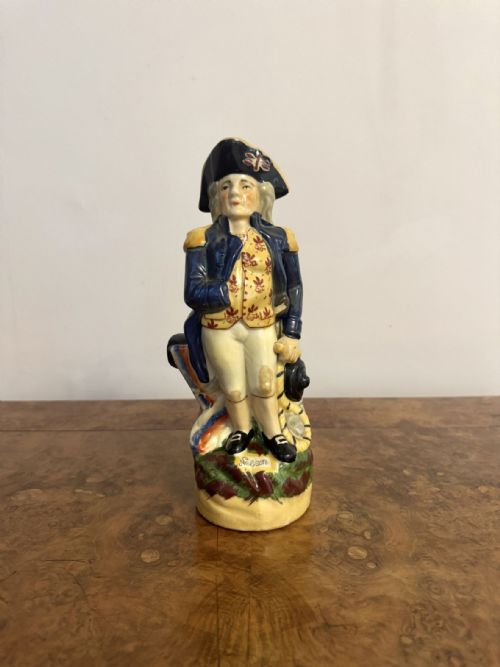
The pieces on this page span the Georgian, Victorian, and Edwardian eras, predominantly produced within English potteries and Dutch workshops. The forms include traditional Toby jugs, character jugs, and specific portrait pieces depicting figures such as Lord Nelson and Lord Kitchener.
Materials and manufacture
Makers utilised earthenware and ceramic bodies, shaping them through moulding before applying surface decoration. Lead glaze, ceramic glaze, and enamel provide the glossy protective coatings and colourful finishes seen across these vessels.
Earthenware Character Pitcher Retail Price Guide 2026
Typical asking prices for earthenware character pitcher among the pieces listed under this phrase on Sellingantiques today, from the lower quarter to the upper quarter. They describe what is for sale here now, not the wider market.
Listings include earthenware and ceramic materials finished with lead glaze, enamel, and paint across Victorian, Edwardian, and Georgian periods.
Assessing quality and character
Quality rests in the crispness of the moulded details and the precision of the hand-painted enamel decoration upon the earthenware body. Stronger examples display lively facial expressions and clear delineation of the figure's clothing.
The depth and consistency of the glaze contribute to the visual weight of the pitcher. Early pieces from the Georgian and Victorian periods often show greater individuality in the modelling compared to later mass-produced variations.
Holdcroft
The Earthenware Character Pitcher Glossary
- Earthenware
- Porous pottery fired at lower temperatures, requiring a glaze to achieve impermeability. It forms the structural body for nearly all the jugs on this page.
- Lead glaze
- A traditional shiny coating containing lead compounds, utilised to waterproof the porous earthenware beneath. It gives older pottery its characteristic reflective surface.
- Majolica
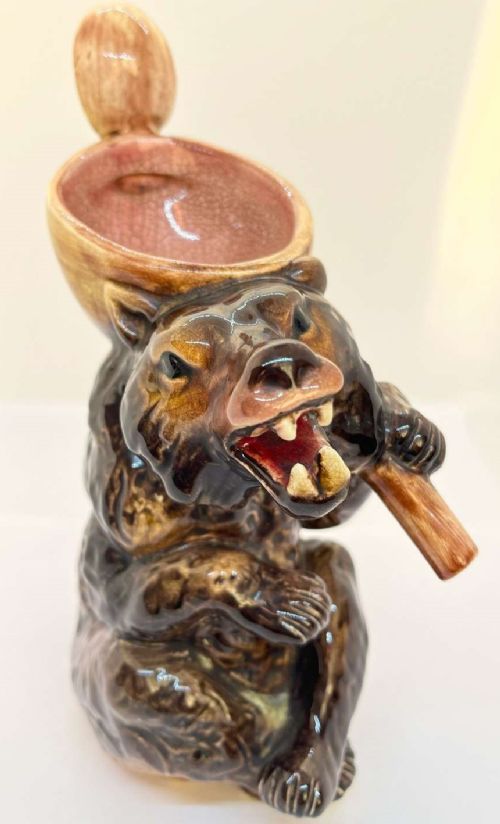
- A colourful, heavy earthenware pottery coated with an opaque tin glaze and painted with metallic oxide colours. The Holdcroft bear jug exemplifies this vibrant Victorian style.
- Staffordshire pottery
- Earthenware produced in the industrial area of Staffordshire, known for prolific figure jugs and Toby jugs. These pieces dominate the Victorian offerings here.
Earthenware Character Pitcher: Frequently Asked Questions
What is a Toby jug?
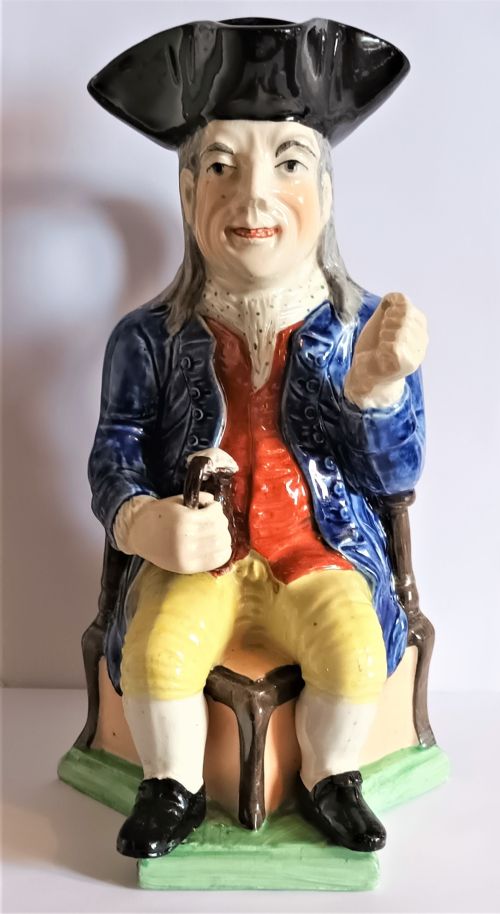
A Toby jug is a pottery pitcher modelled in the shape of a seated person, typically a stout, jovial figure wearing eighteenth-century attire and holding a mug or pipe. These vessels combine functional pouring with humorous character representation.
Originating in the eighteenth century, they became a staple of English earthenware production throughout the Victorian era.
How do I date a character pitcher?
Dating relies on stylistic clues, the type of earthenware body, and the specific glaze or enamel colours used. Figures depicting historical individuals like Lord Nelson or Lord Kitchener provide a secure chronological earliest starting point.
Earlier Georgian pieces often feature simpler hand-painted details, while Victorian and Edwardian examples utilise more complex moulded textures and brighter polychrome glazes.
Were these jugs used for drinking?
Many of these ceramic pitchers served practical functions on dining tables and in taverns for pouring ale or water. The hollow body holds liquid while the handle and hat or head rim form the spout.
Over time, many transitioned into purely decorative cabinet pieces due to their collectible nature and fragility.
What distinguishes delftware from Staffordshire pottery?
Dutch delftware typically employs tin glazes with blue or polychrome painting, occasionally referencing earlier faience traditions. Staffordshire pottery relies on earthenware bodies with lead or coloured majolica glazes shaped into robust figures.
Each regional tradition brings distinct modelling styles and glazing techniques to the character pitcher form.