




Staffordshire Toby Jug
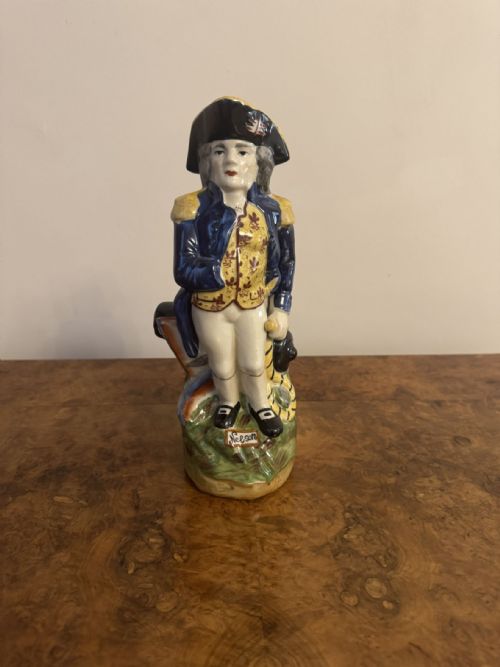
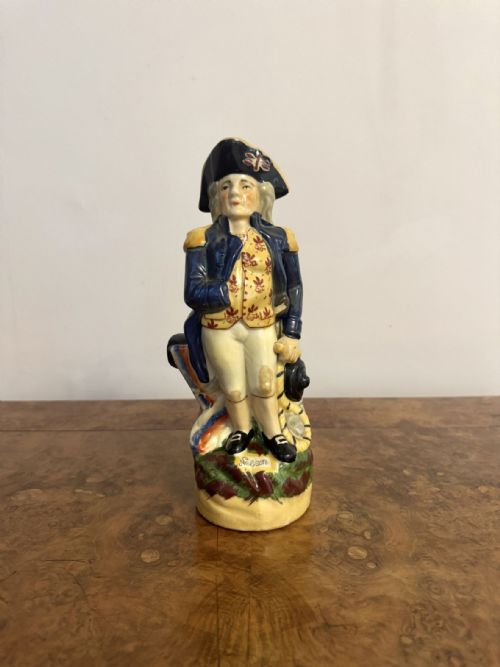
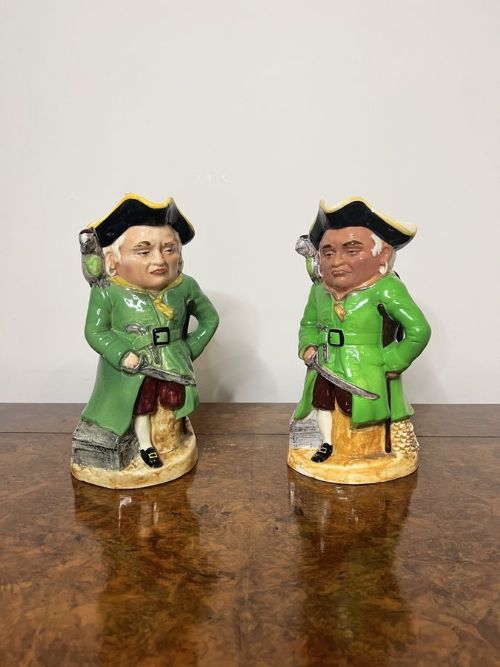
A Staffordshire toby jug brings personality and colour to a room, depicting seated figures from historical heroes to local characters.
Staffordshire Toby Jug
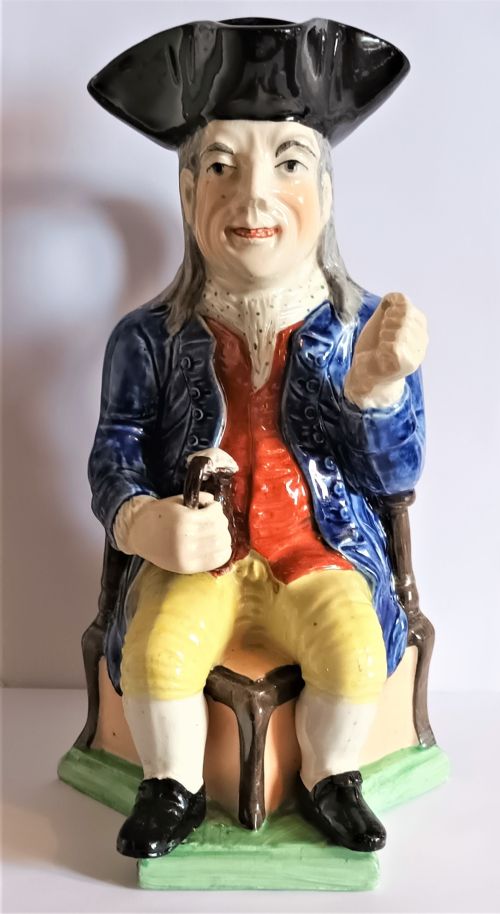
A Staffordshire toby jug takes the form of a seated, stout individual holding a jug of ale and a pipe, often wearing a tricorn hat. When you search for a staffordshire toby jug, you encounter figures ranging from Lord Nelson and Mr Snuff to the Squire and Merry Christmas characters.
The pieces on this page span the Georgian period, the nineteenth century, and into nineteen hundred. Victorian Staffordshire pottery dominates the selection, reflecting the high output of domestic vessels during that era.
Moulded forms extend beyond standard jugs to include pepperpots, humidors, tobacco jars, and character jugs of spaniels and Mr Punch. These variations show the breadth of earthenware production in the potteries.
How they were made
Firing in kilns set the earthenware and the glaze, creating the glossy finish seen on nineteenth-century examples. The combination of slip casting or pressing with hand-painted enamel details defined the Staffordshire output.
Object types associated with the staffordshire toby jug search phrase cover character jugs, pepperpots, humidors, and water jugs.
What varies in quality
The application of the enamel paint and glaze controls the visual depth of the piece. Controlled brushwork and rich colour placement separate standard production jugs from finer examples.
William Kent
The Staffordshire Toby Jug Glossary
- Toby Jug
- A pottery jug shaped as a full-length seated figure, typically holding a mug and a jug. The form became popular in the eighteenth century and continued through the Victorian era.
- Earthenware
- A porous pottery body fired at lower temperatures, requiring a glaze to hold liquids. It forms the base material for Staffordshire figures and jugs.
- Lead Glaze
- A glossy coating containing lead oxide applied to pottery before firing. It provides a smooth, shiny surface characteristic of older ceramics.
- Staffordshire Pottery
- Ceramics produced in the pottery towns of Staffordshire, England. The region outputted massive quantities of figures, animals, and utility wares during the nineteenth century.
- Enamel
- Opaque glass-coloured paints fused to the surface of fired pottery during a low-temperature second firing. It provides the bright reds, blues, and yellows on nineteenth-century jugs.
Staffordshire Toby Jug: Frequently Asked Questions
What is a staffordshire toby jug?
A staffordshire toby jug is a ceramic vessel modelled as a seated, jovial figure holding a drink. These figures represent historical commanders, fictional characters, or traditional archetypes like the snuff taker.
Potters in the Staffordshire region produced them in large numbers across the nineteenth century for display and domestic use.
How do I date a staffordshire toby jug?
Dating relies on the style of clothing, the application of the glaze, and the sharpness of the moulding. Georgian examples display different modelling characteristics compared to later Victorian pieces.
Makers occasionally included factory marks or specific names on the base or within the title, helping to narrow the decade of production.
Were these jugs used for serving drinks?
Many of these vessels functioned as serving jugs or water jugs on dining tables. Larger examples held ale or punch during social gatherings.
Some variations served specific roles as tobacco jars, humidors, or pepperpots rather than liquid containers.
How should I display my toby jug?
Placing the jug on a sturdy shelf or mantelpiece allows the painted details and glaze to catch the light. Grouping pieces together, such as pairs of dogs or graduated sets, creates a traditional display.
Keep pottery away from direct sources of heat and damp environments to protect the earthenware body and enamel paint.