



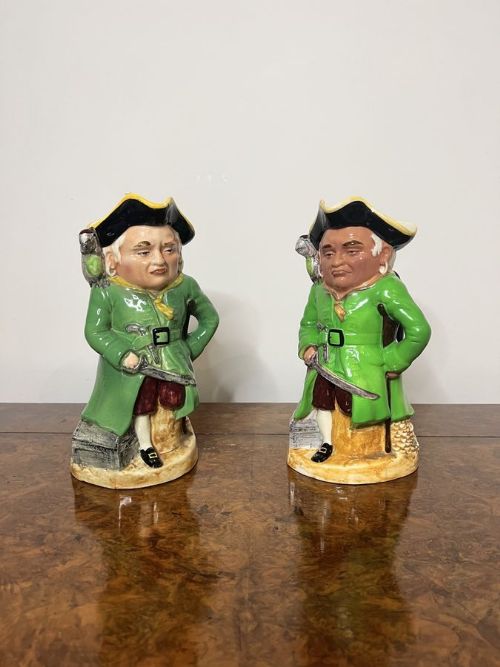


Antique Earthenware Toby Jug
An antique earthenware toby jug brings personality to a room, depicting a stout eighteenth or nineteenth-century figure holding a jug and a pipe.
Antique Earthenware Toby Jug
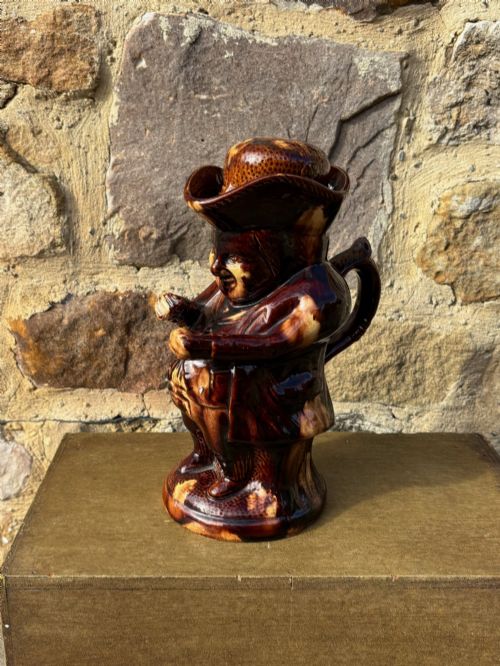
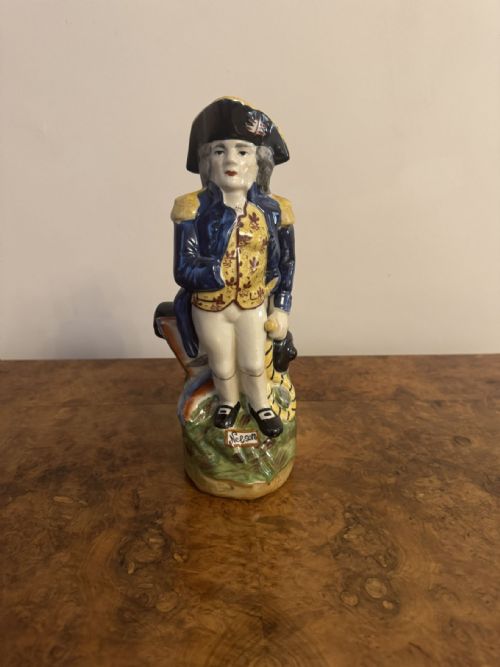
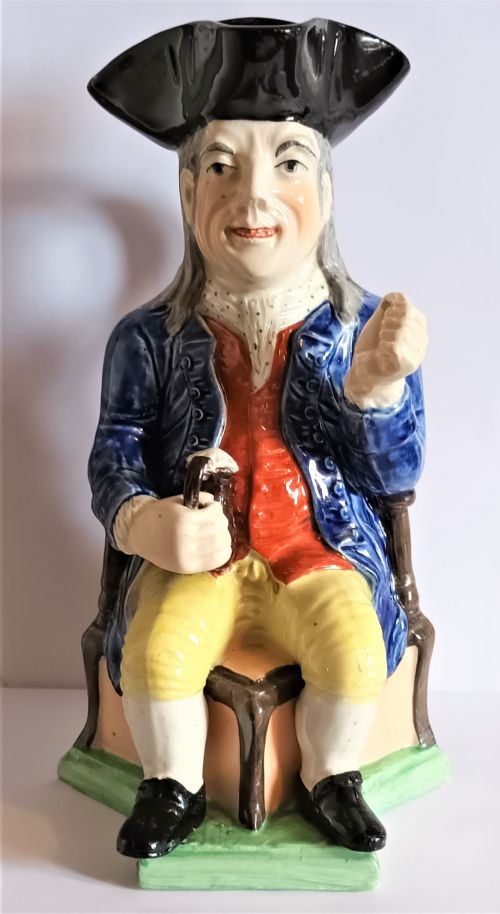
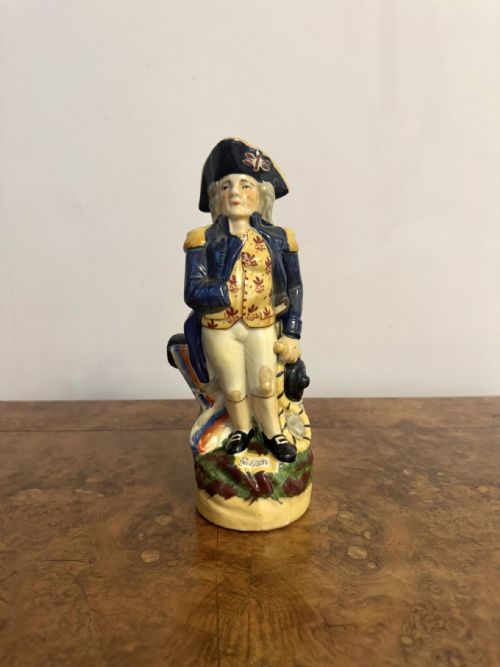
An antique earthenware toby jug depicts a seated, jovial drinker, often wearing a tricorn hat that doubles as a pouring spout. The form originates in the eighteenth century and continues through the Victorian era into the twentieth century with figures such as Lord Nelson and Lord Kitchener.
The versions most commonly met on this page span the nineteenth century, including Staffordshire pottery figures and Dutch Delftware examples. Collectors encounter various iterations, from standard drinking vessels to smaller pepperpot figures and character jugs.
Makers fashioned these vessels as both functional jugs and decorative mantelpiece ornaments. The subjects range from generic squires and merry topers to specific historical commanders and literary characters.
How they were made
Potters shaped these vessels using earthenware clay, forming the robust bodies either by hand or in press moulds. The porous ceramic body provided a stable base for the subsequent application of liquid coatings.
Workers decorated the pieces using tin-glaze, treacle glaze, or polychrome enamel over a ceramic glaze. Firing in kilns set the colours and sealed the earthenware, resulting in the characteristic glossy surfaces seen on Dutch Delftware and Staffordshire pottery.
Antique Earthenware Toby Jug Retail Price Guide 2026
Typical asking prices for earthenware toby jug among the pieces listed under this phrase on Sellingantiques today, from the lower quarter to the upper quarter. They describe what is for sale here now, not the wider market.
Listings span the eighteenth, nineteenth, and early twentieth centuries, featuring Georgian, Victorian, and Edwardian periods alongside Dutch Delftware and English folk pottery.
What varies in quality
The richness and preservation of the glaze or enamel colours influence the visual impact of the piece. Deep treacle glazes or vibrant polychrome palettes distinguish finer examples from standard production wares.
Pieter Verburg
The Antique Earthenware Toby Jug Glossary
- Earthenware
- A porous type of pottery fired at lower temperatures, requiring a glaze to hold liquids. It serves as the primary material for traditional toby jugs.
- Tin-Glazed Earthenware
- Pottery coated with a white, opaque glaze containing tin oxide, providing a smooth background for painted decoration. It is characteristic of Delftware production.
- Treacle Glaze
- A dark, translucent brown glaze applied over earthenware, producing a rich and shiny surface. Pieces utilising this finish date predominantly to the nineteenth century.
- Staffordshire Pottery
- Wares produced in the numerous potteries of Staffordshire, England, known for utilitarian and decorative figures. This region output the majority of Victorian examples listed here.
Antique Earthenware Toby Jug: Frequently Asked Questions
What is a toby jug?
A toby jug is a pottery vessel shaped like a seated person, typically a robust man holding a mug of ale and a pipe. The removable hat often functions as the lid or pouring lip.
These pieces combined utility with domestic satire, serving as both serving vessels and decorative mantel ornaments in British and Dutch households.
How do I date a toby jug?
Dating relies on examining the ceramic body, glaze type, and stylistic clues of the clothing and subject matter. Georgian pieces differ significantly from later Victorian or Edwardian depictions.
Markings, where present, can also indicate origin, though many traditional figures remain unmarked.
Were these jugs used for drinking?
Many early earthenware jugs were functional vessels intended for pouring ale or beer at the table or tavern. Over time, production shifted towards decorative mantel display.
Wear patterns on the rim and interior sometimes reveal regular domestic use, while pristine enamel suggests display purposes.
Who do these jugs depict?
Common subjects include the generic English squire, topers, and historical figures. Naval commanders like Lord Nelson and military leaders such as Lord Kitchener appear in later iterations.
Character representations also extend to literary or satirical personae, including figures named Mr Snuff.