



Victorian Rockingham Glaze Pottery
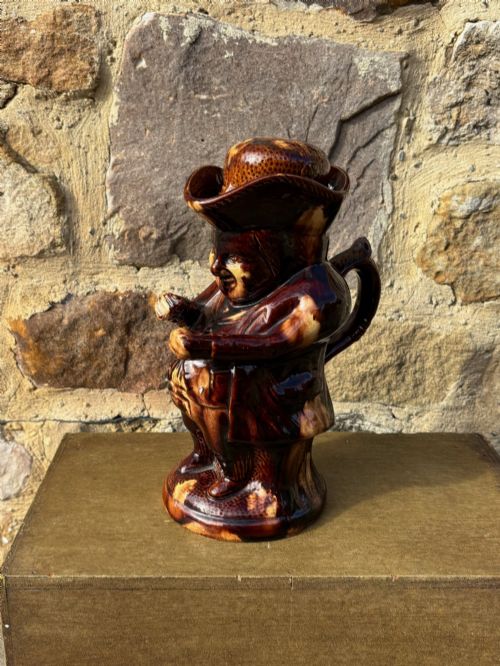
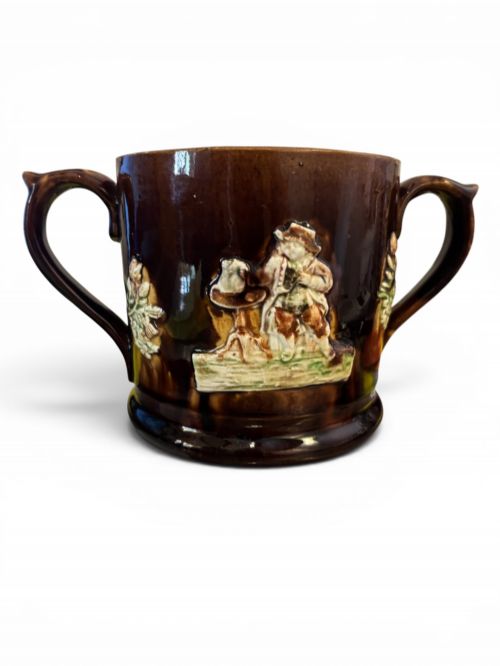
These Victorian rockingham glaze pottery pieces bring rich dark earthenware and stoneware into a room, offering tactile presence through deep rich glazes.
Victorian Rockingham Glaze Pottery
Victorian rockingham glaze pottery spans utilitarian vessels and decorative figures made from earthenware and stoneware during the nineteenth century. Buyers searching for victorian rockingham glaze pottery encounter Toby jugs, ale tankards, ceramic figurines, and large teapots.
The objects frequently take the form of Staffordshire lions, King Charles spaniels, and bargeware teapots decorated with dark treacle and lead glazes. English country pottery traditions strongly influence these pieces, linking functional kitchenware with folk art character.
Most items on this page date to the nineteenth century, with specific examples appearing from eighteen fifty and eighteen eighty alongside wider periods. The selection covers Staffordshire pottery alongside regional English folk pieces.
How they were made
Potters shaped earthenware and stoneware bodies on the wheel or pressed them into moulds to create figures, teapots, and mugs. These ceramic pieces received thick lead glazes and treacle glazes to achieve their characteristic dark, glossy surface finish.
Makers in Staffordshire and other English potteries fired these glazed ceramic vessels in kilns, where the heavy brown glazes pooled naturally in crevices and details. This technique produced deep tonal variations across lions, spaniels, and tankards.
Victorian Rockingham Glaze Pottery Retail Price Guide 2026
Typical asking prices for victorian rockingham glaze pottery among the pieces listed under this phrase on Sellingantiques today, from the lower quarter to the upper quarter. They describe what is for sale here now, not the wider market.
Listings feature items from the eighteenth, nineteenth, and early twentieth centuries, spanning earthenware, stoneware, and glass materials.
What varies in quality
The application and run of the glaze create distinct visual textures, where an even coat contrasts with rich pooling in deep folds and incisions. Superior examples display a brilliant, high-gloss shine across the earthenware or stoneware body.
Rockingham Pottery·Lancaster and Sons of Hanley
The Victorian Rockingham Glaze Pottery Glossary
- Rockingham glaze
- A glossy, dark brown lead glaze named after the Yorkshire pottery, widely used on nineteenth century English ceramics. It creates a rich treacle-like appearance on earthenware and stoneware bodies.
- Treacle glaze
- A dark, translucent brown glaze applied to pottery to give a glossy finish resembling molasses or treacle. It pools thickly in the recesses of figures and vessels.
- Earthenware
- A porous pottery body fired at lower temperatures, commonly used for nineteenth century figures, teapots, and jugs. It requires a glaze to become impermeable to liquids.
- Stoneware
- A dense, hard ceramic material fired at higher temperatures until vitrified, making it durable and waterproof. It forms sturdy bodies for mugs, tankards, and animal figures.
- Staffordshire pottery
- Ceramics produced in the Staffordshire Potteries region of England, encompassing numerous works making figures, animals, and tableware. This group includes notable lion and spaniel figures.
Victorian Rockingham Glaze Pottery: Frequently Asked Questions
How do you date these pieces?
Dating relies on stylistic evidence, manufacturing methods, and ceramic body types associated with nineteenth century production. Pieces from this era often show specific moulding techniques and regional English pottery characteristics.
Comparative study of known Staffordshire figures and bargeware forms helps narrow down the period of manufacture.
What were bargeware teapots used for?
Bargeware teapots served as decorative and practical items on canal narrowboats during the nineteenth century. Their large scale and distinctive ornamentation reflected the pride of boat families.
These heavy ceramic vessels were built to withstand daily use while providing a striking visual centrepiece in the cabin.
How should I display them?
Display these glazed earthenware and stoneware pieces in stable environments away from direct sunlight and sudden temperature shifts. Their dark surfaces stand out well against neutral backdrops where light can catch the glossy glaze.
Grouping figures like lions or spaniels alongside teapots highlights the variety of nineteenth century forms.