



Victorian Toby Jug
These Victorian toby jug pieces bring character and colour to a room, capturing traditional figures in ceramic form.

Victorian Toby Jug
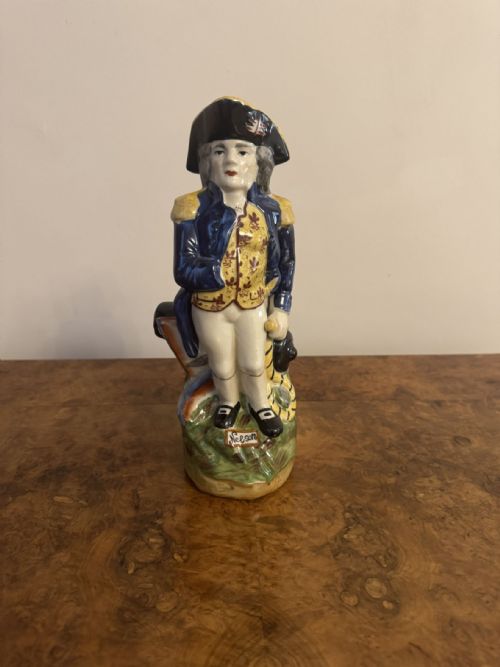
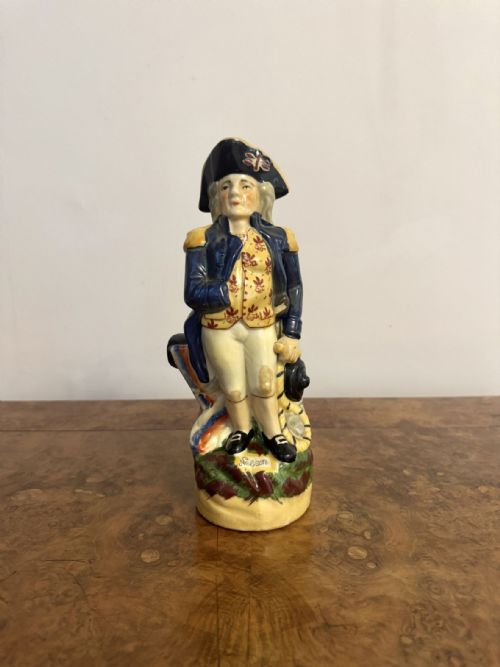
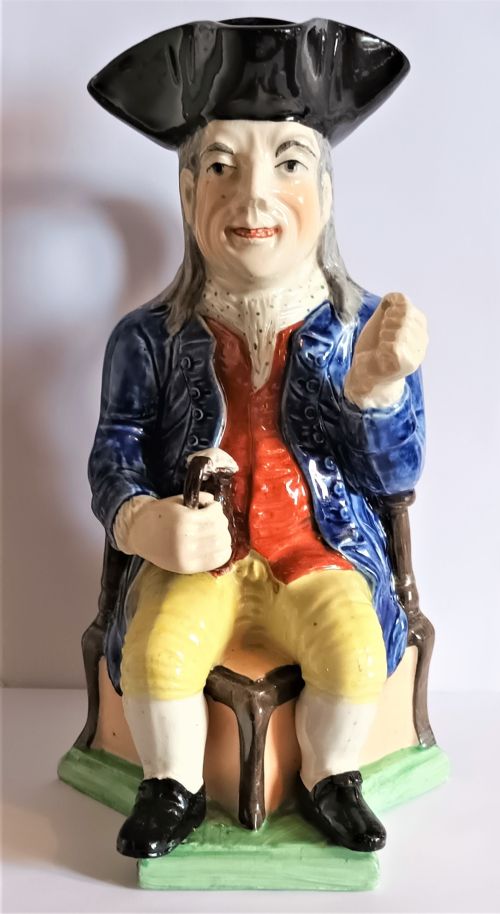
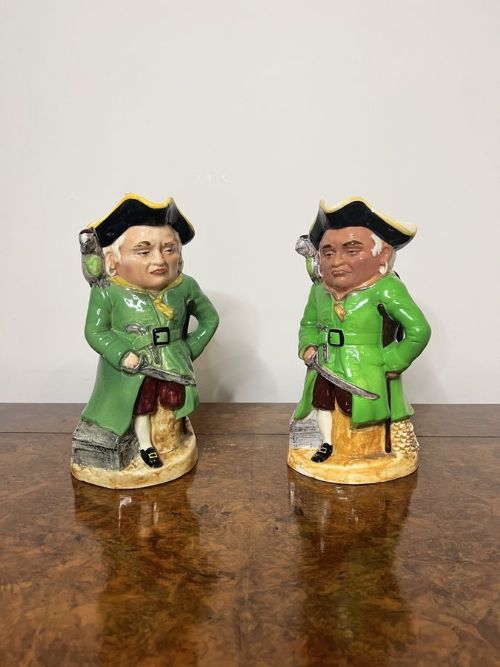
A victorian toby jug is a seated drinking figure, typically depicting a stout, jovial personage in 18th-century attire holding a jug or mug. The pieces available range from character depictions like Lord Nelson and Mr Snuff to animal forms such as spaniels.
Most examples hail from the 19th century, with Staffordshire pottery being particularly prominent alongside Dutch Delftware and tin-glazed earthenware. Makers varied from cottage potteries to established works like Stevenson & Hancock.
Forms extend beyond standard drinking vessels to include pepperpots, vases, and water jugs. These ceramics serve as both decorative items and functional historical pieces.
How They Were Made
Makers utilised earthenware and ceramic bodies, shaping the figures through moulding before applying glaze and paint. Tin-glazed earthenware and polychrome decoration appear frequently across the period.
Surface finishes rely on ceramic glaze and enamel paint to bring out the details of the clothing and facial expressions. Some pieces feature pseudo marks or specific workshop attributions from the era.
Listings feature earthenware, tin-glazed earthenware, and ceramic glaze across 19th-century periods.
What Varies in Quality
The crispness of the moulding and the delicacy of the hand-painting set the better examples apart from standard factory output. Finer pieces display careful brushwork on the faces and clothing.
Stevenson & Hancock, Derby
The Victorian Toby Jug Glossary
- Toby Jug
- A pottery jug shaped as a full-bodied seated figure, usually a man wearing a tricorn hat. These vessels often double as drinking mugs.
- Staffordshire Pottery
- Ceramics produced in the Staffordshire Potteries district of England. This region dominated the manufacture of figuratives and jugs during the period.
- Tin-glazed Earthenware
- Pottery covered with a glaze containing tin oxide, which dries white and opaque. It provides a smooth surface for painting.
- Polychrome
- Decoration employing several colours. Painters applied these pigments over or under the glaze.
- Pepperpot
- A small tabletop shaker for ground pepper. Ceramic versions often replicate the seated Toby figure in miniature.
Victorian Toby Jug: Frequently Asked Questions
What is a victorian toby jug?
A victorian toby jug is a ceramic vessel modelled as a stout seated figure holding a mug or jug. They depict historical figures, fictional characters, or animals.
Potters produced them primarily in earthenware with hand-painted enamel decoration during the 19th century.
How were these jugs used?
Despite their decorative appearance, many were functional drinking vessels or pitchers used at the table. Some smaller examples functioned as pepperpots or vases.
Over time, collectors shifted them from utilitarian use to display pieces on mantelpieces and in cabinets.
How do I date a victorian toby jug?
Dating relies on stylistic clues, materials such as earthenware and tin glaze, and any associated factory marks. The clothing style of the figure also offers a guide to the period.
Most pieces date between the mid-19th century and the turn of the 20th century.
Where were they made?
The majority originate from Staffordshire potteries in England, which specialised in figural ceramics. Other examples come from Dutch Delftware traditions.
Regional potteries across Britain produced varied interpretations of the standard seated character.