




Antique Pottery Toby Pitcher
These antique pottery toby pitcher items are characterful drinking vessels shaped like seated figures, offering an authentic touch of traditional British humour for a collector.
Antique Pottery Toby Pitcher
When searching for antique pottery toby pitcher pieces, you encounter seated figural jugs that depict specific characters, historical figures, or traditional archetypes. These vessels combine practical pouring functions with humorous or satirical portraiture.
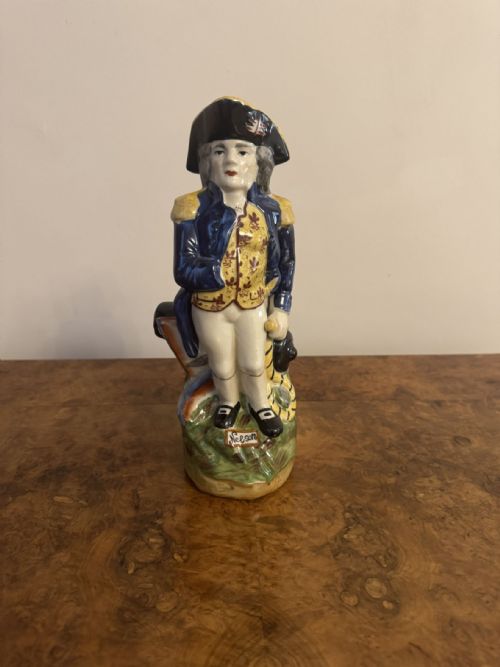
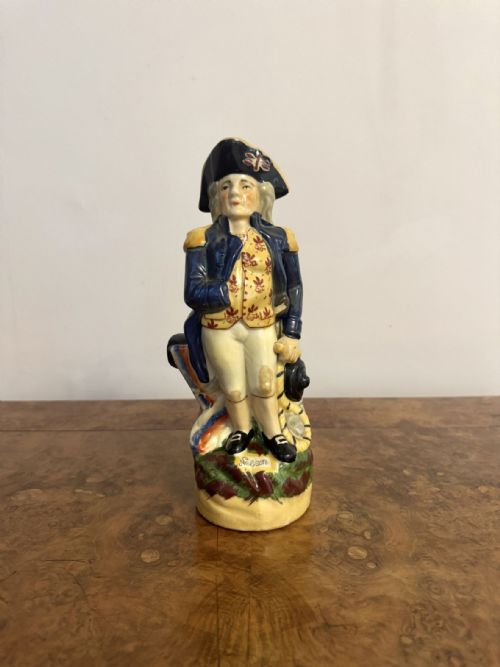
The selections span from the Georgian era through the Victorian period, featuring both English Staffordshire pottery and Dutch Delftware traditions. You find subjects ranging from Admiral Lord Nelson and Lord Kitchener to archetypal figures like the Squire, Mr Snuff, and even a spaniel or a monkey.
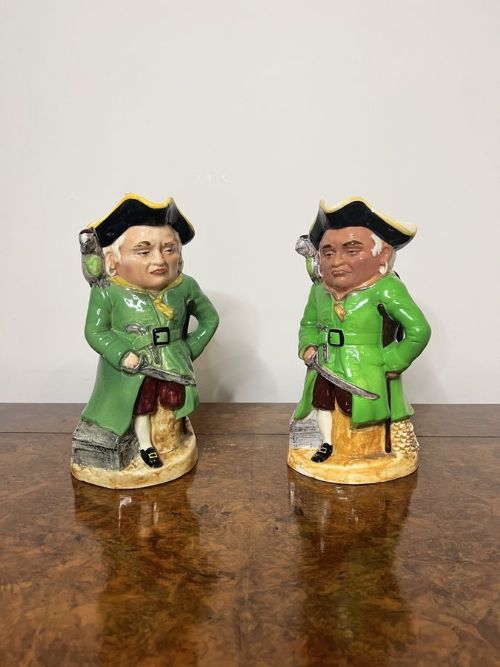
Common forms include standard toby jugs, character jugs, and decorative pitchers that serve as striking display items. The makers utilised earthenware and tin-glazed earthenware to shape these robust drinking vessels.
How they were made
Makers shaped these earthenware and tin-glazed earthenware bodies using traditional potting techniques suited for figural forms. The resulting ceramic vessels provide a solid base for subsequent surface decoration.
Artisans applied coloured glaze, enamel, and paint by hand to bring out the details of the character's clothing, facial expressions, and accessories. A clear ceramic glaze often seals the surface, giving the pitchers their characteristic sheen.
Among the historical admirals and politicians, a cheerful ceramic monkey and a faithful spaniel keep watch from the shelf.
What varies in quality
The preservation of the original paint and glaze surfaces over the centuries influences the desirability of each piece. Intact colour application without excessive wear maintains the visual impact of the figural design.
Pieter Verburg
The Antique Pottery Toby Pitcher Glossary
- Earthenware
- A porous type of pottery fired at a relatively low temperature. It requires a glaze to become impermeable to liquids.
- Tin-glazed earthenware
- Pottery covered with a glaze containing tin oxide, which fires to a white, opaque surface. This technique allows for painted decoration applied directly to the unfired glaze.
- Enamel
- A decorative glass-like substance fused to the ceramic surface during a secondary low-temperature firing. It provides bright, lasting colours on pottery.
- Staffordshire pottery
- Earthenware and stoneware produced in the pottery district of Staffordshire, England. This region became famous for its prolific output of figures and utilitarian wares.
- Delftware
- Tin-glazed earthenware made in the Netherlands and England, often inspired by imported Chinese porcelain or local folk styles.
Antique Pottery Toby Pitcher: Frequently Asked Questions
What is a toby pitcher?
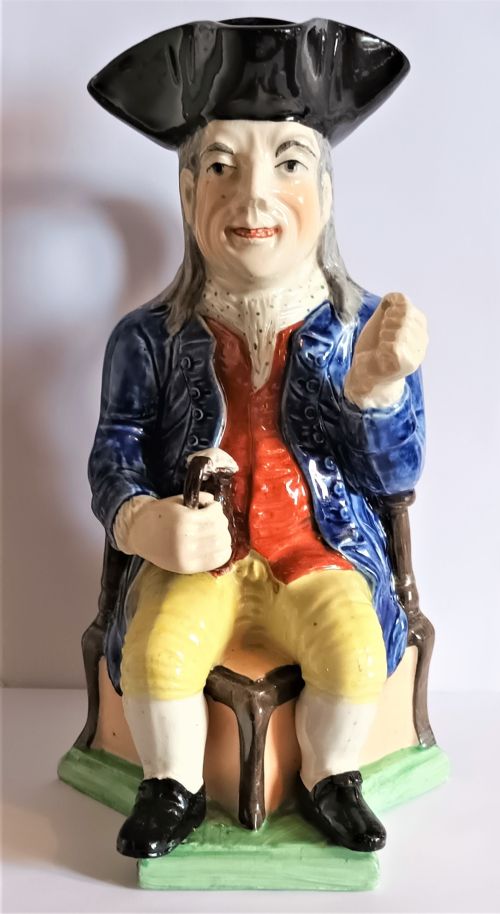
A toby pitcher is a ceramic jug modelled in the shape of a stout, cheerful person, usually wearing 18th-century attire and a tricorn hat. These vessels combine a functional pouring spout and handle with a humorous figural sculpture.
Potters designed them for serving beer or ale in homes and taverns, making them both practical tableware and entertaining conversation pieces.
How were these jugs used?
These pitchers served primarily as containers for pouring ale, beer, or other beverages at the table or in communal drinking houses. Their robust earthenware construction made them durable for daily use.
Over time, owners also displayed them on mantelpieces or shelves as decorative ornaments that showed off the buyer's taste or sense of humour.
How do I tell periods apart?
Differentiating periods relies on observing the potting style, the types of glazes applied, and the specific historical figures or characters depicted. Georgian and early 19th-century pieces often feature simpler earthen bodies and hand-painted enamel details.
Later Victorian and Edwardian examples shift in stylistic detailing, sometimes incorporating specific military figures like Lord Kitchener or Admiral Lord Nelson associated with distinct historical dates.
Where were they made?
Many of these pieces originated in the Staffordshire potteries of England, which produced vast quantities of figural earthenware for domestic and export markets. Other examples stem from Dutch traditions, such as Delftware workshops.
Regional variations in clay preparation, glaze formulas, and painting styles help attribute the pieces to specific geographic potting centres.