


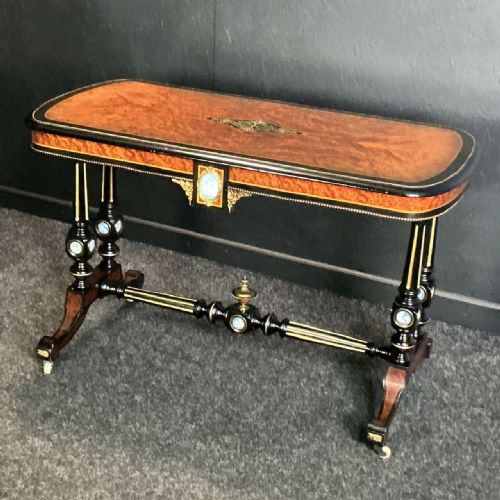
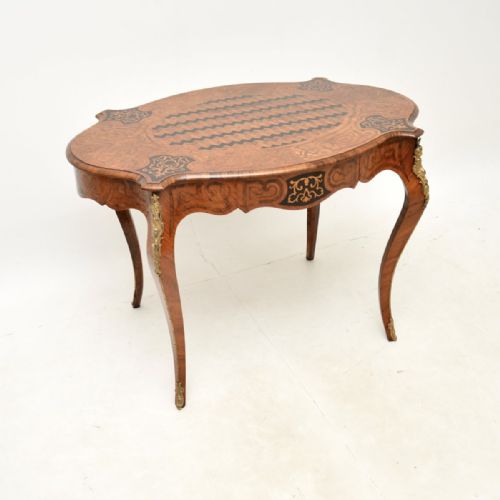
19th Century Marquetry Table
A 19th century marquetry table brings intricate floral and pictorial wood-inlay craftsmanship into a room, offering both decorative presence and practical utility.
19th Century Marquetry Table
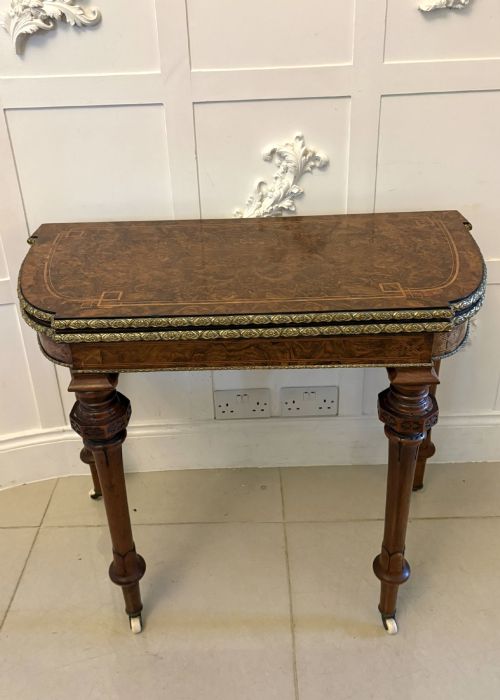
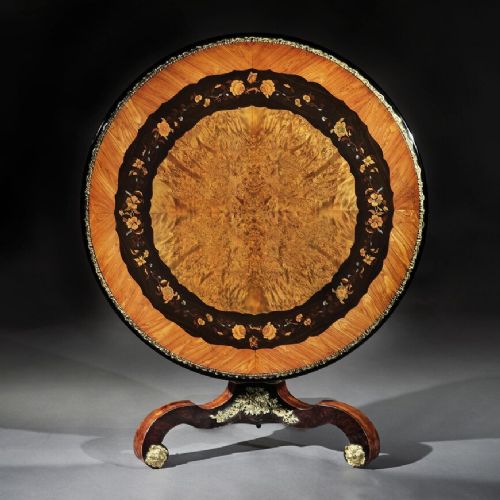
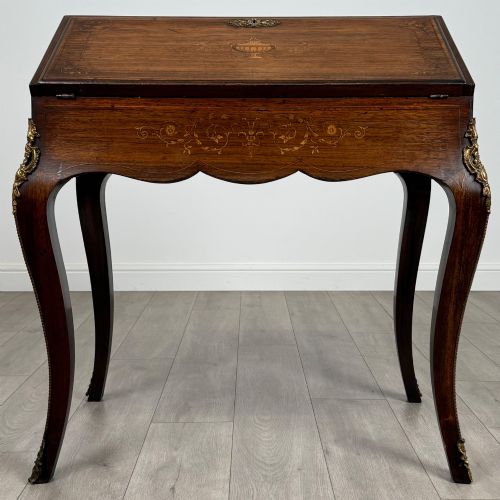
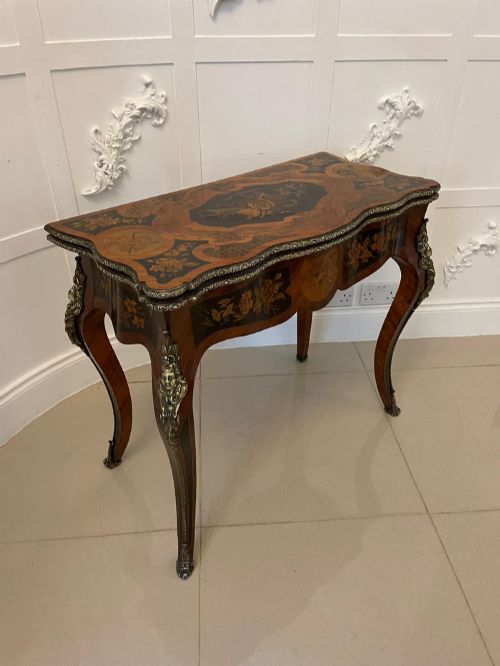
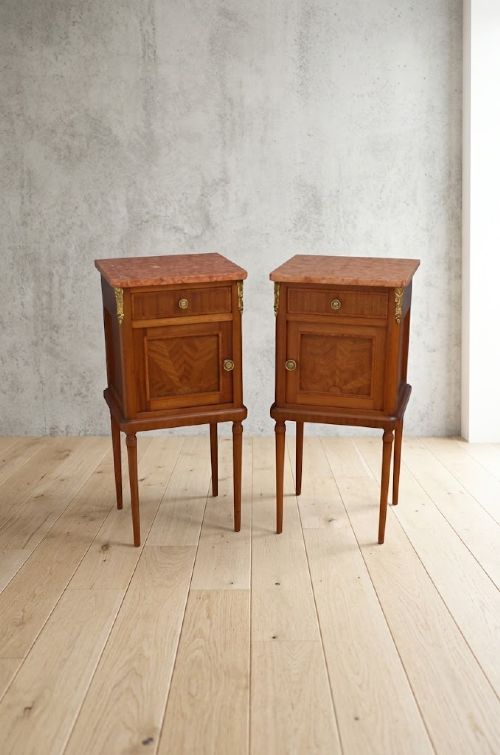
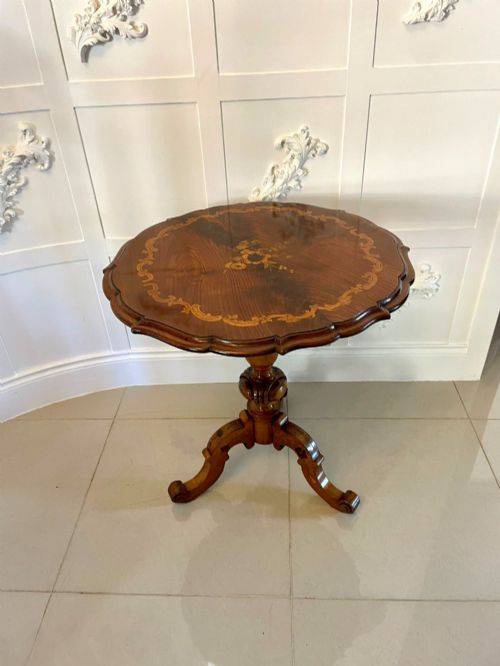
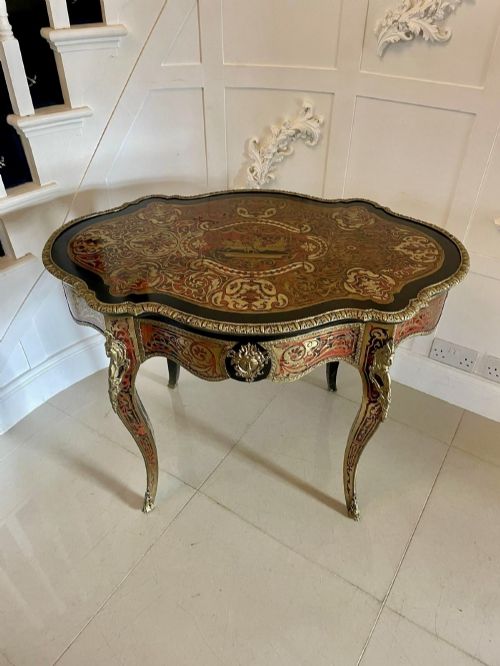
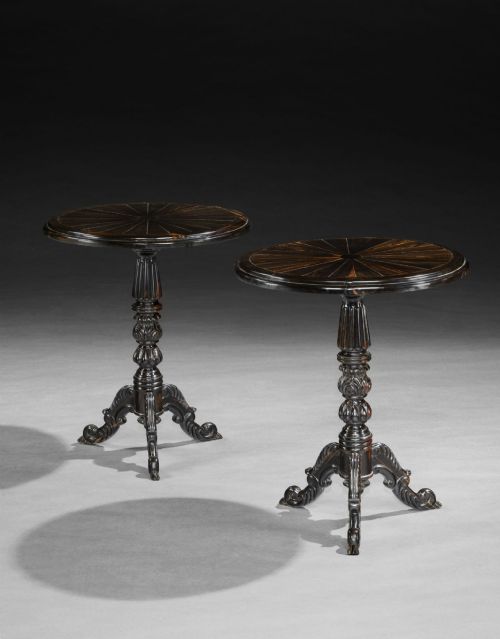
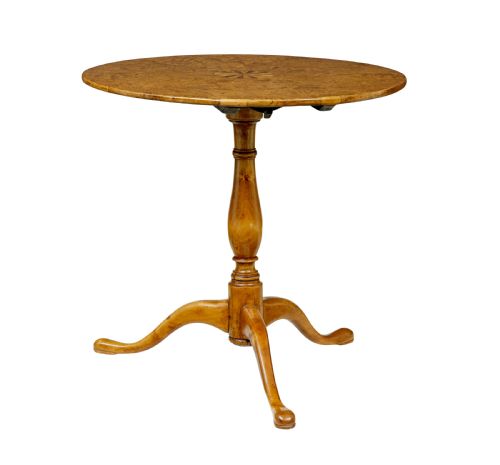
A 19th century marquetry table encompasses a diverse range of forms designed for domestic display and daily use, spanning centre tables, occasional tables, writing desks, and card tables. These pieces emerge predominantly from Victorian English workshops and continental European centres adopting Louis XV and revival styles.
The buyer meets various configurations on this page, from freestanding parlour centrepieces to intimate lamp tables, side tables, and specialised writing furniture. Woods such as walnut, kingwood, rosewood, and satinwood provide the ground for elaborate decorative veneers applied across the top and sides.
Origins stretch from English and French cabinet makers to Dutch floral specialists, Italian workshops, and Anglo-Indian creators utilising indigenous timbers. Each regional tradition imparts distinct characteristics to the structure, inlay motifs, and overall silhouette of the furniture.

How They Were Made
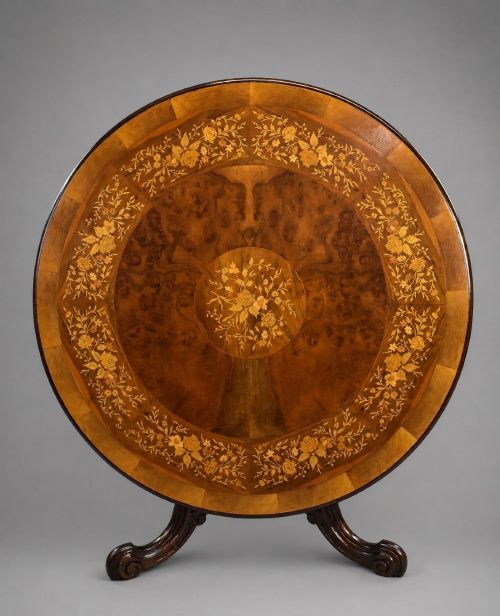
Cabinet makers constructed the foundational carcase using sturdy timbers like mahogany, oak, or walnut, upon which decorative veneers were carefully glued. Marquetry cutters then sliced paper-thin sections of contrasting woods, mother-of-pearl, or metal to assemble pictorial motifs like floral sprays or geometric patterns before pressing them into the surface.
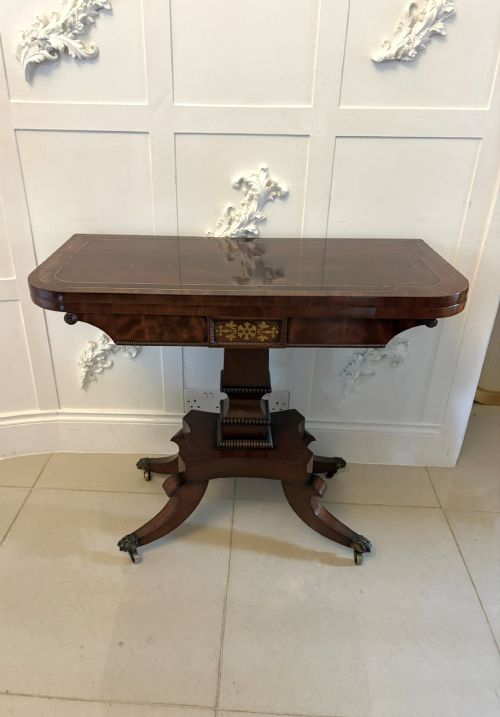
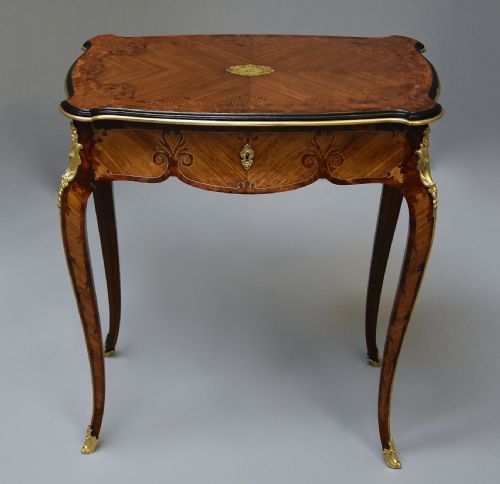
Ormolu mounts, cast in bronze and gilded, frequently edge tabletops, frame drawers, or accentuate cabriole legs on French revival pieces. Brass inlay and stringing often define the borders of English and Regency surfaces, adding crisp linear contrast to the figured background grain of walnut or rosewood.
19th Century Marquetry Table Retail Price Guide 2026
Typical asking prices for 19th century marquetry table among the pieces listed under this phrase on Sellingantiques today, from the lower quarter to the upper quarter. They describe what is for sale here now, not the wider market.
Some nineteenth-century tables hide clever internal mechanisms beneath their floral veneers, ready to transform a casual lamp stand into a fully equipped writing desk.
What Varies in Quality
The standard of execution in the pictorial inlay distinguishes ordinary production from masterwork pieces, visible in the tightness of the veneer joints and the shading achieved by scorching wood pieces in hot sand. Richly figured timbers like burr walnut, kingwood, and tulipwood indicate high-tier selection by the maker.
Structural refinement also separates the grades, apparent in the fluidity of serpentine curves, the integration of sophisticated internal mechanisms on desks and card tables, and the precision of cast ormolu mounts rather than rudimentary brass stamping.
Edward Holmes Baldock·Edwards And Roberts·Gillows·Durand·Escalier de Cristal
The 19th Century Marquetry Table Glossary
- Marquetry
- A decorative technique where small pieces of wood veneer, shell, or ivory are assembled to create pictorial designs on a wooden background. This differs from parquetry, which forms geometric or repeating tile-like patterns.
- Ormolu
- Gilded bronze mounts applied to furniture edges, feet, and corners for ornamental enrichment. The technique involves applying a mercury-gold amalgam to cast bronze and heating it.
- Kingwood
- A dense, richly figured timber featuring dark brown and violet stripes, frequently utilised in high-end French and English cabinet making during the period. It provides a striking contrast when paired with lighter marquetry woods.
- Boulle
- A style of marquetry using tortoiseshell and brass inlay, popularised in France and revived during the nineteenth century on cabinets, desks, and tables. The technique often reverses the ground and pattern materials to create matching counterpart panels.
- Bijouterie table
- A display table with a glass top and a shallow glazed compartment designed for showing small collectibles, jewellery, or curiosities. These often feature elaborate marquetry on the frieze and legs.
19th Century Marquetry Table: Frequently Asked Questions
How do I care for a marquetry table?
Keep wooden furniture away from direct sunlight and heat sources to prevent the delicate veneers from drying out, shrinking, or cracking over time.
Apply a microcrystalline wax periodically to nourish the timber and protect the surface from moisture without building up heavy residues.
Were these tables used for writing or display?
Many specific forms like bureau plats, writing desks, and card tables served functional daily roles for correspondence and indoor games in the parlour.
Other designs such as centre tables, lamp tables, and bijouterie stands functioned primarily to display decorative objects, lamps, or floral arrangements.
How can I tell English and French tables apart?
English examples from the period frequently utilise rich burr walnut, mahogany, or satinwood with restrained brass inlay and sturdy, balanced proportions.
French pieces lean towards kingwood or rosewood veneers paired with pronounced cabriole legs, serpentine outlines, and elaborate gilt bronze ormolu mounts.
What is the difference between marquetry and parquetry?
Marquetry involves cutting and assembling various coloured veneers into figurative pictorial scenes, scrolls, urns, or intricate floral bouquets.
Parquetry constructs repeating geometric patterns, cubes, chevrons, or brick designs using uniform blocks of contrasting wood.