
19th Century Gilt Urns
These 19th century gilt urns combine classical forms with rich metallic finishes, offering striking decorative presence for period interiors.
19th Century Gilt Urns
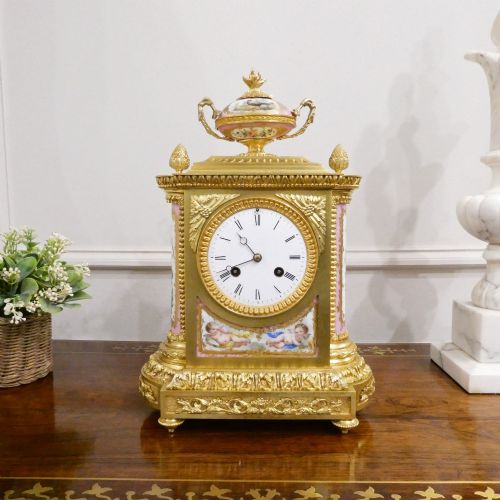
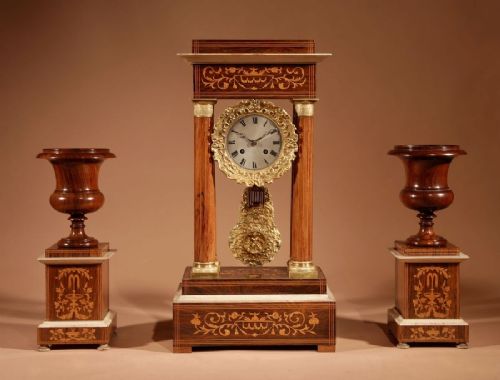
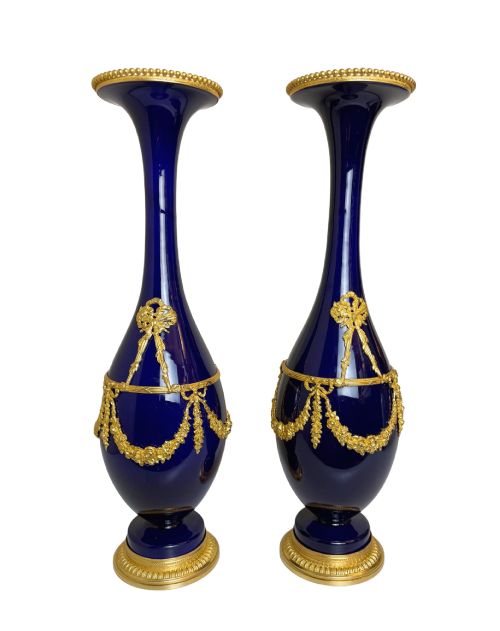
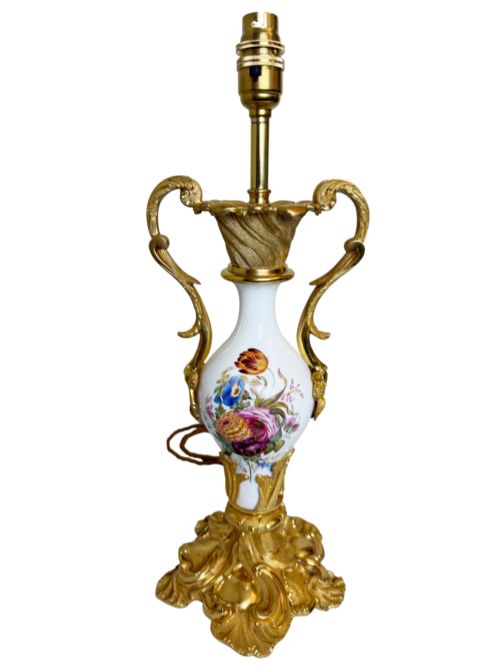
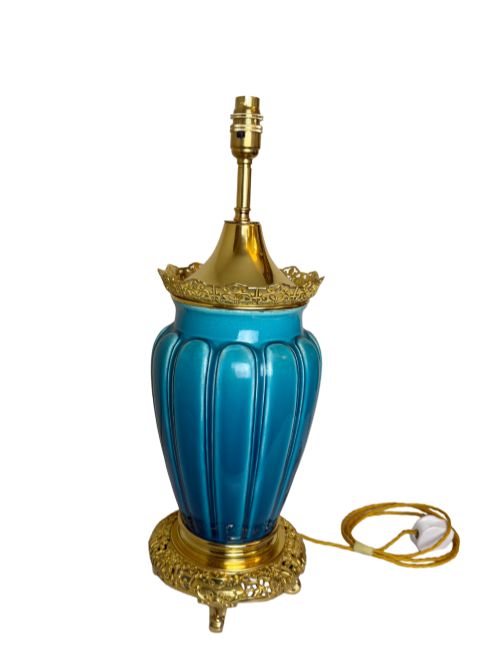
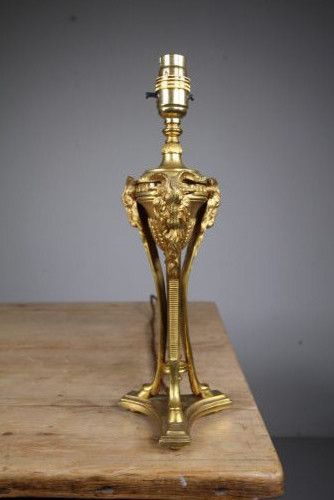
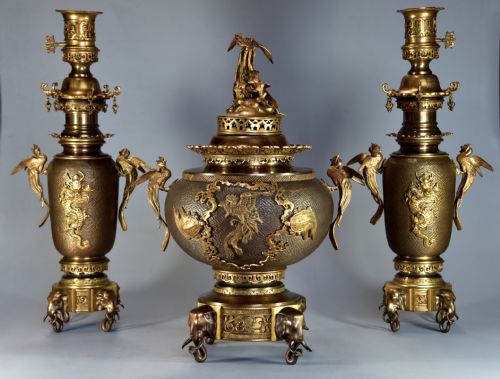
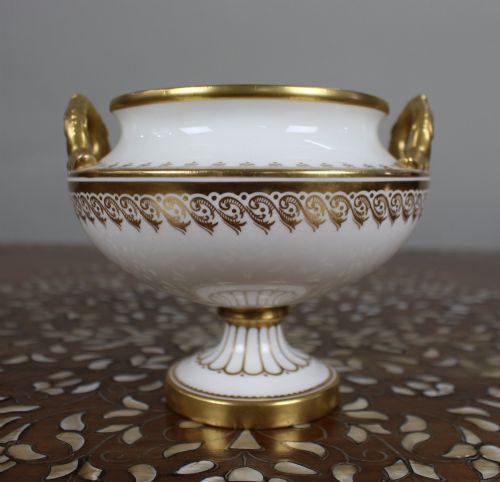
When searching for 19th century gilt urns, collectors encounter a diverse range of decorative vessels, table lamps, and clock garnitures originating from French, English, and Asian workshops. These pieces frequently combine glazed porcelain bodies with gilded bronze or ormolu mounts, reflecting a sustained fascination with classical antiquity during the Victorian and Edwardian eras.
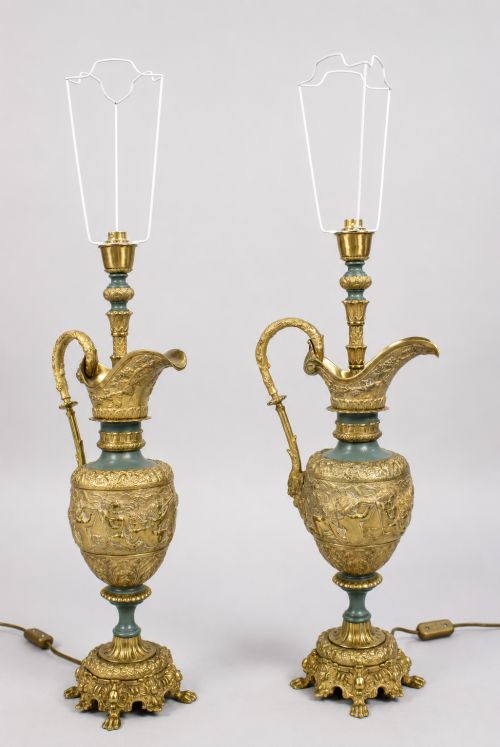
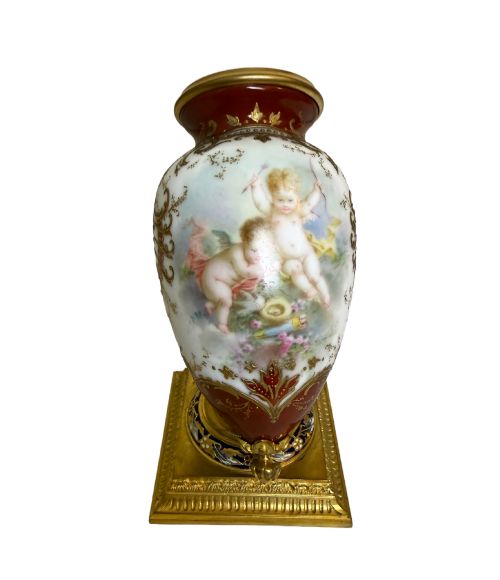
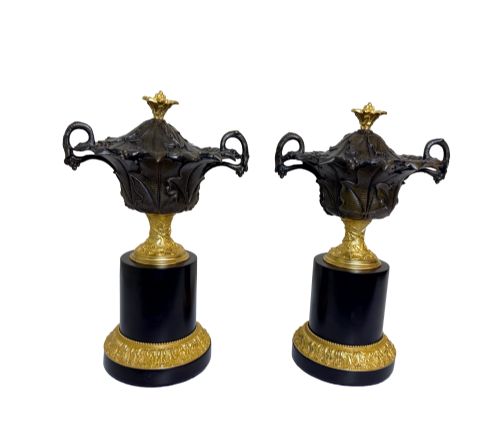
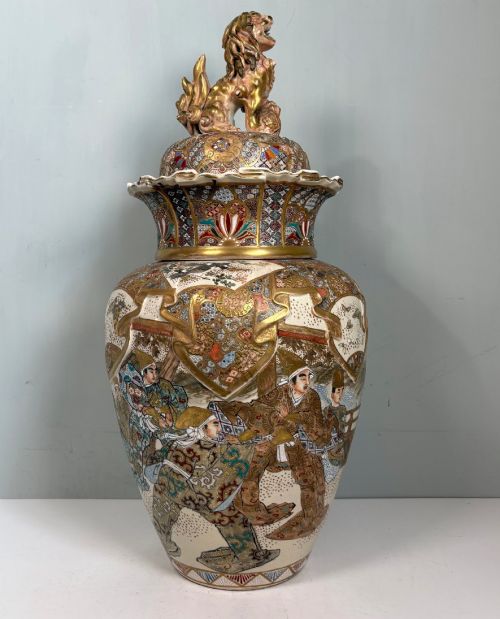
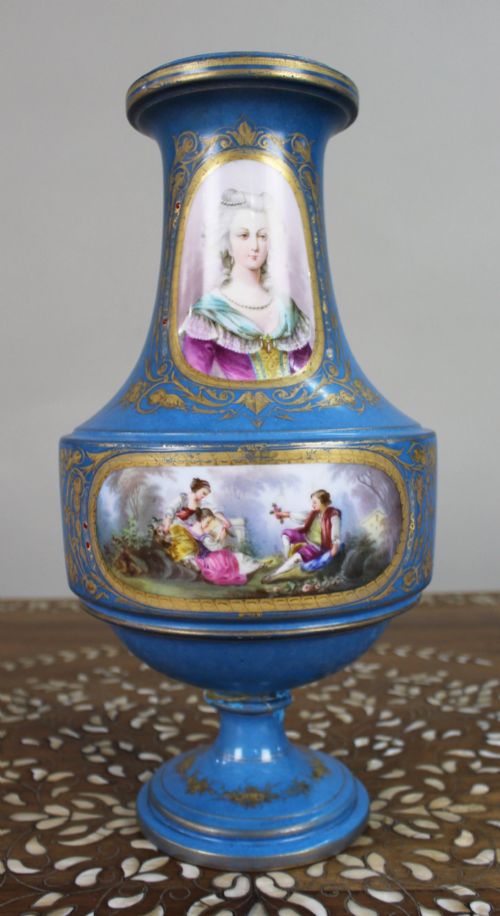
The version most commonly met on this page is the French or English porcelain vase mounted with gilt bronze, often styled after Sèvres or designed for the Grand Tour market. Alongside these, buyers find solid bronze and marble pieces shaped as classical campana urns or ewers, as well as occasional Japanese export ceramics fitted with gilt metal mounts.
What varies in quality
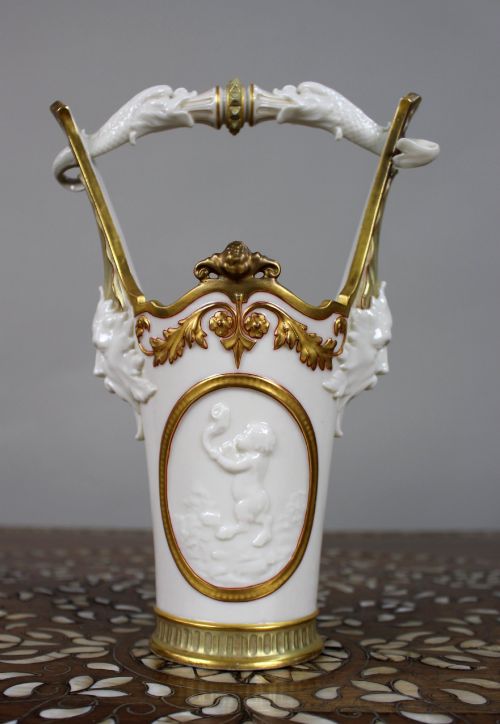
The distinction between standard commercial output and superior craftsmanship rests in the crispness of the bronze chasing and the delicacy of the hand-painted porcelain decoration. Finer examples display deeply carved foliage, clean gilding with high burnished contrast, and carefully fitted mounts that integrate seamlessly with the ceramic body.
Heavier gauge bronze, genuine white marble or Sienna marble bases, and well-documented factory marks or retailer signatures indicate higher workshop standards. Simpler production pieces often utilise lighter base metals, painted rather than enamelled details, and less refined casting seams.
Several Grand Tour visitors evidently required miniature bronze reproductions of the Warwick Vase to remember their travels by.
Royal Worcester·Elkington Mason And Co·Helena Wolfsohn·Coalport·Spode·BFB Worcester
The 19th Century Gilt Urns Glossary
- Ormolu
- Gilt bronze produced by applying a finely ground high-carat gold mercury amalgam to a bronze object before heating to drive off the mercury. This technique creates a rich, matte yellow golden surface characteristic of fine French decorative arts.
- Campana
- A bell-shaped classical urn form originating from ancient Roman pottery and stone vessels. These pieces feature an everted rim, deep body, and a pedestal foot.
- Garniture
- A set of three or more matching decorative objects, commonly comprising a central clock or large urn flanked by smaller matching vases or candelabras. They were designed to sit on mantelpieces or console tables.
- Bleu céleste
- A distinctive bright sky-blue ceramic glaze developed at the Sèvres porcelain factory in the eighteenth century and widely imitated throughout the nineteenth century.
19th Century Gilt Urns: Frequently Asked Questions
What materials make up these urns?
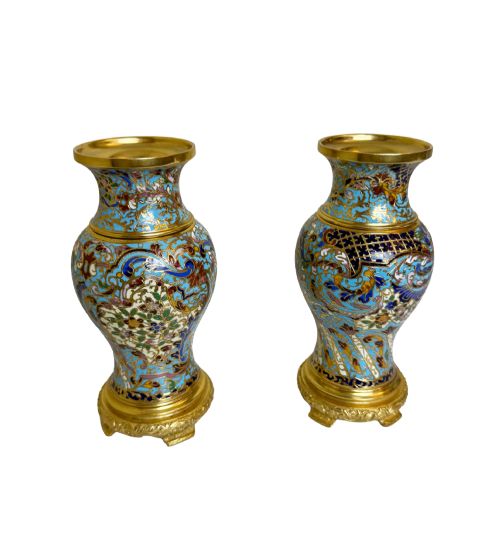
These decorative objects primarily combine ceramic or porcelain bodies with gilt bronze, ormolu, and brass mounts. Many examples incorporate white, rouge, or Sienna marble bases and occasional champlevé enamel detailing.
Finer pieces feature hand-painted cobalt blue or polychrome porcelain surfaces accented with gold leaf or fire-gilt metal fittings, reflecting period manufacturing standards across English and continental workshops.
Were these urns originally lamps?
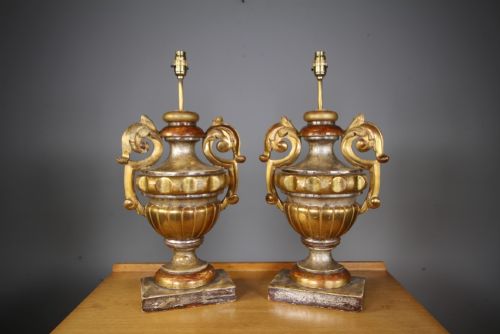
Most of these vessels started as decorative urns, vases, or garniture pieces rather than lighting fixtures. Many surviving nineteenth-century examples were later converted into table lamps during the twentieth century by wiring through the base or interior.
Some specialist pieces, however, were manufactured specifically as electrified or oil-burning lamps during the late Victorian period, retaining original burner assemblies or matched fitting components.
How do I distinguish French and English pieces?
French pieces frequently lean towards Rococo Revival or neoclassical styles, often utilising Sèvres-style bleu céleste porcelain paired with chased ormolu mounts and champlevé enamel. They tend to emphasise decorative grandeur and figurative Grand Tour themes.
English examples from factories like Spode, Coalport, and Royal Worcester often display tighter botanical or Imari palette painting on refined earthenware and bone china bodies, reflecting domestic neoclassical tastes.
Where should I display a gilt urn?
These urns suit prominent placement on mantelpieces, entrance hall console tables, or deep sideboards where their reflective metallic mounts catch natural light. They function effectively as single decorative focal points or paired symmetrically.
Because many pieces incorporate delicate hand-painted porcelain or exposed mercury gilding, they perform best away from direct, harsh sunlight and areas of heavy household traffic.