




Ornate Bronze Urn Pair
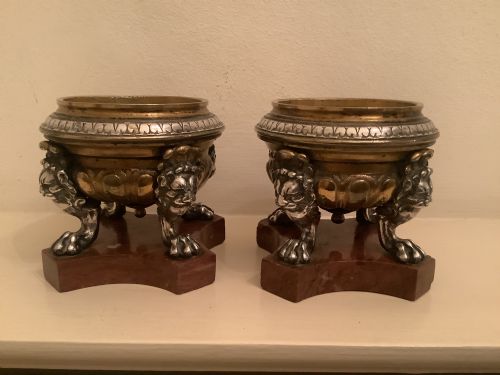
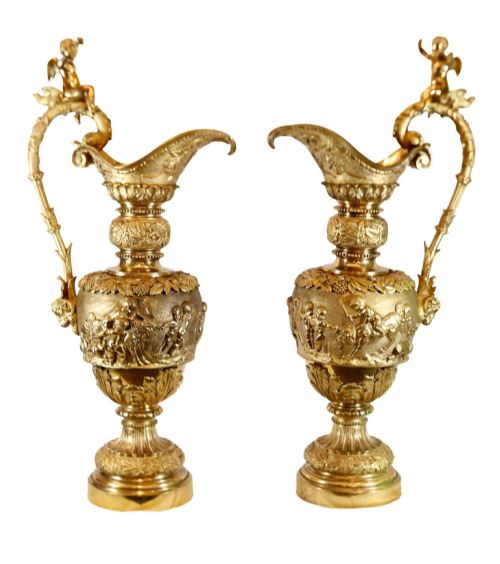
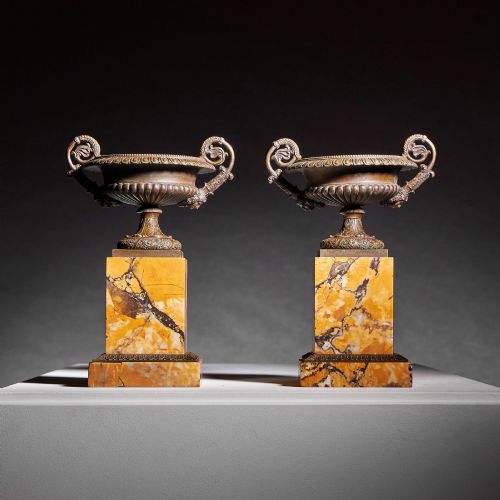
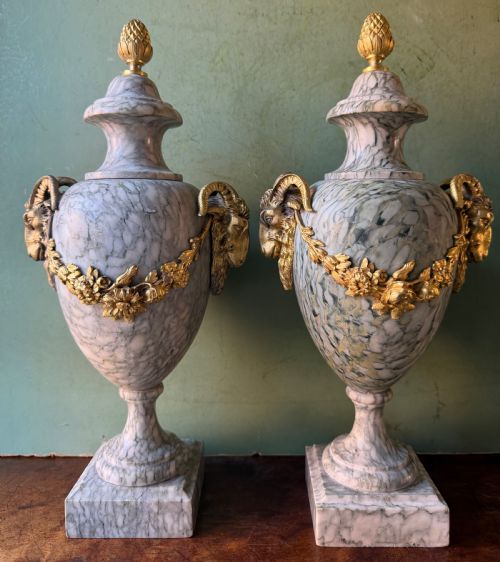
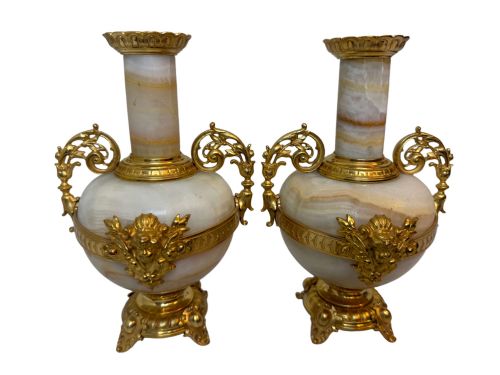
These ornate bronze urn pair examples combine classical metalwork with decorative stone, offering a striking display for a mantelpiece or console.
Ornate Bronze Urn Pair
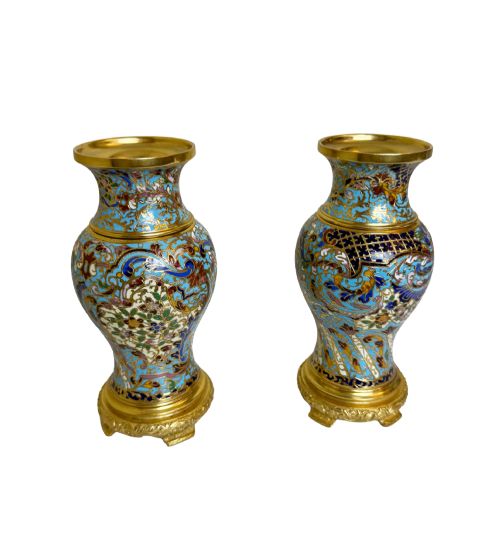
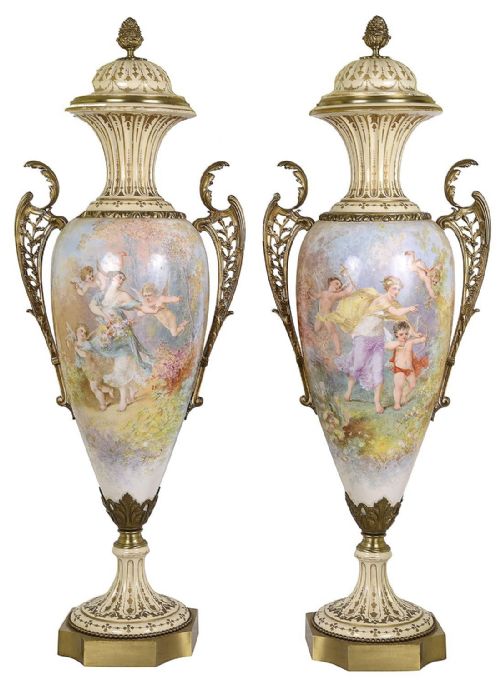
When you search for an ornate bronze urn pair, you are looking at dual display pieces designed to anchor a room with classical symmetry. The items seen on this page span the nineteenth century and the early twentieth century, taking the form of vases, ewers, candelabras, and table lamps.
Most examples originate from French and Victorian workshops, utilising decorative pairings such as bronze with marble, white onyx, or porcelain. These decorative objects draw on Revival styles including Louis XVI, Rococo, and French Empire, bringing substantial presence to interior spaces.
Materials and construction
The manufacture of these pairs relies heavily on metal casting, utilising bronze, gilt bronze, ormolu, and gilded brass. Many pieces incorporate champlevé enamel or detailed surface chasing to achieve high ornamental complexity.
Makers combined these cast metals with carved bases of white onyx or marble, and occasionally integrated porcelain bodies such as Sevres style elements. These mixed media constructions required collaboration between metalworkers and stone carvers.
Ornate Bronze Urn Pair Retail Price Guide 2026
Typical asking prices for ornate bronze urn pair among the pieces listed under this phrase on Sellingantiques today, from the lower quarter to the upper quarter. They describe what is for sale here now, not the wider market.
Listings feature pieces spanning the nineteenth century into the early twentieth century, incorporating marble, white onyx, and porcelain alongside bronze.
Assessing the workmanship
Quality in these pairs rests on the crispness of the casting and the depth of the gilding or patination. Finer examples show sharp relief in ornamental motifs and careful finishing on unseen areas.
The choice and execution of secondary materials also dictate the tier of the piece. Solid marble or onyx bases and hand-finished enamel work elevate an item above simpler cast brass or spelter alternatives.
The Ornate Bronze Urn Pair Glossary
- Ormolu
- Gilded bronze produced by applying a mercury-gilding mixture to a cast bronze object. This technique creates a rich, durable golden finish found on nineteenth-century decorative pieces.
- Champlevé
- An enamelwork technique where troughs are dug into a metal surface and filled with vitreous enamel before firing. It adds colourful patterning to bronze vases and ewers.
- Ewer
- A large jug with a wide spout and a decorative handle, often produced in pairs as ornamental vessels rather than functional water pitchers.
- Tazza
- A shallow cup or vase set on a pedestal foot, used for display on dining tables or sideboards during the nineteenth century.
- Jardinière
- An ornamental pot or stand designed to hold plants or floral arrangements, often matching the materials of adjacent decorative urns.
Ornate Bronze Urn Pair: Frequently Asked Questions
How do I style an ornate bronze urn pair?
Place them symmetrically on a mantelpiece, a large sideboard, or flanking a mirror to create a balanced focal point in a formal room.
Because these objects are substantial in height and weight, they require sturdy furniture that can support both pieces safely without overcrowding.
Are these pairs functional or purely decorative?
The majority of these pieces are strictly ornamental, designed to add classical elegance and visual weight to an interior space.
Some examples have been adapted over time to function as table lamps or candelabras, combining decorative presence with lighting.
What is the difference between bronze and ormolu?
Bronze is an alloy of copper and tin used for the base metal casting of the urns and ewers.
Ormolu refers specifically to the gilded finish applied to that bronze, giving the surface its characteristic gold appearance.
How do I identify a Louis XVI Revival piece?
Louis XVI Revival items draw on neoclassical design motifs such as straight fluted columns, laurel wreaths, and restrained geometric symmetry.
These pieces typically date from the nineteenth century and contrast with the more flamboyant curves of earlier Rococo Revival works.