
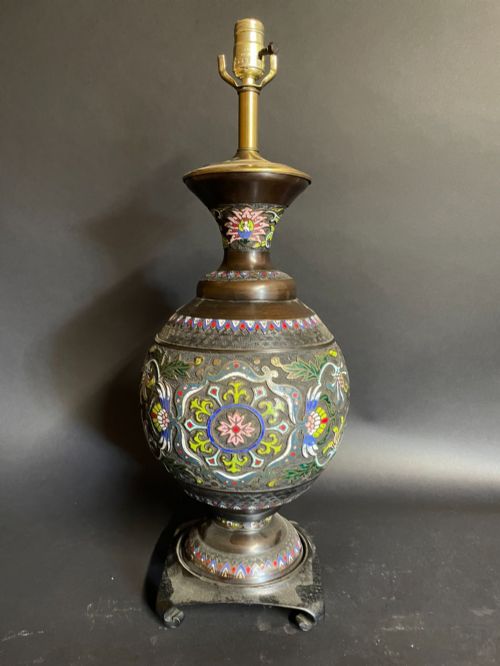


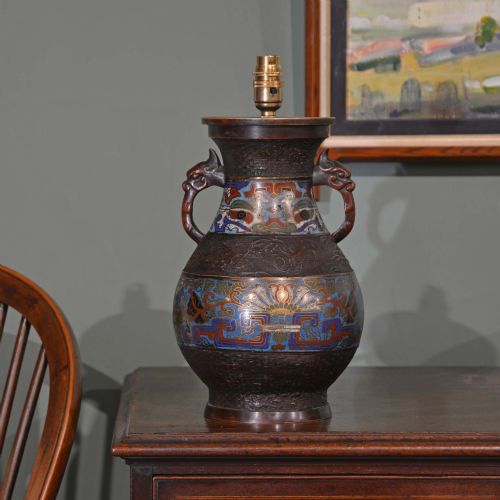

Champleve Enamel Urns
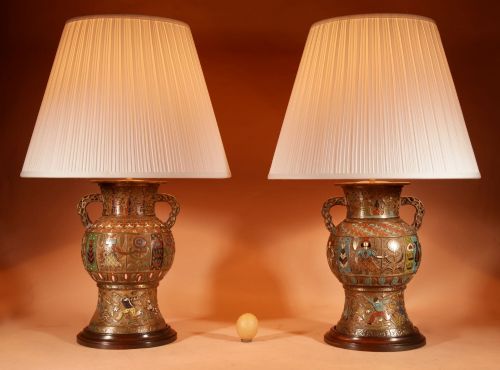
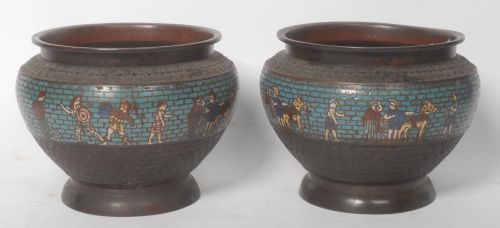
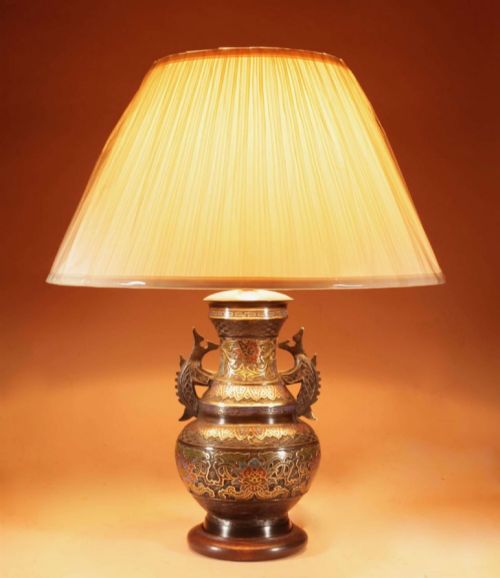
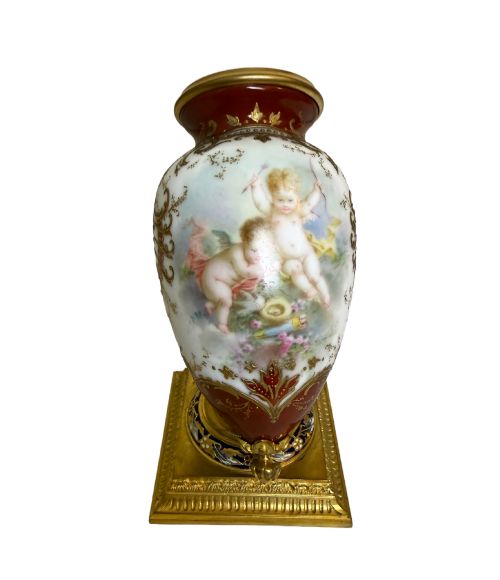
These champleve enamel urns bring together cast bronze and vibrant coloured vitreous decoration from French workshops, Chinese export kilns, and Japanese Meiji period foundries.
Champleve Enamel Urns
When you search for champleve enamel urns, you encounter decorative vessels shaped by 19th century French makers, Japanese Meiji period artisans, and Chinese export workshops. The pieces span pedestal urns, lidded vases, and cachepots produced across the nineteenth and early twentieth centuries.
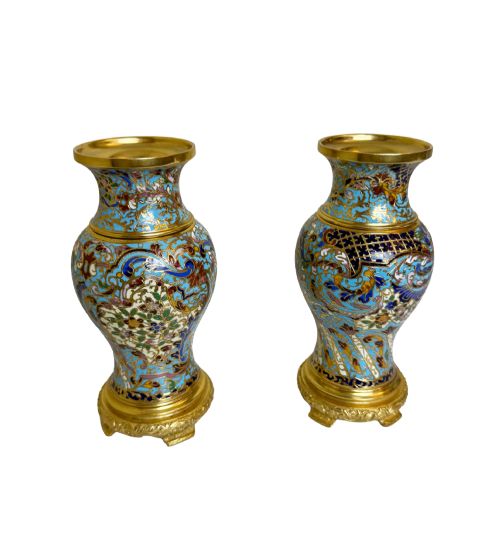
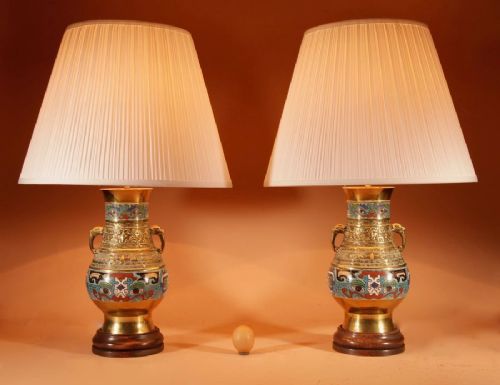
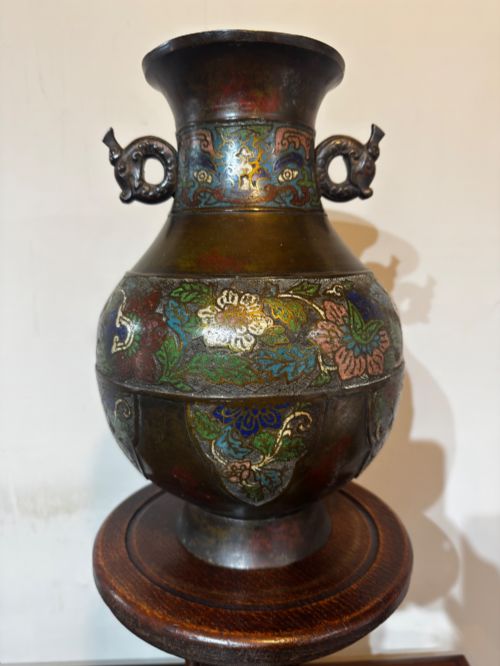
The version most commonly met on this page is the French gilt bronze or brass vessel, frequently dated to the late 19th century and heavily influenced by Rococo revival tastes. Alongside these, Japanese and Chinese bronze forms appear regularly, incorporating archaic styles or Meiji period motifs.
Materials and construction methods
The foundation of these pieces relies on cast bronze, gilt bronze, or brass, shaped into heavy bodies and detailed mounts. Artisans carved recesses directly into the metal surface to receive vitreous pastes, a technique that distinguishes this work from wire-based cloisonne.
Once filled with coloured enamel, the vessels underwent firing and extensive surface polishing to bring the metal partitions and glass paste to a flush, uniform finish. Additional elements like porcelain, green onyx, and gilt metal details frequently accompany the enamelled bronze bodies.
Listings feature pieces spanning the 1880s to the 1920s, incorporating materials such as porcelain, green onyx, and gilt bronze alongside champleve enamel.
Distinguishing quality in the metalwork and enamel
The standard of an urn is revealed in the crispness of the cast metal and the precision of the hand-carved channels that hold the vitreous paste. Finer examples maintain sharp relief in the bronze mounts without soft edges or pooling in the coloured fills.
Depth of colour and the stability of the fired enamel across complex curved surfaces separate superior decorative objects from simpler production. The integration of secondary materials, such as polished green onyx or fire-gilt highlights, dictates the refinement of the completed object.
The Champleve Enamel Urns Glossary
- Champleve enamel
- A technique where troughs or cells are hollowed out of a metal surface and filled with vitreous enamel powder before firing. The surrounding metal walls remain visible as part of the final design.
- Gilt bronze
- Metal alloy coated with a thin layer of gold, commonly seen in French 19th century mounts and decorative vessels. It provides a bright, durable finish that resists tarnishing.
- Cachepot
- An ornamental flowerpot container designed to hold a plain pot inside. These vessels often feature matching stands or detailed side handles.
- Clock garniture
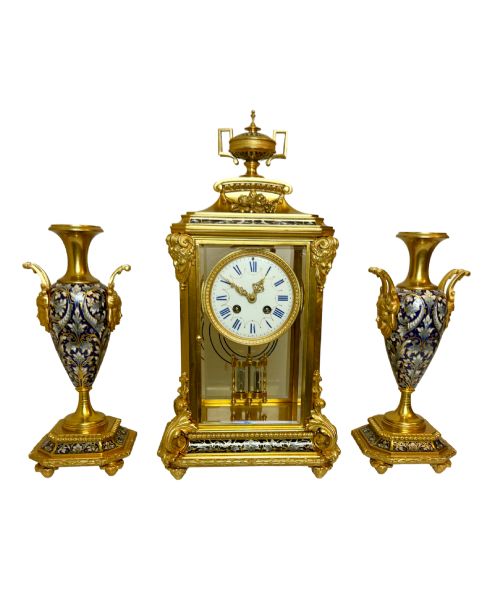
- A set comprising a mantel clock flanked by matching decorative objects such as urns, vases, or candelabra. These matched suites formed centrepieces for nineteenth century domestic interiors.
- Meiji period
- The era in Japanese history spanning from 1868 to 1912, characterised by the opening of trade with the West and a surge in export bronze production.
Champleve Enamel Urns: Frequently Asked Questions
What rooms suit champleve enamel urns?
These decorative vessels sit well on heavy wooden mantelpieces, sideboards, or large tables where their gilt surfaces catch the light. They function effectively as standalone ornaments or paired elements.
Because they incorporate rich colours and substantial metal frames, they anchor traditional interior schemes and complement period architectural details.
How were these urns used originally?
Nineteenth century households displayed these objects primarily as decorative focal points in salons, drawing rooms, and formal dining spaces. Some forms, such as cachepots, held potted plants, while pedestal urns served purely to display craftsmanship.
Clock garnitures placed matching urns alongside timepieces to create a balanced arrangement on parlour mantels.
How do French and Japanese pieces differ?
French pieces from the nineteenth century frequently employ gilt bronze frames, green onyx bases, and Rococo revival scrolls or classical motifs. They often form part of matched clock sets or lidded vase pairs.
Japanese examples from the Meiji period utilise dark bronze foundations, incorporating archaic shapes and bird or floral motifs executed in varied enamel palettes.
How do I care for the enamel surface?
Dust the metal and enamel surfaces regularly with a soft, dry cloth to prevent particulate buildup in the recessed channels. Avoid liquid cleaners, polishes, or abrasive materials that can scratch the vitreous paste or strip the gilt finish from the bronze.
Keep the vessels away from direct sunlight and damp environments to protect both the enamel integrity and the underlying metal alloy.