


Turquoise Enamel Vase
These turquoise enamel vase examples bring striking colour and intricate metalwork to a room, drawing the eye instantly.
Turquoise Enamel Vase
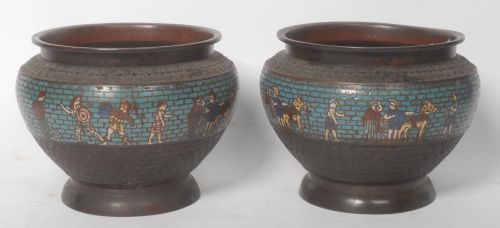
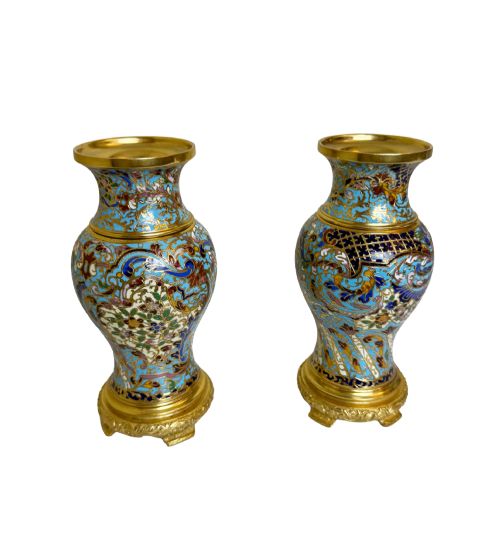
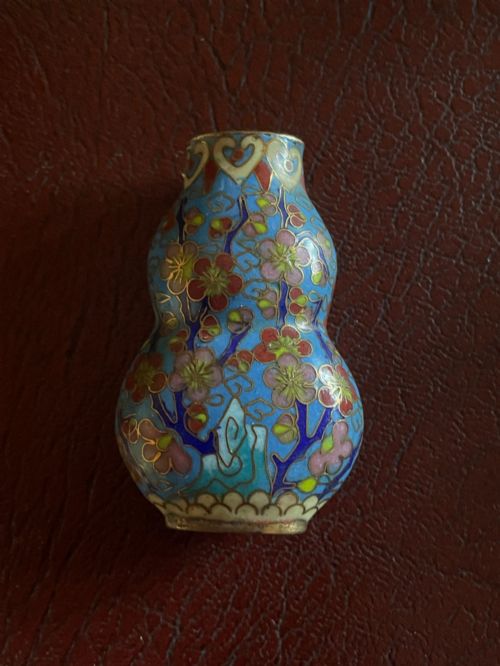
When searching for a turquoise enamel vase, you encounter a selection spanning the nineteenth and twentieth centuries, originating predominantly from Chinese Export, Japanese Meiji, and European workshops. The most frequent forms on this page include pairs of cloisonné or champlevé vessels in bronze, brass, or gilt metal, alongside occasional glass pieces.
Vessels range from miniature cabinet pieces to large floor-standing floor items and converted table lamps. Many reflect distinct stylistic influences such as Chinese export decorative art, Japanese archaic designs, and Art Deco geometry.
How they were made
Maker techniques rely on fusing powdered glass pastes onto metal foundations of copper, brass, or bronze, often utilising wire cells in cloisonné or recessed channels in champlevé. Alternatively, glass bodies receive surface enamelling and etching.
Gilt bronze, ormolu mounts, and brass elements are frequently paired with the central enamel body to provide structural weight and decorative framing.
Bright turquoise fields originally emulated the look of high-value turquoise gemstones on accessible metal bases.
What varies in quality
Quality rests in the precision of the metalwork and the depth of the enamel ground. Superior pieces display crisp, uniform wirework or clean champlevé channels paired with a vibrant, even turquoise field.
The sophistication of the secondary mounts, such as fire-gilded ormolu or cast bronze bases, distinguishes standard production from finer workshop outputs.
Karl Palda
The Turquoise Enamel Vase Glossary
- Cloisonné
- An enamel technique where thin metal wires are soldered to a metal base to form compartments filled with glass paste before firing. This method creates defined patterns of coloured fields.
- Champlevé
- A method where troughs or cells are hollowed directly into the surface of a thick metal body and filled with enamel. The remaining metal walls form the outlines of the design.
- Ormolu
- Finely ground high-carat gold applied to a bronze base using a mercury amalgam, producing a rich golden lustre on mounts and fittings. It was widely used in nineteenth-century European decorative arts.
- Cachepot
- An ornamental container designed to hold a flowerpot, hiding the standard clay pot from view. These often share forms with traditional decorative vases.
- Moon flask
- A flattened circular ceramic or metal vessel with a narrow neck and small handles, standing on a low base. Originating in ancient forms, they feature prominently in Asian export wares.
Turquoise Enamel Vase: Frequently Asked Questions
How are these vases cleaned?
Dust gently with a soft dry cloth to protect delicate enamel surfaces and metal finishes. Avoid liquid cleaners and chemical solvents entirely.
Moisture can seep into microscopic fissures in old enamel or tarnish exposed bronze and brass over time.
Can these vases hold water?
Many older metal and cloisonne vessels function primarily as decorative objects rather than water-tight containers. Lining them internally protects the antique core from moisture damage.
Glass examples from the nineteenth century may hold water safely, but inspection of the interior is prudent.
What periods do these pieces span?
The selection covers items from the mid-nineteenth century through the Edwardian era and into the Art Deco period of the 1930s. Nineteenth-century examples often feature Asian bronze and cloisonne.
Later twentieth-century items include European glass and etched designs from makers like Karl Palda.
Why are some mounted as lamps?
Conversion to table lamps occurred frequently during the twentieth century to adapt decorative vases for domestic lighting. This practice preserved fine antique bodies by giving them a modern functional purpose.
Wiring configurations vary, and many retain original or later metal mounts attached to the base or rim.