




Bronze Champleve Vase
These bronze champleve vase pieces combine cast metalwork with fused coloured glass, offering substantial decorative presence for a collector's interior.
Bronze Champleve Vase
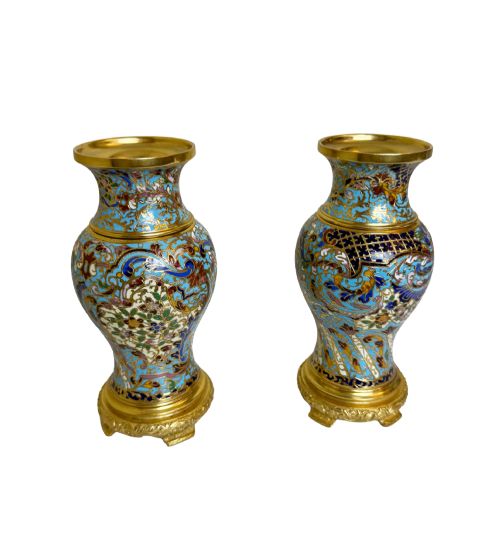
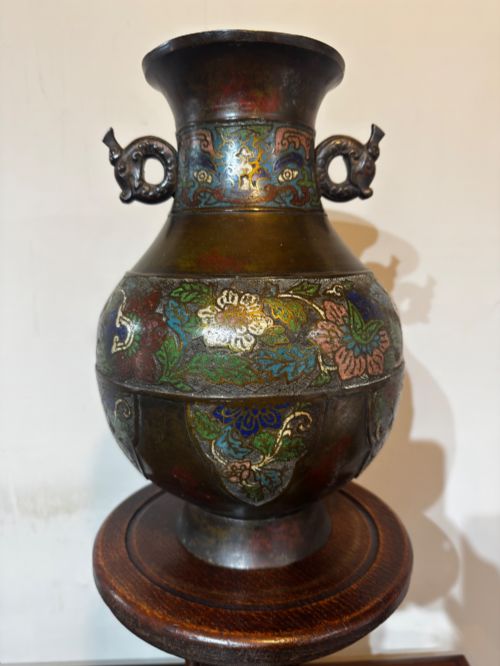
When you examine a bronze champleve vase, you are looking at vessels formed from metal and decorated with recessed enamel cells. The examples appearing here span the nineteenth century through the early twentieth century, originating from French workshops, Chinese export trade, and Japanese Meiji period makers.
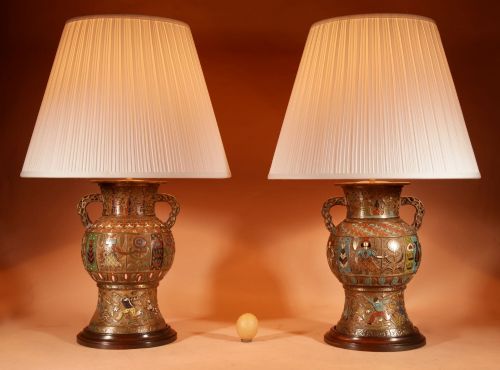
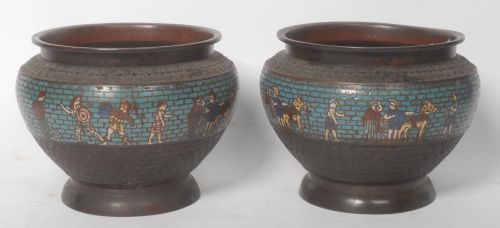
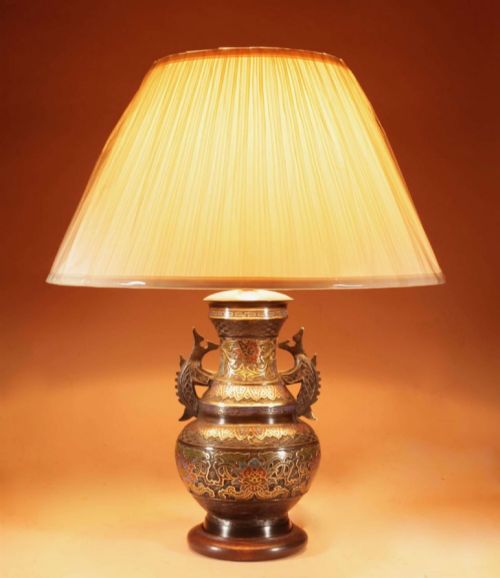
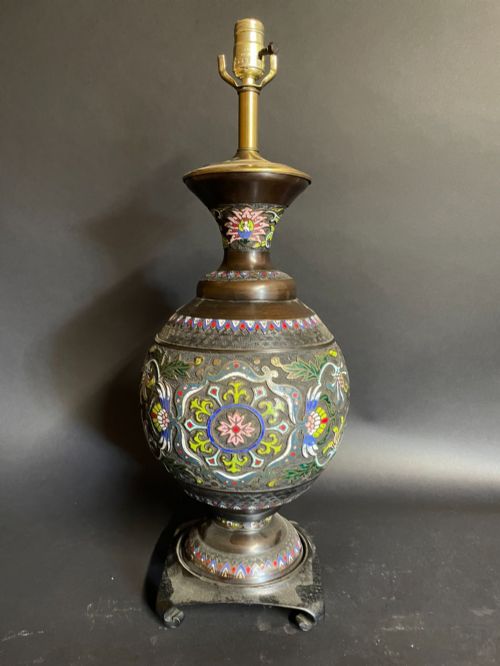
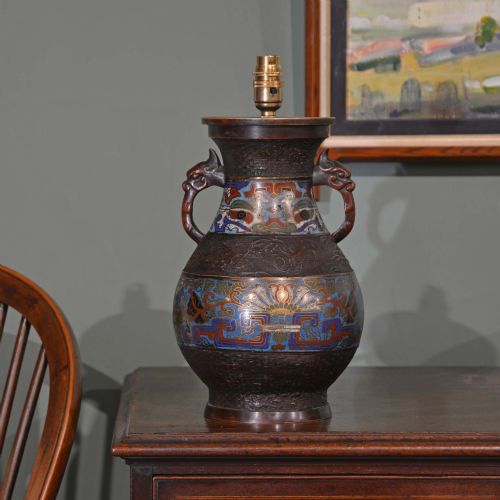
The dominant forms on this page include standard decorative vases, lidded vessels, twin-handled urns, and pieces adapted into table lamps or cachepots. Many items arrive in matched pairs, reflecting the formal display tastes of the Victorian and Napoleon III periods.
Chinese and Japanese pieces often display archaic revival motifs, while French interpretations lean towards Rococo revival or classical Greco-Roman influences. Each regional tradition applies the champleve technique with distinct colour palettes and bronze casting styles.
Materials and Construction
The foundation of every piece is a heavy bronze or brass casting, shaped through casting methods to create raised metal partitions. These sunken troughs or fields receive coloured enamel pastes before being fired and polished flush with the metal ridges.
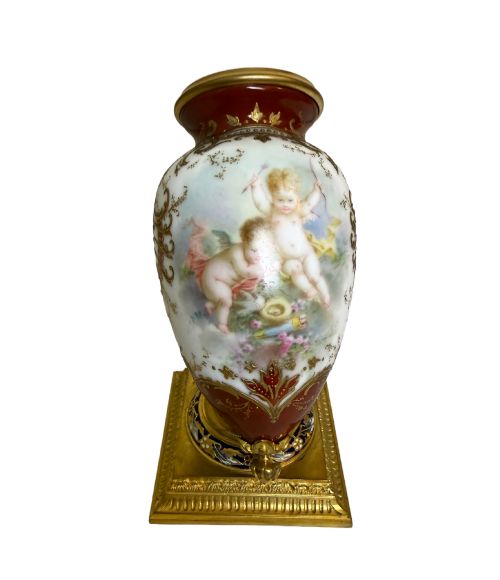
Gilding appears frequently on the bronze surfaces of French examples, creating a bright metallic contrast against the opaque enamel fields. Some vessels incorporate secondary materials such as porcelain, onyx bases, or fabric elements within their overall assembly.
Listings feature items dated across the nineteenth century, eighteen-eighty, eighteen-ninety, nineteen hundred, nineteen-ten, nineteen-twenty, and the Victorian period.
Assessing Quality and Execution
Quality rests upon the crispness of the bronze casting and the precision of the champleve enamel work within the recessed channels. Finer pieces show clean separation between coloured enamel fields without pitting or clouding in the glass paste.
The weight of the bronze and the depth of the chased surface detail separate standard production items from exceptional workshop output. Patination and the retention of original gilding also influence the visual integrity of the finished vessel.
The Bronze Champleve Vase Glossary
- Champleve Enamel
- A technique where troughs or cells are hollowed out of a metal surface and filled with enamel before firing. The surrounding metal walls remain visible to form the outline of the design.
- Gilt Bronze
- Bronze that has been coated with a thin layer of gold or gold leaf to enhance its appearance and prevent tarnishing. It provides a bright finish common in nineteenth-century French decorative objects.
- Cachepot
- An ornamental pot used to hold an ordinary flowerpot and catch drainage water. These vessels appear in various materials including bronze and enamel.
- Meiji Period
- The era in Japanese history spanning from eighteen sixty-eight to nineteen twelve. Pieces from this time often exhibit refined metalworking and detailed enamel decoration.
- Garniture Set
- A matched group of ornamental vases or jars designed to be displayed together on a mantelpiece or sideboard. They typically comprise a central piece flanked by smaller matching vessels.
Bronze Champleve Vase: Frequently Asked Questions
How do I clean a bronze champleve vase?
Dust the surface gently with a soft, dry brush to prevent dirt accumulation in the recessed enamel channels. Avoid using liquid metal cleaners or harsh chemical polishes, as these can damage the exposed bronze and the vitreous enamel.
For stubborn grime, use a slightly damp cloth followed immediately by thorough drying with a lint-free towel. Preserving the natural age patination protects the long-term surface character of the metal.
Are these vases watertight?
Most antique metal and enamel vessels are intended purely for decorative display rather than holding water. Thermal expansion and old assembly joints make modern water use risky for the interior structure.
If you wish to display fresh stems inside a vase, place a separate glass liner or test tube inside the vessel. This prevents moisture from reaching the inner bronze walls and any historical repair materials.
How do I tell Chinese from French pieces?
Chinese and Japanese examples frequently utilise archaic vessel forms and stylised floral motifs influenced by traditional bronzes. The colour palettes often feature turquoise, deep blues, and muted greens within the enamel fields.
French pieces from the nineteenth century generally incorporate classical Revival styles, such as Greco-Roman urn shapes or ornate gilt mounts. The bronze is often brighter due to mercury gilding or modern electroplating techniques.
Why are some mounted as lamps?
Many decorative vessels were converted into table lamps during the late nineteenth or early twentieth centuries to suit changing domestic lighting trends. These adaptations often involved drilling a discreet channel for wiring through the base or adding fitted metal collars.
Such conversions are period alterations that reflect how previous owners lived with and repurposed their collections. They remain a standard feature among surviving ornamental metalwork.