



Chinese Cloisonne Vase
A chinese cloisonne vase brings vibrant enamelled colour and intricate wirework into a room, spanning the nineteenth century up to the nineteen-forties.
Chinese Cloisonne Vase
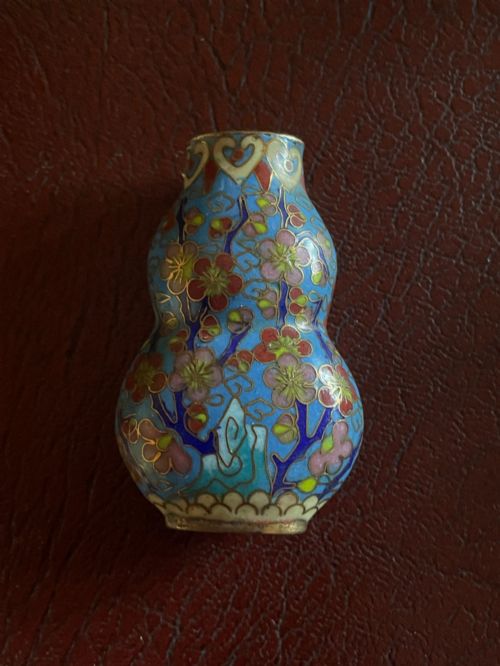
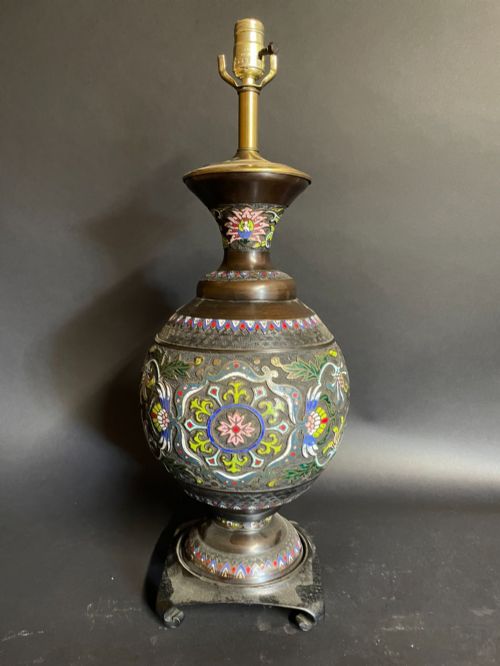
A chinese cloisonne vase takes many forms on this page, including miniature vessels, lidded urns, double-gourd shapes, and pieces adapted as table lamps. The selection spans the nineteenth century, the Edwardian period, and the early decades of the twentieth century up to nineteen-forties items.
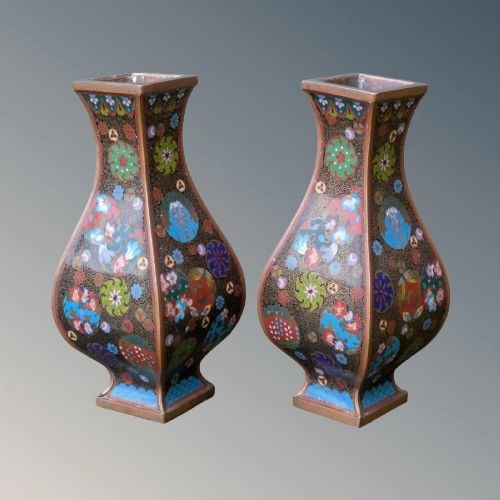
Most examples display traditional oriental styles, Qing period influences, and export decorative art. Buyers frequently encounter pairs alongside single vessels, occasionally complete with carved wooden stands.
How they were made
The underlying body is typically formed from copper, brass, bronze, or gilt metal, providing a rigid structural foundation for the vessel. Metal wires are soldered onto this surface to create cellular compartments.
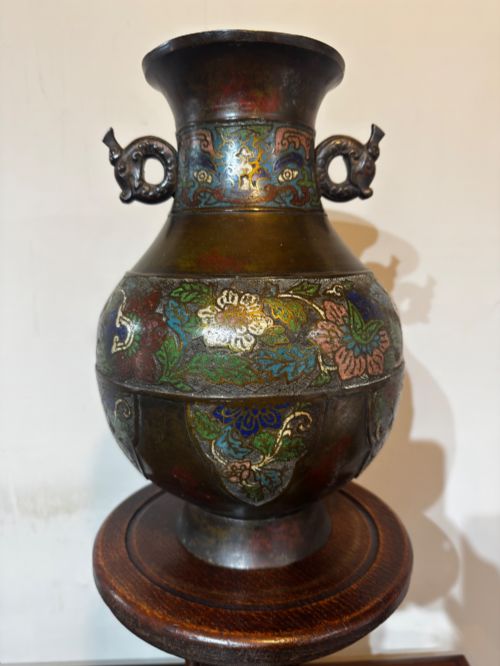
Coloured enamel paste is packed into the wire cells and fired before the entire surface is polished smooth. Certain pieces utilise champleve techniques, where troughs are cast directly into the bronze rather than relying solely on soldered wire cloisters.
Listings span the nineteenth century, Edwardian era, and early twentieth century, utilising enamel, bronze, brass, and copper.
What varies in quality
The precision of the wirework defines the visual clarity of the design, separating standard decorative items from finer examples. Cleaner solder lines and more densely packed enamel fields indicate superior craftsmanship.
Heavier base metals such as bronze and gilt metal, alongside complete original components like carved wooden stands or matching lids, elevate the standing of a piece.
The Chinese Cloisonne Vase Glossary
- Cloisonne
- A decorative metalwork technique where thin metal wires form raised barriers to hold coloured enamel pastes. The vessel is fired and polished until the wires and enamel form a continuous surface.
- Champleve
- A method where troughs or cells are hollowed directly into the surface of a bronze or metal base to hold enamel. This differs from soldered wire cloisters.
- Double Gourd
- A bulbous vessel shape comprising two rounded lobes stacked vertically, symbolising auspicious fortune in traditional oriental design.
- Ormolu
- Gilt bronze mounts applied to decorative objects, frequently seen on pieces adapted into table lamps during the nineteenth century.
Chinese Cloisonne Vase: Frequently Asked Questions
How do I date a Chinese cloisonne vase?
Dating relies on the style of the metalwork, the composition of the base materials, and manufacturing characteristics recorded across nineteenth-century and early twentieth-century examples.
Items from the Qing period or late nineteenth century often display heavier bronze foundations and distinct enamel palettes compared to later Edwardian production.
Were these vases used as lamps?
Many examples on this page were converted into table lamps during the nineteenth and early twentieth centuries, retaining their original enamel bodies.
Adapting vessels for lighting was a common practice for decorative export pieces arriving in Western homes.
What is the difference between cloisonne and champleve?
Cloisonne utilises thin wires soldered onto a copper or brass body to create cells for the enamel.
Champleve involves carving or casting troughs directly into a bronze surface to receive the coloured paste.
How should I clean a cloisonne vase?
Gentle dusting with a soft, dry cloth preserves the polished enamel surface and protects the delicate metal wire boundaries.
Avoiding harsh chemical polishes prevents damage to the exposed brass, bronze, or gilt metal components.