
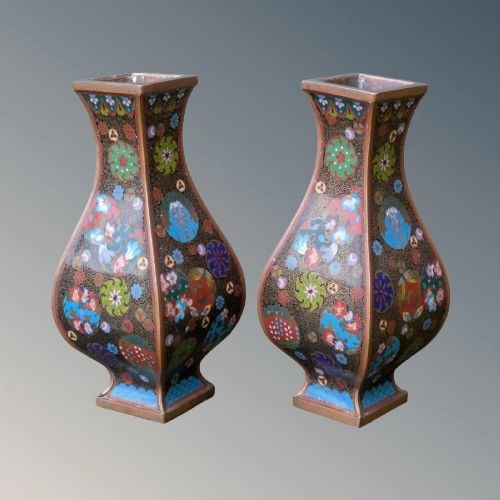
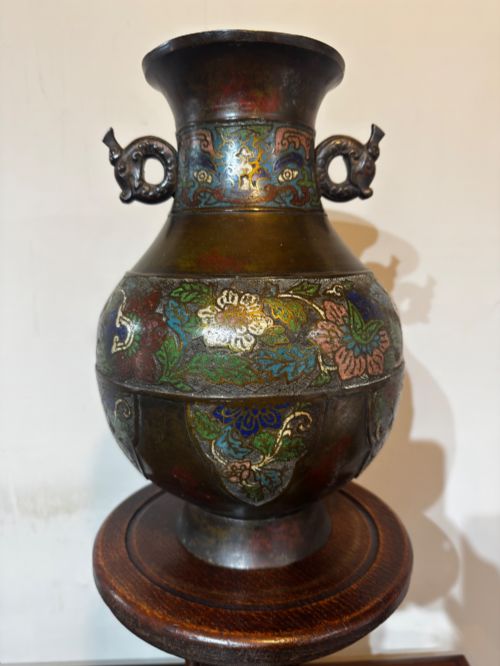


Qing Dynasty Cloisonne Vase
A qing dynasty cloisonne vase brings vibrant enamelled colour and intricate wirework into a room, offering tactile depth that modern reproductions simply cannot match.
Qing Dynasty Cloisonne Vase
A qing dynasty cloisonne vase takes many forms across the selection here, including paired mantel pieces, converted table lamps, and lidded jars. These vessels emerge from the nineteenth century and the early twentieth century, showing both standard decorative styles and export variations.
The objects combine traditional Chinese Qing aesthetics with periods like the Edwardian era, reflecting how pieces travelled and adapted to Western interiors. Most examples rely on copper or bronze foundations to support the intricate surface decoration.
Vases appear alongside champleve alternatives in the listings, widening the scope for collectors interested in worked metal surfaces. Buyers frequently encounter pairs alongside single display pieces, all bearing the hallmark weight of cast metal and fused glass.
How they were made
Craftsmen built these vessels by soldering thin metal wires onto copper, brass, or bronze bodies to form raised partitions known as cloisons. These compartments were then filled with coloured enamel paste before the entire piece underwent high-temperature firing.
Gilt bronze and gilt metal frequently appear as framing materials, adding golden borders that outline the intricate enamel patterns. Once cooled, the surfaces were polished down until the metal wires and hardened enamels sat in a smooth, continuous plane.
Several heavy metal vases found new life as reading lamps, proving that nineteenth-century art makes an excellent bedside companion.
What varies in quality
Quality rests heavily on the precision of the wirework and the density of the enamel filling within each cell. Finer examples display perfectly uniform wire lines and smooth, unblemished glass surfaces without the pitting seen in simpler work.
The weight and finish of the underlying bronze or copper foundation also dictate the standard of the vessel. Superior pieces maintain crisp gilt details and balanced proportions that mark them out from standard decorative wares.
The Qing Dynasty Cloisonne Vase Glossary
- Cloisonne
- Enamelwork in which enamel paste is applied within compartments made by soldering metal wires to a metal base. This technique creates a distinctive cellular pattern across the surface of the vessel.
- Champleve
- An enamelling technique where troughs or cells are carved directly into the thick metal surface rather than using soldered wires. The hollows are then filled with enamel before firing and polishing.
- Gilt Bronze
- Bronze metal coated with a thin layer of gold to give a rich, metallic sheen. It provides a durable and decorative framework for enamel designs.
- Export Ware
- Objects manufactured in China specifically for overseas markets in Europe and the West. These items often blend traditional techniques with foreign taste and functional adaptations like lamp conversions.
Qing Dynasty Cloisonne Vase: Frequently Asked Questions
How do I clean a cloisonne vase?
Dust the surface gently with a soft, dry brush to prevent dirt settling in the wire crevices. Avoid harsh chemical cleaners or submersion in water, as moisture can affect the aged metal and enamel.
For stubborn grime, a slightly damp cloth followed immediately by thorough drying is sufficient. Treat the aged metal base with care to preserve its original finish.
Can these vases hold water?
Most antique metal and enamel vessels are intended for dry display rather than holding fresh flowers. Many nineteenth-century examples have also been converted into table lamps with drilled bases.
Using them for liquids risks damaging the internal metal seams and the aged enamel work. Display them empty or use dry botanical arrangements instead.
Why are some mounted as lamps?
Wiring antique vessels for lighting was a popular practice during the Edwardian period and later, adapting decorative items for modern domestic utility. This conversion often involves fitted wooden or metal bases.
Collectors view these dual-purpose items as period alterations rather than modern interventions. They offer a practical way to integrate antique metalwork into everyday living spaces.
How do I date an antique piece?
Dating relies on examining the weight of the bronze or copper body, the brilliance of the enamel colours, and the style of the wirework. Nineteenth-century examples often display denser metal foundations and distinct regional palettes.
Comparing the manufacturing quirks with documented periods helps narrow down the decade of production. Documentation or retailer records from the era also assist in verification.