




Chinese Brass Cloisonne Vase
A Chinese brass cloisonne vase brings vibrant enamelled colour and intricate metal wirework into a room, offering both decorative presence and traditional craftsmanship.
Chinese Brass Cloisonne Vase
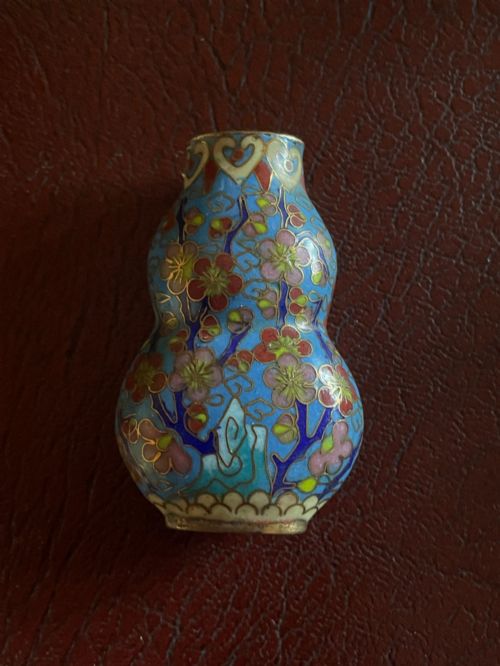
When you search for a chinese brass cloisonne vase, you encounter decorative vessels fashioned from metal and filled with coloured vitreous pastes. These objects range from compact miniature vessels to large matched pairs designed for display.
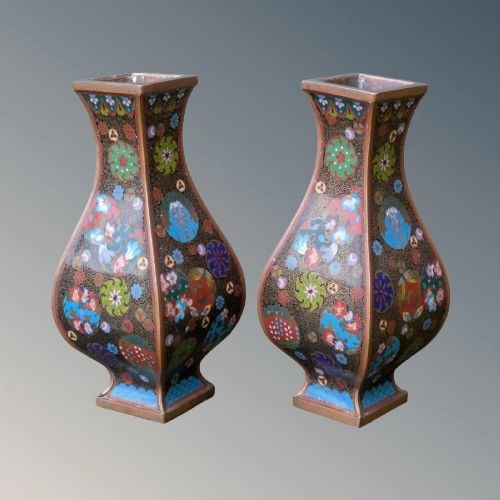
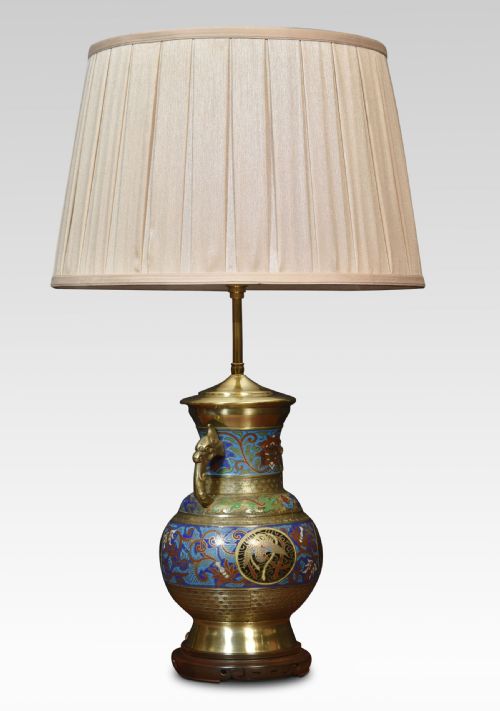
The pieces listed here draw upon Qing Dynasty traditions and later Chinese Export styles, encompassing both standalone display vessels and those later adapted into table lamps. You frequently find them grouped in pairs or offered alongside twin-handled lamp bases.
Dating primarily spans the nineteenth century through the early decades of the twentieth century, including Edwardian interpretations and pieces marked by the Chinese Republic period.
How they were made
Craftsmen built these vessels by soldering thin metal wires, typically brass, bronze, or gilt metal, onto a metallic base to form detailed cells or cloisons. These individual compartments were then filled with coloured enamel pastes before being fired in a kiln.
Once fired, the surfaces were ground down and polished so that the metal outlines remained flush with the hardened enamel fields, creating a smooth and colourful decorative pattern.
Listings combine nineteenth-century Qing pieces with early twentieth-century export lamps utilising brass, bronze, and enamel.
What varies in quality
Quality rests in the precision of the wirework and the depth of the enamel, where finer examples display unbroken symmetry and densely packed decorative motifs. The crispness of the metallic lines dictates how cleanly the pattern reads from a distance.
The weight of the underlying bronze or brass and the uniformity of the final polish distinguish the superior production from standard decorative wares. Surviving pairs that match closely in tone and pattern density command stronger visual harmony.
The Chinese Brass Cloisonne Vase Glossary
- Cloisonne enamel
- A decorative technique where metal wires are soldered to a base to form cells that hold coloured glass paste. This method creates detailed patterns defined by thin metallic borders.
- Champleve
- An enamelling process where troughs or cavities are gouged directly into the metal surface to receive the enamel. It differs from wire-work methods by using carved depressions rather than soldered partitions.
- Chinese Export
- Objects manufactured in China specifically for Western markets and tastes during the Qing Dynasty and later periods. These items often blend traditional Eastern forms with decorative motifs appealing to foreign buyers.
- Qing Dynasty
- The final imperial dynasty of China, spanning from the seventeenth to the early twentieth century. This era produced much of the foundational metalwork and enamel traditions seen in later antiques.
- Gilt bronze
- Bronze metal treated with a thin layer of gold applied through amalgamation or other historical methods. This finish provides a warm golden sheen that enhances the metallic framework of the vessel.
Chinese Brass Cloisonne Vase: Frequently Asked Questions
Are these vases usually found in pairs?
Many examples survive as matched pairs, particularly those intended for mantelpiece display or later conversion into lighting.
Single vessels also appear, often representing smaller cabinet pieces or survivors from larger dispersed sets.
How do I spot a lamp conversion?
Converted pieces generally feature drilled bases or fitted hardware designed to accommodate electrical wiring and lamp fittings.
Original vessels remain intact at the base, retaining their solid metal form without structural alterations.
What periods do these pieces date from?
The selection spans the nineteenth century through the mid-twentieth century, including Qing period work and Edwardian imports.
Later pieces often reflect the Chinese Republic aesthetic or early twentieth-century export production.
How should I clean cloisonne enamel?
Dust the surface gently with a soft, dry cloth to prevent accumulation within the wire cells.
Avoid abrasive cleaners or harsh liquids that might dull the polished enamel and metal borders.