


Turquoise Cloisonne Urn
These turquoise cloisonne urn and related vessel forms bring together metalwork and enamel with striking colour.
Turquoise Cloisonne Urn
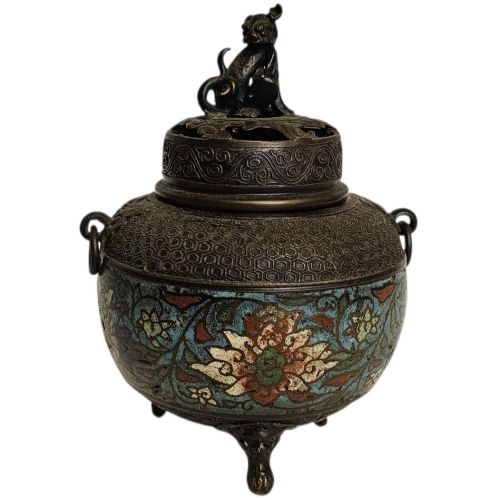
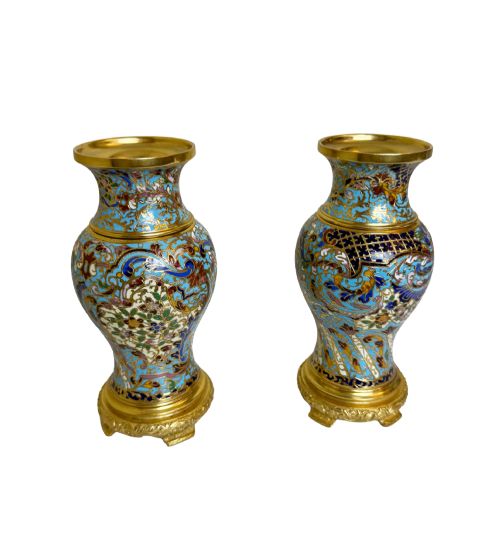
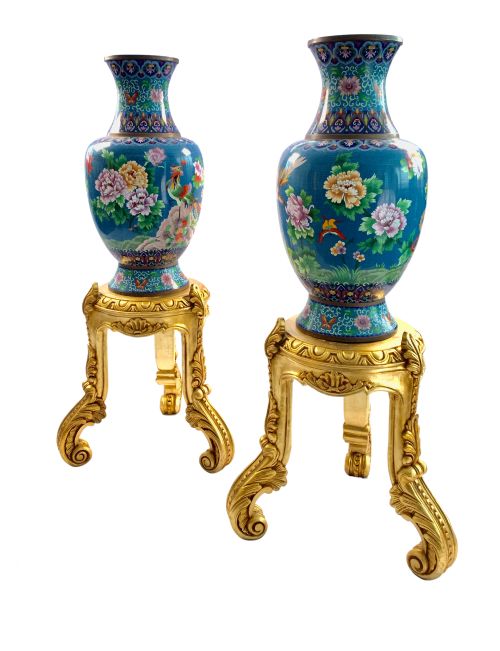
When you search for a turquoise cloisonne urn, you encounter vessels that span Chinese Qing Dynasty production, Japanese Meiji period work, and 19th-century French interpretations. The pieces on this page appear predominantly as vases, censers, jardiniere bowls, and table lamps rather than strictly narrow-necked urns.
The dominant aesthetic involves turquoise ground enamel enriched with wirework cells forming complex patterns. These items reflect both Asian antiques traditions and Chinoiserie or 19th-century French decorative arts.
Materials and construction methods
The foundation of these vessels relies upon copper, bronze, brass, or gilt metal substrates shaped into vases, bowls, and censers. Artisans soldered thin metal wire onto these metallic bodies to map out distinct decorative compartments.
These wire cells were subsequently filled with cloisonne enamel, often featuring a turquoise background, before undergoing firing and polishing. Certain pieces also incorporate champleve techniques where troughs are carved directly into the bronze rather than using soldered wires.
Listings feature items from the 19th century, Edwardian era, 1930, and 1940, employing copper, bronze, brass, and enamel.
Distinctions in quality and execution
Quality in these vessels rests upon the precision of the wirework and the evenness of the enamel filling. Finer examples display meticulous symmetry in intricate motifs and smooth, highly polished enamel surfaces without pitting.
The weight and substance of the underlying bronze, copper, or gilt metal armature also dictate the caliber of the piece. Substantial metal casting combined with crisp detailing separates standard decorative items from superior masterworks.
The Turquoise Cloisonne Urn Glossary
- Cloisonne Enamel
- A technique where thin metal wires form raised cells on a metal body to hold coloured enamel paste before firing.
- Champleve
- An enamelling method where troughs or cavities are gouged directly into the metal surface to receive the enamel.
- Censer
- A traditional vessel designed for burning incense, frequently supported by tripod feet and fitted with a cover.
- Jardiniere
- A large ornamental pot or bowl intended to hold plants or flowers, often displayed on a dedicated stand.
- Qilin
- A mythical hooved creature from Chinese mythology frequently depicted in bronze or enamel ornamentation.
Turquoise Cloisonne Urn: Frequently Asked Questions
How do I clean these enamel vessels?
Dust the surface gently with a soft, dry cloth to prevent accumulation within the wire crevices. Avoid harsh chemical cleaners or abrasive materials that might damage the delicate enamel and metal wire.
Keep these objects away from direct, prolonged sunlight and excessive moisture. Proper placement protects both the metallic substrate and the vibrant coloured glass pastes.
Are these items waterproof for plants?
Vessels originally formed as jardiniere bowls were designed to hold plants, yet older enamel linings can develop hairline fractures over decades of use. Inserting a modern plastic liner inside protects the antique interior from standing water.
Vases and censers should generally remain dry to preserve the internal metal and solder joints. Using them strictly for display avoids internal corrosion.
How do I distinguish Chinese from Japanese pieces?
Chinese turquoise cloisonne often utilises a heavy bronze body with turquoise grounds that incorporate intricate floral and symbolic motifs. Meiji period Japanese examples frequently demonstrate extreme precision in wirework with distinct naturalistic imagery.
Examining the base and interior reveals further clues regarding manufacturing habits. Different regional traditions favoured specific base metal alloys and polishing styles.
What period do most of these items date from?
The majority of pieces originate from the late 19th century through to the early 20th century. This span includes late Qing Dynasty production alongside Edwardian and 1930s European decorative imports.
Earlier transitional pieces from the 18th and 19th centuries also appear occasionally. These older examples typically display heavier bronze casting and deeper enamel tones.