

Japanese Meiji Vase
A Japanese Meiji vase brings together intricate metalwork, earthenware, and porcelain from a transformative era of craftsmanship.
Japanese Meiji Vase
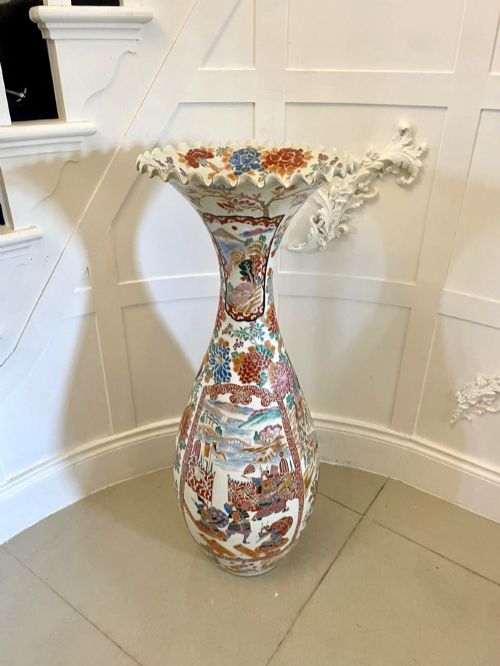
A japanese meiji vase encompasses a wide variety of forms produced between 1868 and 1912, ranging from small domestic vessels to large floor-standing urns. Buyers encounter traditional Imari and Kutani porcelains alongside earthenware Satsuma wares and highly detailed bronze creations.
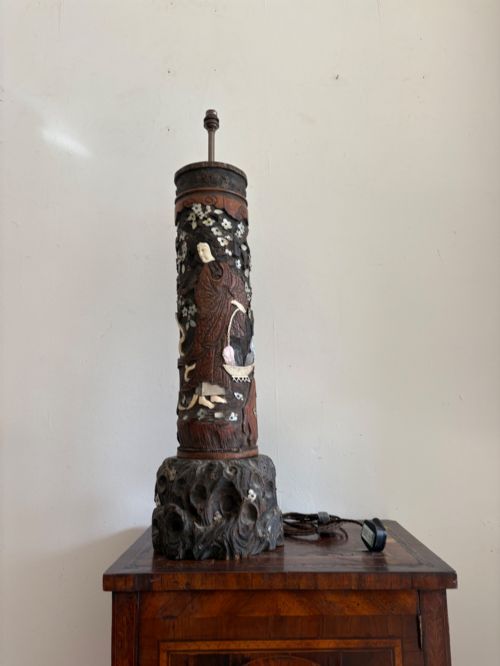
Many examples double as decorative lamps, baskets, or pitchers, showing how makers adapted traditional forms for domestic utility. The selection includes matched pairs, garnitures, and monumental display pieces spanning the late nineteenth and early twentieth centuries.
How they were made
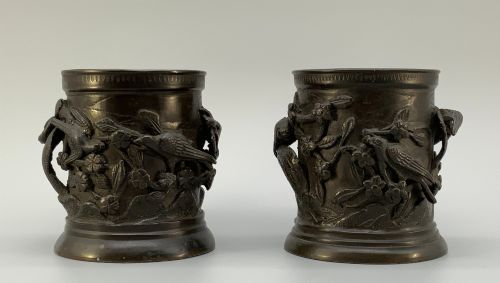
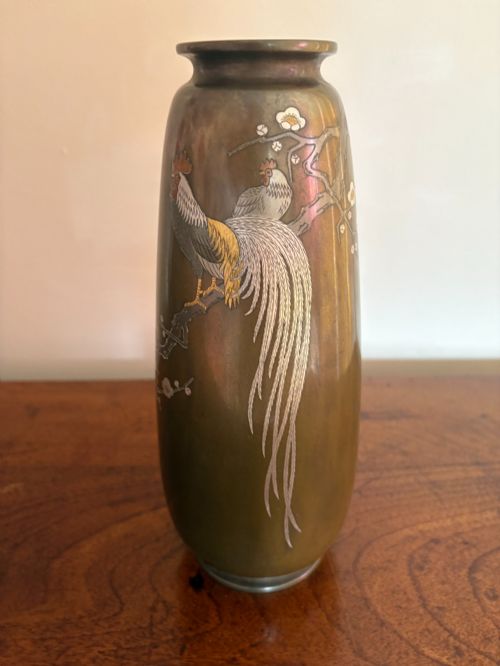
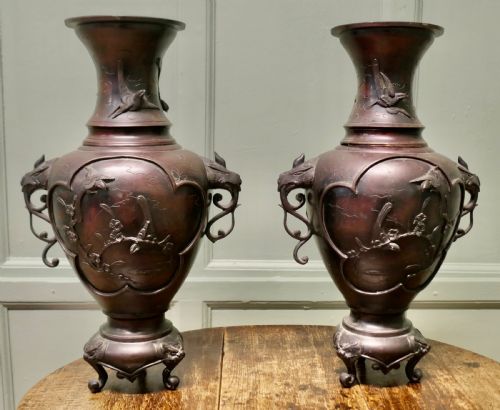
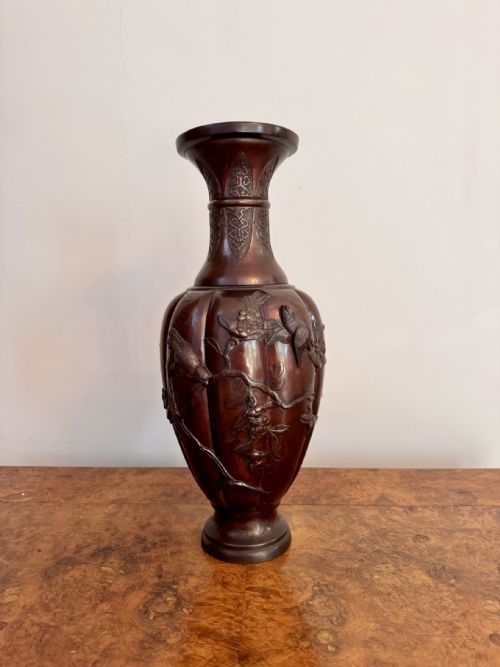
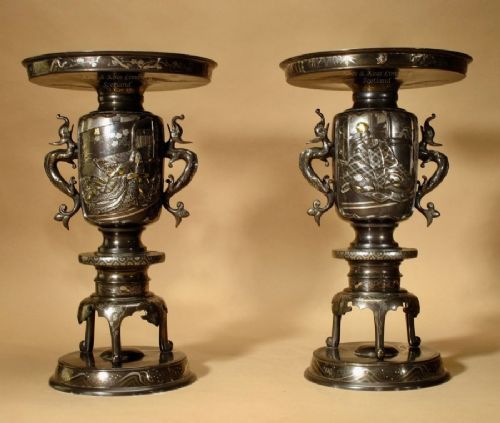
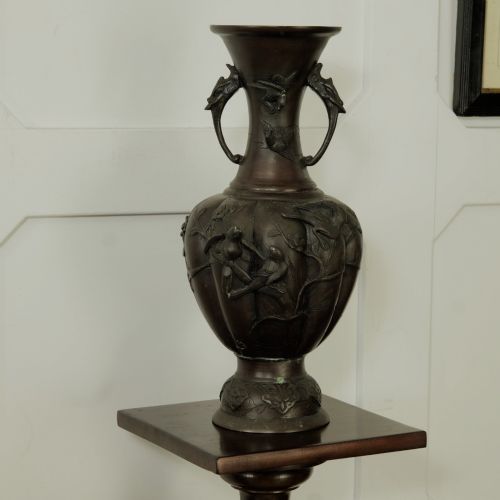
Metal vessels utilise bronze, brass, and copper, often enriched with intricate silver and gold inlay or champlevé enamel work. Artisans cast these forms and applied high-relief motifs depicting dragons, birds, and landscapes.
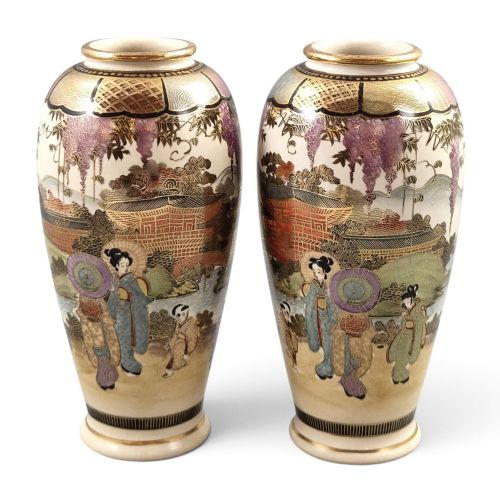
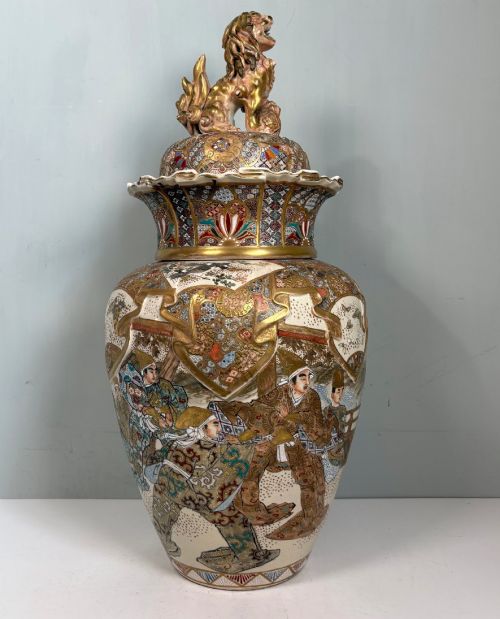
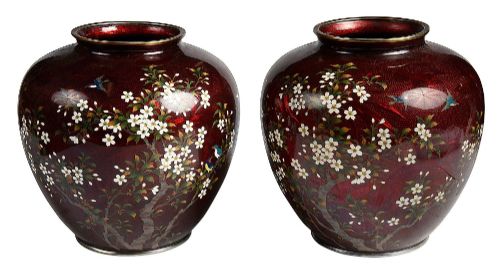
Ceramic pieces combine earthenware and porcelain bodies decorated with polychrome glazes, gold leaf, and elaborate hand-painted figures. Cloisonné examples rely on delicate wire cells filled with enamel to create precise pictorial designs.
Listings feature bronze, porcelain, and earthenware forms produced across the Meiji period and early Taisho era.
What varies in quality
Quality rests upon the precision of the workmanship, from the fineness of wirework in cloisonné to the depth and clarity of bronze chasing and inlay. Master makers executed intricate details with immense control, producing crisper lines and more balanced compositions than mass-produced export pieces.
The complexity of the palette and the ambition of the form also divide standard vessels from exceptional works. Signed pieces from recognised artists and workshops demonstrate superior mastery of glazes, patination, and sculptural relief.
Inoue Ryosai·Oshima Joun·Kanaya Gorosaburo XI·Takusai Honma·Gyokuzan·Dozan
The Japanese Meiji Vase Glossary
- Satsuma
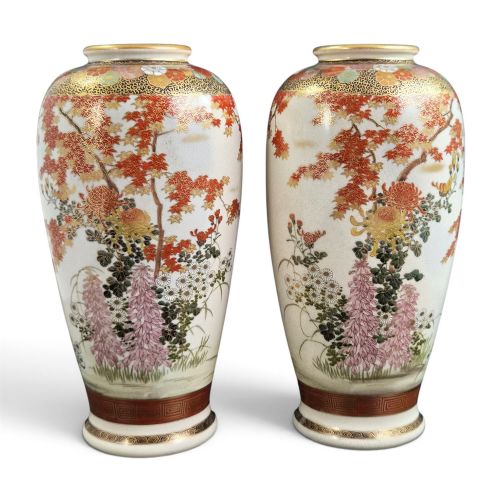
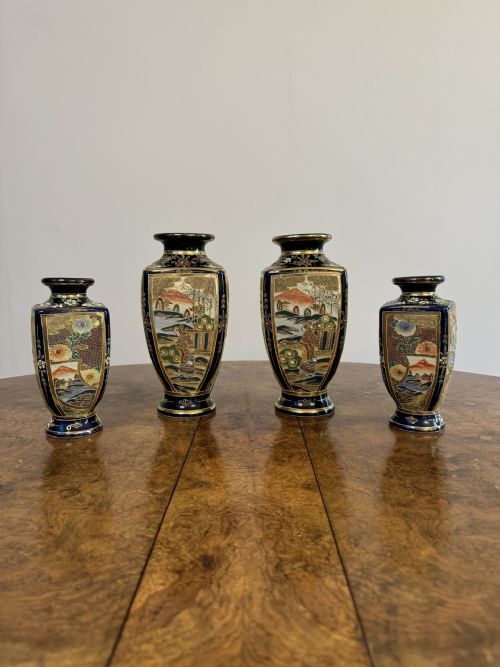
- An earthenware ceramic type featuring a crackled creamy glaze and detailed polychrome or gilt decoration. These pieces frequently depict court scenes, deities, and flora.
- Imari
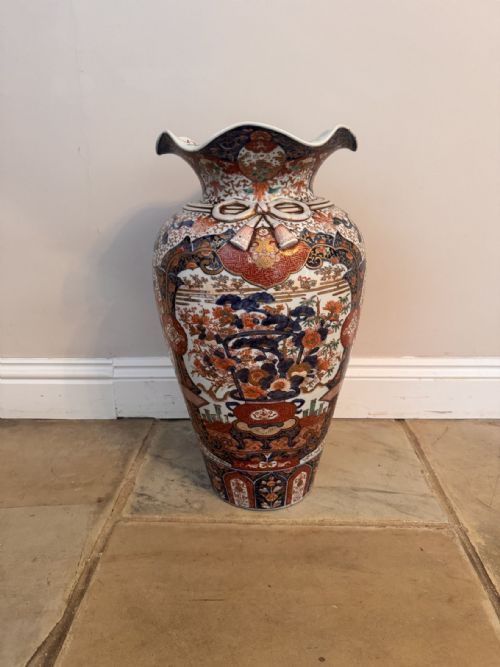
- A traditional Japanese porcelain style characterised by underglaze blue and iron red accents, often enriched with gold leaf. These export wares display bold geometric and floral patterns.
- Cloisonné
- A metalworking technique where thin flat wires form raised barriers on a surface to hold coloured enamel paste. Artisans fire the piece repeatedly to fuse the glass paste into place.
- Sumida Gawa
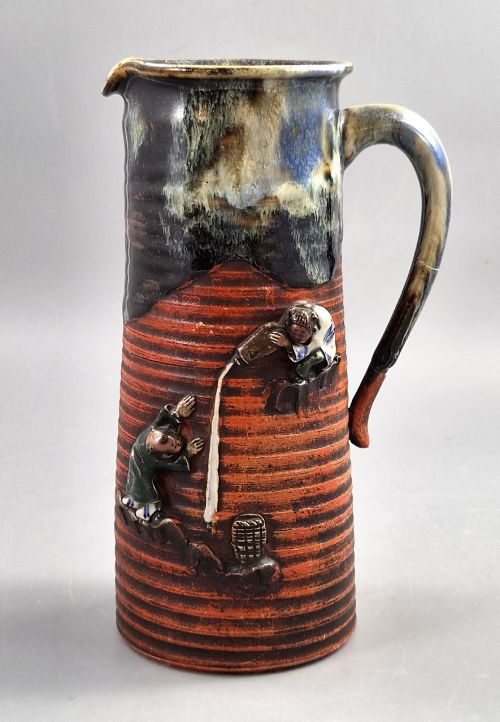
- A distinctive type of pottery known for heavily textured flambe glazes and applied figures climbing across the body. These pieces originate from workshops near Tokyo.
- Kutani
- A category of Japanese porcelain distinguished by strong, vibrant enamel palettes and intricate pictorial designs. They frequently incorporate bird, flower, and figural motifs.
Japanese Meiji Vase: Frequently Asked Questions
How do I identify a Meiji period piece?
Look for the distinctive combination of traditional Japanese motifs executed with high-level technical precision during the late nineteenth and early twentieth centuries.
Many finer vessels carry artist signatures, workshop marks, or specific export stamps on the base that help confirm the era.
Are bronze vases heavy?
Bronze and brass vessels from this era possess substantial weight due to the solid casting methods utilised by metalworkers. Larger floor-standing examples and urns require sturdy placement surfaces.
Inlaid silver and gold elements add surface texture without altering the core heft of the bronze body.
How should I display a large vase?
Large floor-standing vases and monumental urns suit open spaces or corners where their height and detailed relief work remain visible. Paired pieces work well flanking a fireplace or framing an entryway.
Ensure heavy ceramic or bronze vessels rest on stable, level flooring away from high-traffic household areas.
What is the difference between Satsuma and Imari?
Satsuma wares utilise a crackled earthenware body decorated with opaque enamels and raised gold, often featuring human figures and narrative scenes. Imari pieces consist of hard porcelain decorated in deep cobalt blue, iron red, and gilt.
Imari relies on geometric and floral patterns, whereas Satsuma focuses on pictorial storytelling.