

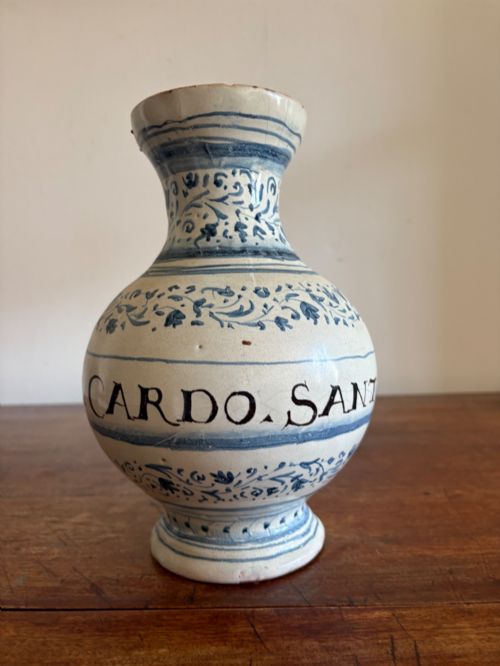


18th Century Majolica
These 18th century majolica pieces are tin-glazed earthenwares from Italy, Spain, and the Netherlands, bringing hand-painted colour and historic utility into a modern interior.
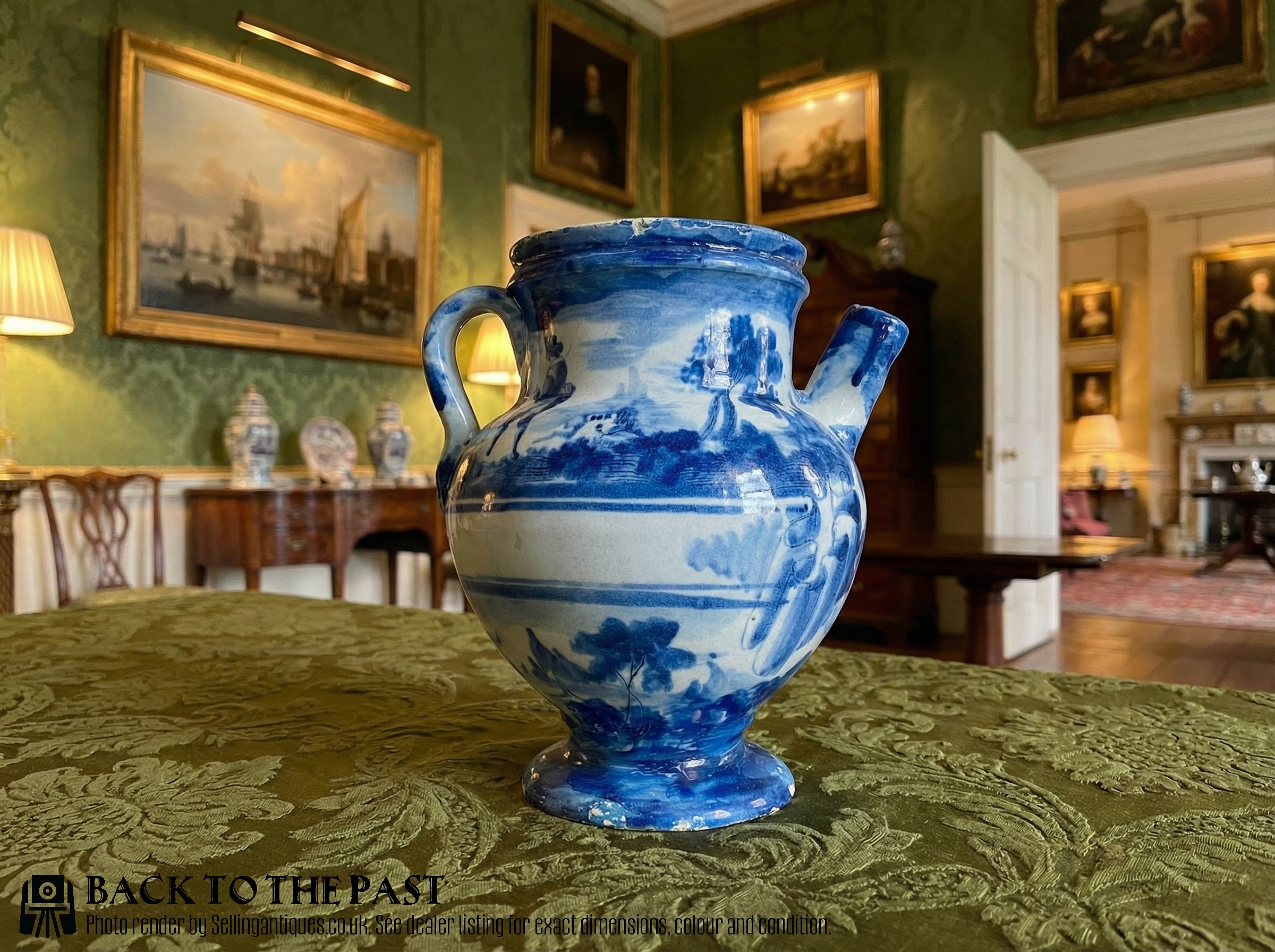
18th Century Majolica
When you search for 18th century majolica, you encounter a specialised selection of historic European tin-glazed earthenware. The inventory here spans utilitarian pharmacy vessels and decorative display items originating primarily from Italian, Spanish, and Dutch workshops.
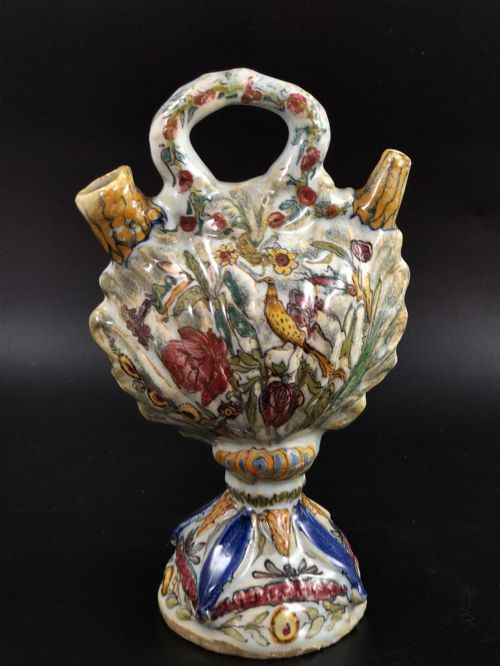
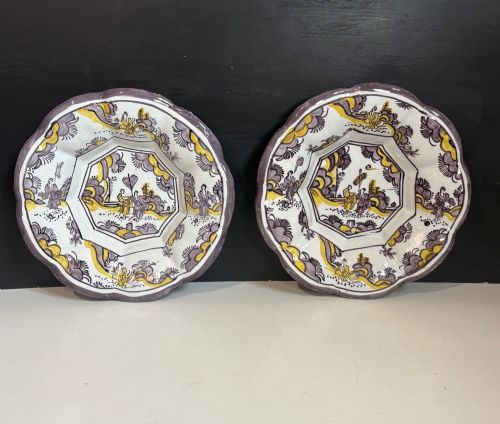
The practical forms dominate the selection, most notably pharmacy wet drug jugs, albarello jars, and lidded vases designed for apothecary use. Alongside these medicinal containers, the listings include large charger plates, devotional wall plaques, and scallop-shell pilgrim flasks.
The geographical origins reflect distinct regional traditions within the broader tin-glaze family, including Italian centres like Savona and Naples, alongside Spanish Talavera and Dutch delft production. These items bridge the gap between functional apothecary storage and fine decorative art.
How they were made
The foundation of these objects is earthenware clay, shaped on the wheel or pressed into moulds to form vessels, jars, and charger plates. Artisans then applied a tin-opacified glaze over the ceramic body to create a smooth, white opaque surface suitable for painting.
Makers decorated the dry, unfired glaze using metallic pigment washes in blue and white or polychrome palettes. The pieces underwent high-temperature kiln firing, which fused the pigments into the tin glaze and fixed the final colours.
The listings show earthenware and tin-glazed earthenware forms spanning the seventeenth and eighteenth centuries, originating from Italian, Spanish, and Dutch workshops.
What varies in quality
The distinction between ordinary and superior pieces rests on the crispness of the hand-painted ornament and the control of the pigment during firing. Master painters achieved fine linework and balanced compositions on pharmacy jars and charger plates, whereas lesser items display rushed or muddy brushwork.
The survival of original components, such as matching covers on pharmacy wet drug jugs and lidded vases, elevates a piece significantly. Furthermore, the complexity of the form, from standard albarello cylinders to sculptural scallop-shell pilgrim flasks, dictates the ambition of the original workshop.
The 18th Century Majolica Glossary
- Albarello
- A cylindrical earthenware jar used by apothecaries to store dry drugs, ointments, and electuaries. The pinched waist allowed handlers to grip the vessel securely on busy dispensary shelves.
- Tin Glaze
- An opaque white ceramic glaze containing tin oxide that provides a reflective background for painted decoration. This technique forms the technical basis for majolica, delftware, and faience.
- Charger Plate
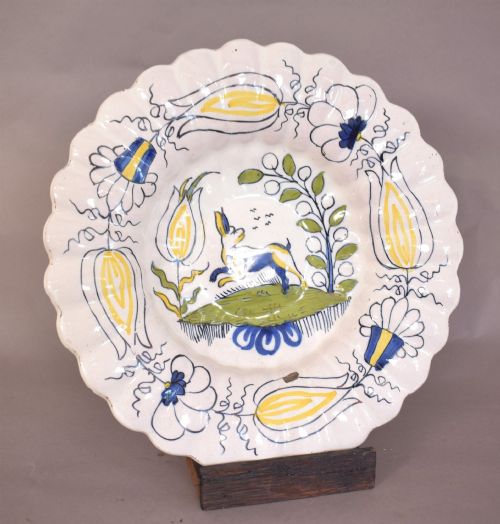
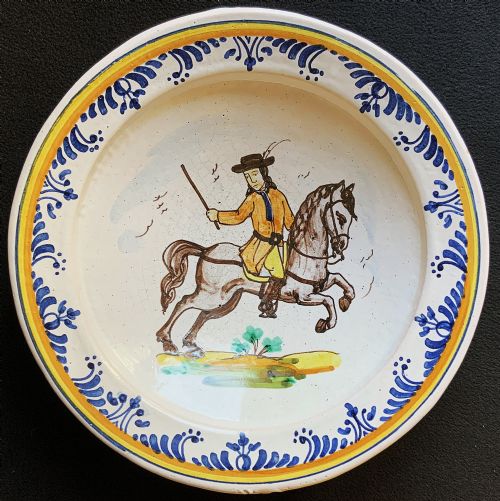
- A large decorative dish intended for display on walls or sideboards rather than dining use. These items often feature elaborate polychrome scenes or armorial motifs.
- Pilgrim Flask
- A flattened pear-shaped or shell-formed vessel with side loops for suspension cords, originally carried by travellers. Majolica examples transform this functional travel form into ornamental table or cabinet ware.
- Polychrome
- Decoration employing multiple colours, typically iron red, cobalt blue, antimony yellow, and copper green. In majolica, these pigments react with the tin glaze during firing to produce vibrant surface hues.
18th Century Majolica: Frequently Asked Questions
What is an albarello jar used for?
Apothecaries utilised albarello jars to store dry herbs, spices, and medical compounds in dispensaries. Their distinctive hourglass shape prevented contents from spilling when handlers reached for jars on crowded shelves.
Over time, these utilitarian vessels transitioned from working dispensaries into decorative display pieces. Collectors prize them today for their historic pharmaceutical inscriptions and hand-painted blue and white or polychrome surfaces.
How do you tell majolica from delftware?
Majolica primarily refers to tin-glazed earthenware produced in Italy and Spain, rooted in Mediterranean Renaissance and Baroque traditions. Delftware describes the equivalent tin-glazed earthenware made in the Netherlands and England, which often shows strong East Asian blue and white influences.
Both categories share the fundamental technique of a tin-opacified glaze over an earthenware body painted with mineral pigments. Distinguishing between them depends on the specific palette, clay body characteristics, and regional painting styles visible on the piece.
Were charger plates used for dining?
Large charger plates served primarily as decorative display items on sideboards and walls rather than for serving food at the table. Their expansive surfaces provided artisans with a canvas for elaborate polychrome scenes, religious motifs, and heraldic designs.
Because they hung on walls or stood on display furniture, many survive in sound condition without the surface wear associated with active tableware. Their scale showcases the full narrative skill of the pottery workshop.
Why do pharmacy jars have Latin inscriptions?
Pharmacy jars feature abbreviated Latin titles to identify the specific medicinal contents, gums, or syrups held inside. Apothecaries and physicians relied on these clear labels to dispense remedies quickly in busy seventeenth and eighteenth-century dispensaries.
These painted inscriptions range from neat apothecary shorthand to flowing script integrated into floral cartouches. They provide a direct link to the historic medical practices of Italian and Spanish apothecaries.
How should I display majolica at home?
Display majolica on stable shelves, inside cabinets, or mounted securely on walls using specialist fittings designed for heavy ceramic plates. Because tin-glazed earthenware can be vulnerable to edge chips, positioning pieces away from heavy household traffic ensures their safety.
Keep these historic ceramics out of direct, prolonged sunlight to protect the stability of the glaze and pigments. Gentle dusting with a dry cloth is sufficient for routine maintenance.