
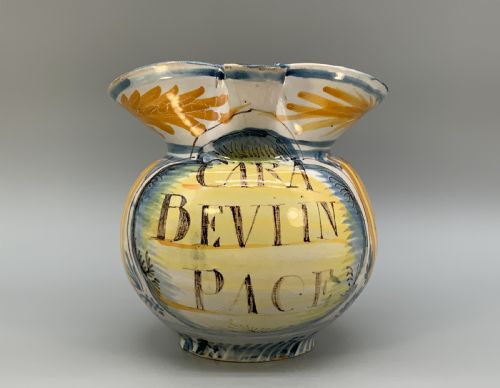
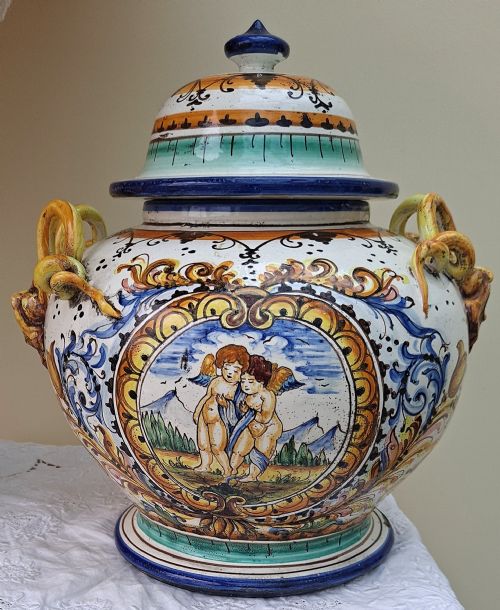
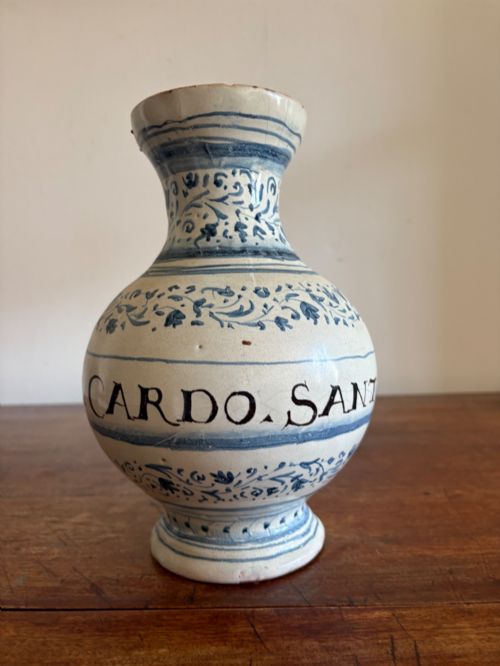


Italian Majolica Jar
These italian majolica jar pieces offer centuries of apothecary history, prized for their rich tin-glaze surfaces and vibrant pigments.
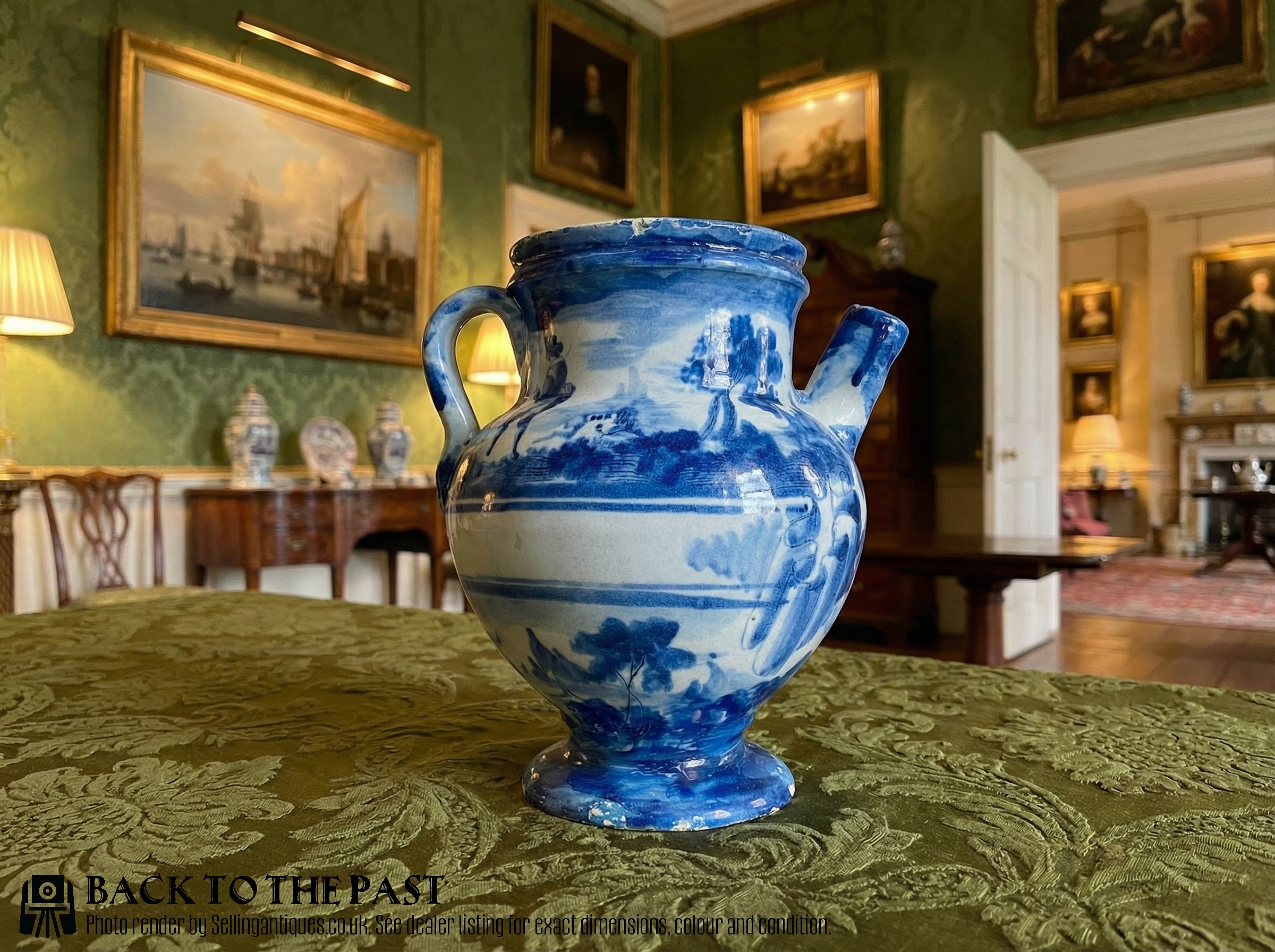
Italian Majolica Jar
An italian majolica jar encompasses centuries of apothecary vessels, pharmacy jugs, and lidded albarellos originating from Italian workshops. The pieces seen on this page span the seventeenth, eighteenth, and nineteenth centuries, alongside early twentieth-century examples.
Buyers most frequently encounter traditional albarellos and pharmacy wet drug jars designed for historical apothecary use. These cylindrical storage vessels often feature waisted profiles and painted decoration, alongside decorative vases and water vessels.
The regional diversity across these items ranges from Savona and Nove production centres to South Italian Naples pieces. Blue and white palettes appear alongside polychrome finishes incorporating manganese, yellow, and other pigments.
Materials and technique
These vessels rely upon earthenware or terracotta bodies shaped into traditional forms such as albarellos and pharmacy jugs. Potters coated these clay foundations in an opaque tin glaze that provided a smooth white ground for subsequent painting.
Makers applied mineral pigments directly onto the unfired tin glaze in both blue and white and multi-coloured polychrome schemes. This technique required precise brushwork before a final kiln firing fixed the oxides into the lustrous surface.
Materials documented across the selection include terracotta, earthenware, tin-glazed earthenware, and mineral pigments.
Understanding quality
The distinction between ordinary and exceptional examples rests upon the crispness of the painted detail and the complexity of the palette. Pieces featuring nuanced polychrome shading or carefully rendered botanical motifs demonstrate superior artistic execution.
Survival of original matching covers on lidded vases and apothecary jars significantly elevates the integrity of the piece. The depth and brilliance of the tin glaze, combined with minimal disruption to the historical surface, define the finest specimens.
The Italian Majolica Jar Glossary
- Albarello
- A cylindrical earthenware jar designed for holding apothecary drugs and ointments. This characteristic shape evolved in the Middle East before becoming a staple of Italian majolica production.
- Tin Glaze
- An opaque white ceramic glaze containing tin oxide that accepts painted pigment before firing. It forms the smooth background typical of majolica and faience pottery.
- Polychrome
- Decoration employing multiple distinct colours rather than a single monochrome pigment. On these jars, this typically includes manganese, yellow, and blue oxide paints.
- Pharmacy Jug
- A handled vessel used in historical apothecaries for holding liquid medicines or syrups. Many examples feature spouts and specific drug inscriptions.
- Faience
- European tin-glazed earthenware produced in imitation of tin-glazed Italian pottery traditions. The term frequently overlaps with majolica in historical cataloguing.
Italian Majolica Jar: Frequently Asked Questions
What were these jars used for?
Historical apothecaries utilised these ceramic vessels to store dried herbs, ointments, electuaries, and liquid syrups. The distinctive cylindrical shape allowed pharmacists to line them tightly on apothecary shelves.
Many pharmacy jugs and albarellos bear painted labels or inscriptions denoting specific medicinal contents used in medical treatments of past centuries.
How do I identify a 17th-century jar?
Seventeenth-century pieces often display specific regional characteristics associated with production centres like Savona, featuring characteristic cobalt blue painting or early polychrome pigments. The clay body, glaze texture, and stylistic painting conventions offer key clues.
Archival examples from around sixteen hundred demonstrate distinct early forms that differ from the later nineteenth-century revival styles found on this page.
Are lids usually original to the jar?
Matching original covers on lidded vases and apothecary jars remain uncommon due to the fragility of ceramic lids over centuries of handling. Many surviving vessels are found today without their original tops.
When a piece retains its matching lid from the period, it represents a more complete survival of the original apothecary container.
How do I display an albarello at home?
These jars suit placement on bookshelves, sideboards, or open kitchen shelving where their cylindrical forms and painted patterns remain visible. Their historical character complements traditional and eclectic interiors alike.
Displaying them away from direct moisture preserves the porous earthenware body and the historical tin glaze surface.