


Italian Maiolica Vase
An italian maiolica vase brings intense colour and historical ornament into a room, fashioned from tin-glazed earthenware and painted by hand.
Italian Maiolica Vase
When you search for an italian maiolica vase, you encounter tin-glazed earthenware vessels ranging from eighteenth-century apothecary jars to nineteenth-century revival centrepiece bowls and table lamps. The selection spans straightforward eighteenth-century lidded forms and vibrant nineteenth-century Italian Renaissance Revival interpretations.
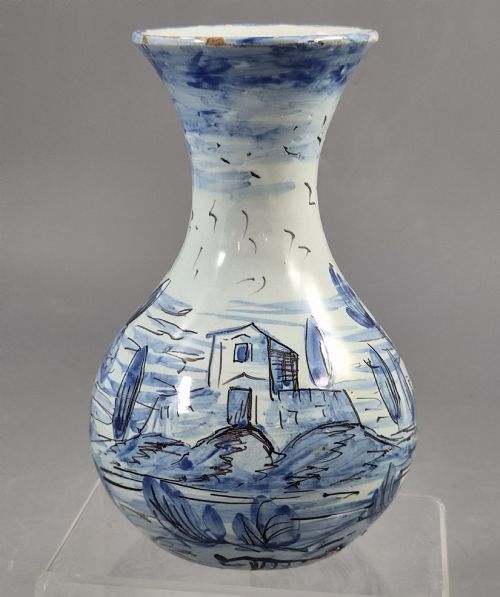
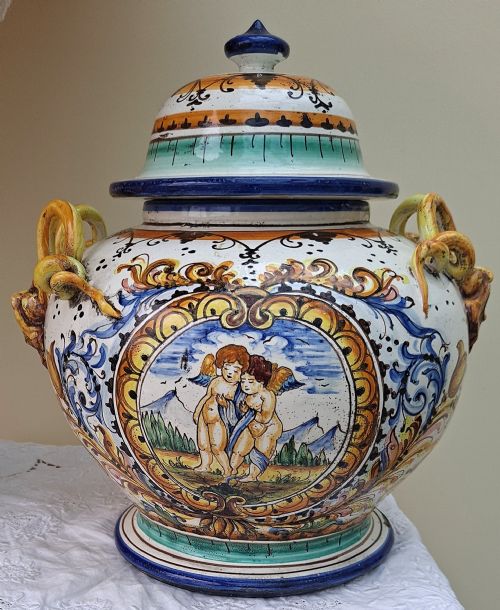
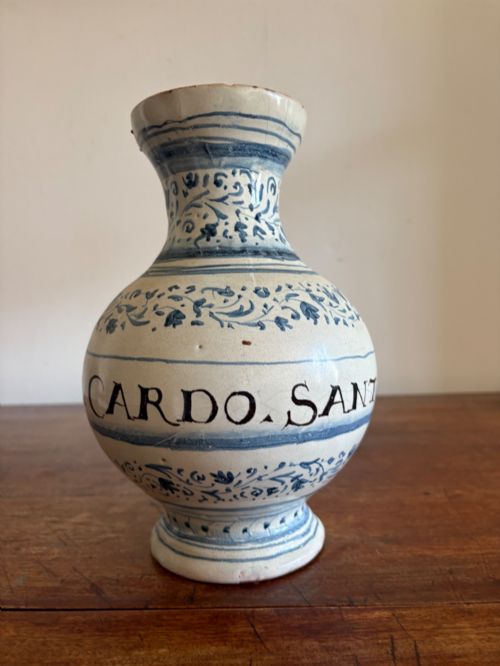
Most pieces date from either the eighteenth century or the nineteenth century, often reflecting regional styles like Savona or the Garofano pattern. You will find both blue and white colour schemes and rich polychrome palettes on vases, urns, and albarello shapes.
Materials and construction
Makers formed these vessels using terracotta and ceramic earthenware before applying an opaque white tin glaze that provided a smooth surface for painting. Metallic lustre elements sometimes added a reflective sheen to the finished piece.
Painters decorated the dry glaze directly with mineral pigments before firing, allowing the colours to fuse into the surface. Some nineteenth-century examples incorporate secondary mounts of brass for stands or lamp conversions.
Listings feature earthenware and ceramic bodies finished with tin glaze, alongside brass mounts used on later table lamp conversions.
Assessing quality and execution
The distinction between ordinary and exceptional pieces lies in the crispness of the hand-painted ornament and the depth of the palette. Superior examples display confident brushwork and balanced compositions, whether drawing on eighteenth-century traditions or later revival aesthetics.
The purity of the tin glaze and the control shown during the firing process also determine distinction. Finer pieces maintain a clean glaze surface without excessive pooling, allowing the underlying earthenware form to support the painted design.
Cantagalli·Ulisse Cantagalli
The Italian Maiolica Vase Glossary
- Maiolica
- Tin-glazed earthenware produced in Italy, typically featuring colourful hand-painted decoration over an opaque white background. The technique has roots in Renaissance traditions and later nineteenth-century revivals.
- Albarello
- A cylindrical earthenware jar originally used by apothecaries to store drugs and spices. These vessels often feature distinctive waisted bodies to allow easy handling.
- Tin Glaze
- A ceramic glaze made opaque by the addition of tin oxide, providing a white canvas for painting. It forms the defining surface of traditional maiolica.
- Polychrome
- Decoration employing multiple distinct colours rather than a single monochrome palette. In these ceramics, painters utilised blues, yellows, greens, and oranges.
- Lustre
- A type of pottery decoration that imparts a metallic sheen through the application of metallic films during a secondary low-temperature firing.
Italian Maiolica Vase: Frequently Asked Questions
How do I date an italian maiolica vase?
Dating relies on stylistic clues, palette characteristics, and the physical properties of the ceramic body. Eighteenth-century pieces often show different glaze textures and simpler forms compared to elaborate nineteenth-century revival output.
Maker marks, where present, help pinpoint specific workshops such as the Cantagalli factory in Florence. Comparing the tin glaze and pigment tones against known period examples provides further confirmation.
Were these vases meant for actual use?
Many historical vessels served functional roles, particularly apothecary jars and albarellos designed to hold dry medicines. Other forms were strictly decorative, intended for display on cabinets or pedestals.
Over time, some vases and urns have been adapted into table lamps while retaining their original ceramic bodies. This practical conversion allowed Victorian and later interiors to display antique ceramics safely.
What is the difference between maiolica and faience?
Both terms describe tin-glazed earthenware, but terminology often shifts by region. Maiolica specifically denotes the Italian tradition, while faience is more commonly applied to French, German, and English tin-glazed wares.
Despite the regional names, the underlying technique of applying mineral pigments over a white tin glaze remains largely similar across European potteries.