


Antique Italian Faience
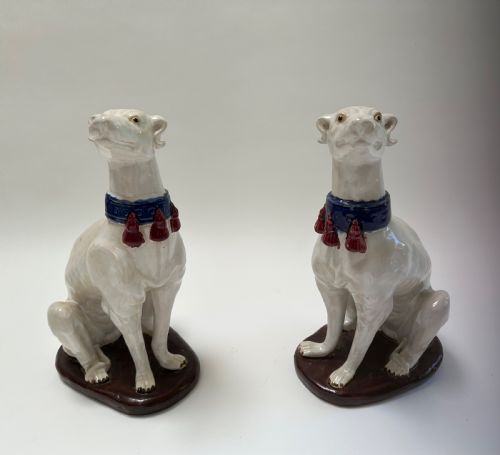
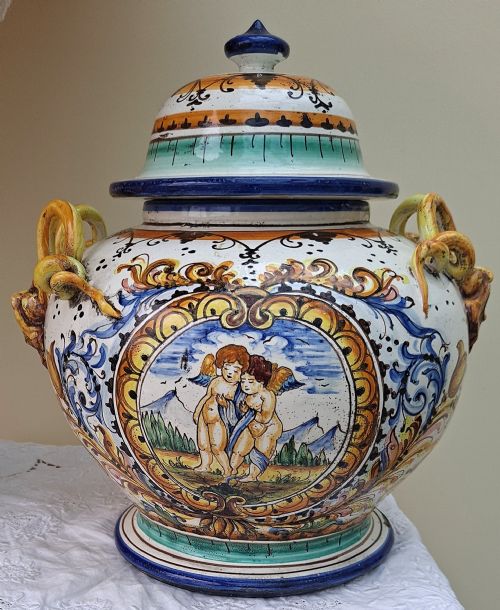
These pieces of antique italian faience are tin-glazed earthenware vessels and plaques that bring historic colour and narrative design into a room.
Antique Italian Faience
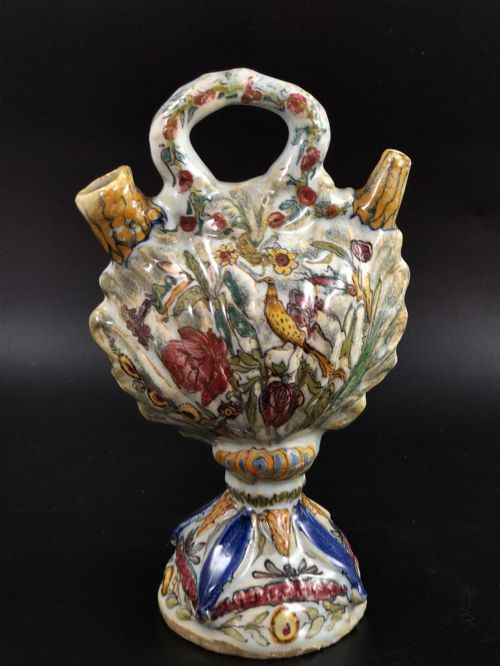
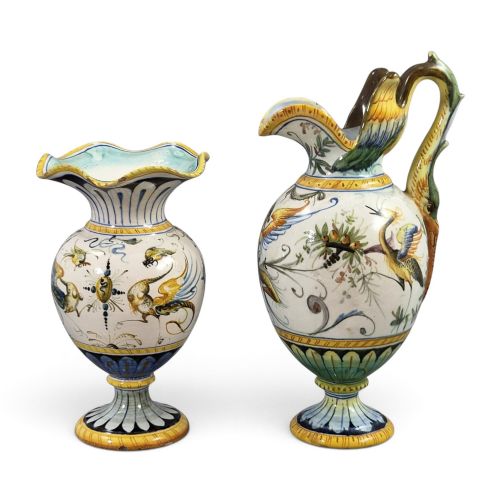
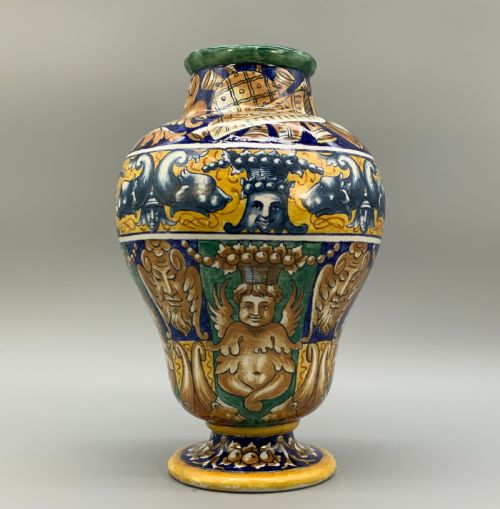
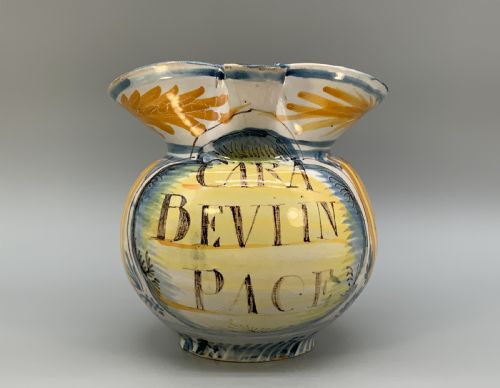
When you search for antique italian faience, you encounter tin-glazed earthenware and ceramic objects spanning several centuries of European production. The pieces on this page range from utilitarian pharmacy jars and drug vessels to decorative chargers, wall plaques, and pilgrim flasks.
The selection includes wares originating from traditional pottery centres as well as later revival pieces produced in the nineteenth century. Apothecary jars and albarelli appear alongside large painted chargers depicting classical historical scenes and religious subjects.
Earlier examples represent seventeenth and eighteenth-century craftsmanship, while nineteenth-century revivals draw heavily upon Renaissance and Baroque styles. Buyers frequently select these items for their rich polychrome palettes and distinctive historical forms.
How they were made
The foundation of these objects is earthenware or terracotta, shaped into vessels or plaques before receiving an opaque white tin glaze. Pigments and enamels are then applied directly to the porous unfired glaze surface, absorbing the colour before a final high-temperature firing.
Metallic lustre techniques appear on select pieces, adding a reflective sheen over the glaze. Hand-painted brushwork defines the ornament, ranging from simple cobalt blue motifs to complex multi-coloured historical narratives.
Pharmacy jars occasionally bear cryptic Latin abbreviations for ancient remedies like crushed gemstone.
What varies in quality
The distinction between ordinary and exceptional pieces lies primarily in the confidence and detail of the hand-painted decoration. Expert brushwork on istoriato chargers and pharmacy jars displays precise facial expressions, dynamic compositions, and a harmonious balance of mangonese, yellow, and blue pigments.
Execution also differs in the thickness and evenness of the tin glaze application, as well as the crispness of the earthenware potting. Finer examples retain sharp definition in their forms and possess a luminous, vitreous surface quality.
Cantagalli Florence·Bassano pottery works
The Antique Italian Faience Glossary
- Faience
- Tin-glazed earthenware produced in Europe, typically featuring painted decoration over an opaque white glaze. The term encompasses various regional traditions including majolica.
- Albarello
- A cylindrical pharmacy jar designed to store dry drugs, herbs, or ointments. These vessels often feature a waisted profile to allow for easy handling on apothecary shelves.
- Istoriato
- Painted pottery decorated with narrative scenes drawn from history, mythology, or the Bible. This elaborate style gained prominence during the Italian Renaissance.
- Pilgrim Flask
- A flattened pear-shaped or circular vessel with side lugs for suspension cords. Originally carried by travellers, these decorative flasks often take the form of scallop shells.
- Tin Glaze
- An opaque white ceramic glaze containing tin oxide. It provides a smooth white background suitable for painting detailed polychrome designs.
Antique Italian Faience: Frequently Asked Questions
What were pharmacy jars used for?
Apothecary jars and albarelli held dry drugs, syrups, and medicinal preparations in historic pharmacies. Their painted labels indicated the specific contents within.
Today, collectors appreciate these jars as sculptural objects that display centuries of ceramic art and apothecary history.
How do I identify a revival piece?
Nineteenth-century revival pieces often mimic seventeenth or eighteenth-century styles, such as Renaissance Maiolica or Baroque forms. Examining the paste, glaze maturity, and pigment characteristics helps differentiate earlier originals from later interpretations.
Makers like Cantagalli also incorporated distinct factory marks or specific stylistic cues typical of the Victorian period.
Where should I display a charger?
Large wall chargers and plaques look striking mounted on a wall or displayed on a sturdy plate stand. Their pictorial scenes demand a central position where lighting highlights the polychrome pigments.
Keep them away from areas prone to heavy foot traffic or accidental knocks.
Are these pieces waterproof?
Tin-glazed earthenware is porous and generally intended for decorative display rather than holding water. Using them as vases for fresh flowers risks moisture seeping through the ceramic body.
Dry botanical arrangements or simply displaying the vessels empty preserves the integrity of the glaze.