


19th Century Majolica Vase
A 19th century majolica vase brings vibrant lead-glazed earthenware and tin-glazed colour into a room, offering rich historical revival styles for the collector.
19th Century Majolica Vase
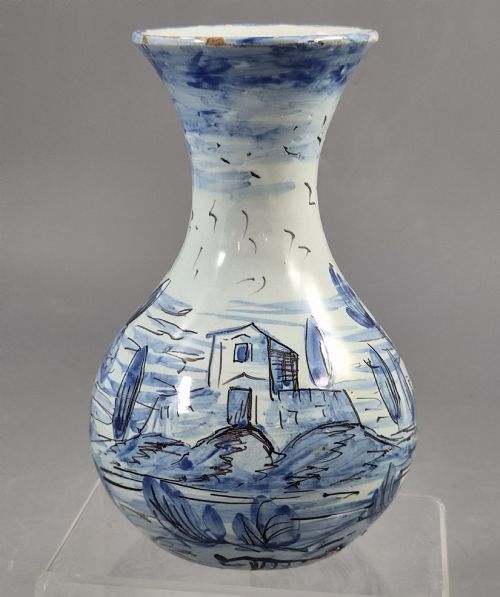
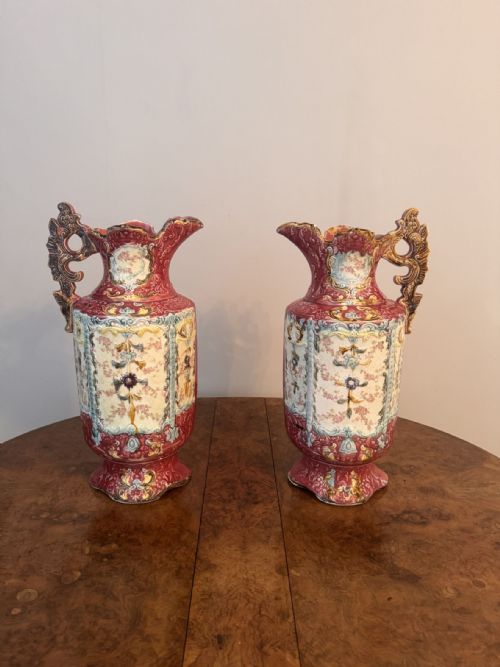
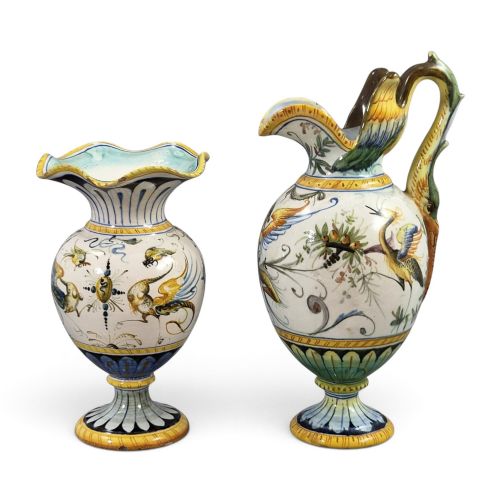
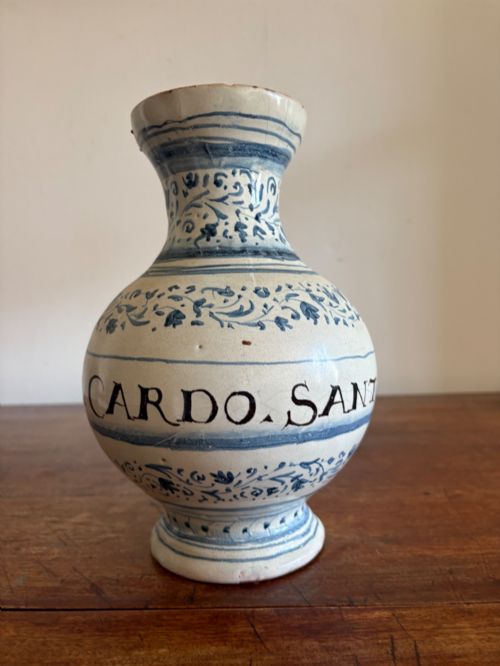
A 19th century majolica vase represents a continuation of tin-glazed earthenware traditions through the Victorian and continental periods. Buyers encounter a variety of forms on this page, including ewers, covered urns, apothecary jars, and pedestal vases.
The objects frequently draw on historical aesthetics such as Renaissance Revival, Italian Renaissance Revival, Chinoiserie, and Victorian Naturalism. These pieces range from cabinet specimens to large monumental pairs intended for prominent display.
Origins span Italian workshops such as Cantagalli in Florence, alongside French, English, and broader continental makers. The typology encompasses both utilitarian drug jars turned decorative and purely ornamental vessels.
Materials and production methods
Potters shaped these vessels from earthenware or terracotta before applying an opaque tin glaze or standard ceramic glaze as a base for painting. Enamel colours were then applied over or into the glaze, often capturing the palette of earlier Italian maiolica.
Many works incorporate moulded relief details, such as the naturalistic forms seen in Victorian pieces or the classical figures on revival ewers. Some continental and French examples combine the ceramic body with metal mounts like ormolu.
Bacchus makes unexpected cameo appearances on nineteenth-century majolica, cheerfully presiding over wine-themed urns with clusters of ceramic grapes.
Assessing quality and execution
The distinction between standard production and top-tier pieces rests on the crispness of the moulded relief and the control of the coloured enamels. Superior examples display precise brushwork, particularly in complex revival and Chinoiserie surface decoration.
Scale and ambition also define the upper tier, where monumental sizing, sculptural handles, or integrated metalwork elevate the object. Maker attribution, especially to notable workshops like Cantagalli or Minton, further distinguishes the standing of a piece.
Cantagalli·Ulisse Cantagalli·Minton·Royal Copenhagen
The 19th Century Majolica Vase Glossary
- Majolica
- A term used in the nineteenth century for colourful tin-glazed earthenware, often produced in revival styles. It relates historically to Italian maiolica but employs nineteenth-century industrial and artistic techniques.
- Tin Glaze
- An opaque white glaze made by adding tin oxide to a lead glaze base. It provides a smooth white background for painted enamel decoration.
- Ewers
- Pitcher-like vessels with wide spouts and arched handles that were often produced purely for decorative display in the nineteenth century. They form a significant portion of the large-scale ceramic vessels on offer.
- Renaissance Revival
- A nineteenth-century artistic movement that drew inspiration from fifteenth and sixteenth-century Italian art and architecture. Makers utilised these historic motifs extensively on pottery and urns.
- Apothecary Jar
- A cylindrical or globular ceramic container originally used to store dried herbs, medicines, or ointments. Nineteenth-century examples often replicate earlier Italian forms for decorative purposes.
19th Century Majolica Vase: Frequently Asked Questions
What is a majolica vase?
A majolica vase is a nineteenth-century ceramic vessel covered in an opaque tin or lead glaze and decorated with coloured enamels. These pieces often emulate historical Renaissance or classical aesthetics.
They serve primarily as decorative objects rather than functional containers. Their bright palettes and moulded reliefs made them popular centrepieces in Victorian interiors.
Where were these vases made?
These pieces originated across Europe, with significant production centres in Italy, France, England, and Denmark. Italian workshops, particularly in Florence, specialised in reviving historic maiolica styles.
French and English manufacturers often combined traditional earthenware bodies with elaborate Victorian or continental decorative schemes. This cross-border exchange created a diverse range of regional aesthetics.
How do I style a majolica vase?
A majolica vase works well as a focal point on a mantelpiece, side table, or pedestal stand. Their strong colours and sculptural forms complement both traditional interiors and eclectic modern spaces.
Due to their decorative nature and historic glazes, they are generally displayed empty rather than used for fresh flowers. Placing them away from direct heat and heavy foot traffic helps protect the ceramic body.