


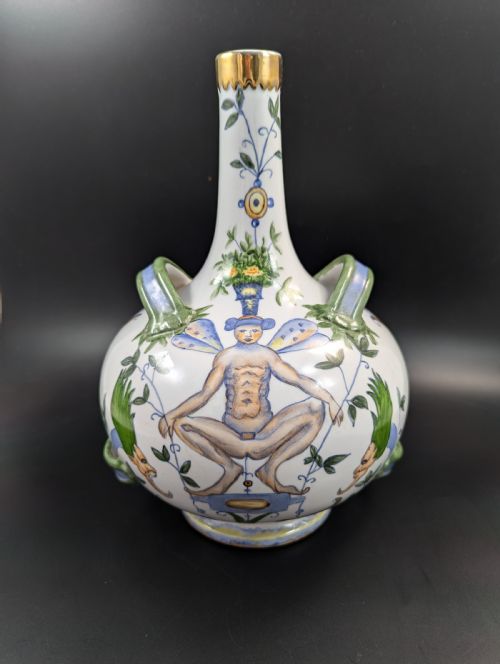


Renaissance Revival Majolica
These renaissance revival majolica pieces are bold, colourful ceramics borrowed from sixteenth-century models to brighten Victorian and later rooms.
Renaissance Revival Majolica
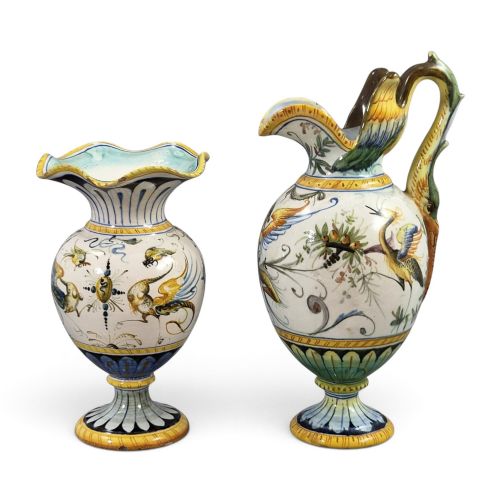
When you search for renaissance revival majolica, you are looking at nineteenth-century earthenware vessels that borrow their forms, palettes, and motifs from the Italian Renaissance. These pieces take the shape of urns, ewers, jardinieres, and chargers, often decorated with polychrome glazes and mythological figures.
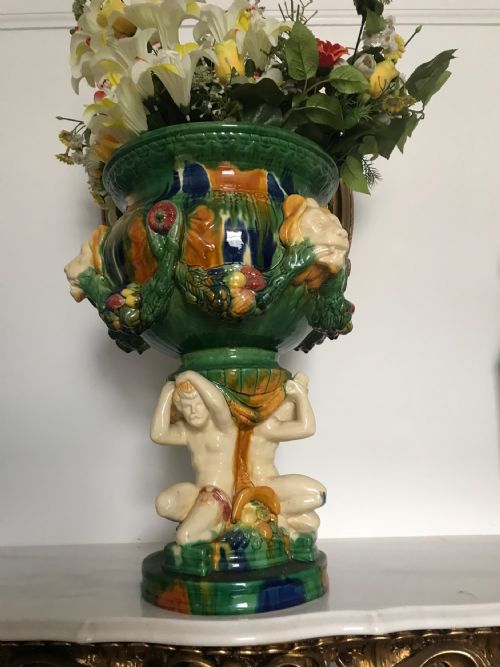
On this page, the most common versions you will meet are Italian and French productions from the Victorian period, alongside specific pieces from potteries like Cantagalli and Minton. They range from small table lamps to massive planters on figural bases with lions head decoration.
What varies in quality
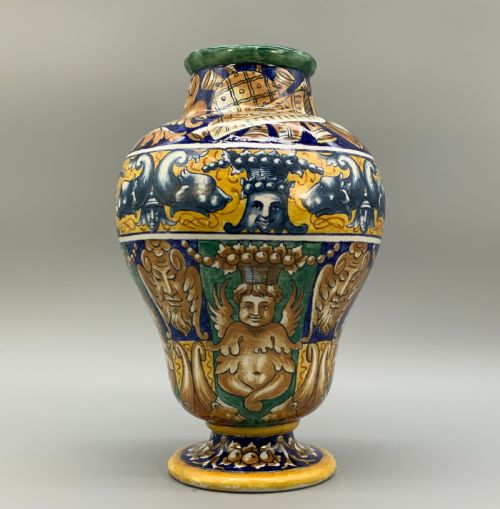
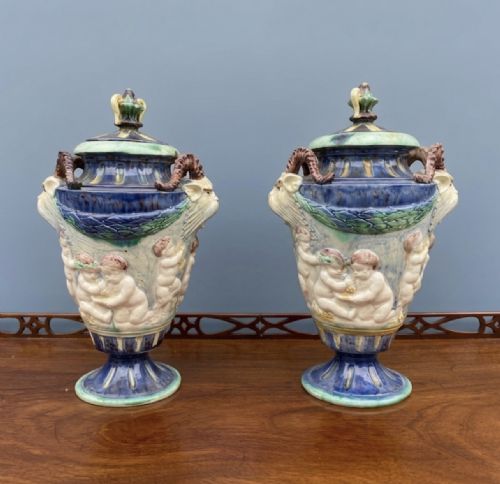
Quality in these ceramics rests on the crispness of the modelling and the control of the polychrome palette. Superior pieces show precise brushwork in the mythological figures and cherubs, with glazes that run evenly without clouding the underlying detail.
The ambition of the form also separates standard production from exceptional work. Vases with figural handles, complex armorial decoration, or integrated pedestals demand greater technical skill from the pottery than simple domestic vessels.
Periods represented span the Victorian era, the nineteenth century, and into the early twentieth century.
Cantagalli Florence·Ulisse Cantagalli·Minton·C. Ravier
The Renaissance Revival Majolica Glossary
- Majolica
- A type of tin-glazed earthenware decorated with opaque coloured glazes. The term encompasses both historic Italian wares and nineteenth-century revivals.
- Ewer
- A large jug with a wide spout and a handle, typically used for water or wine. In this revival style, they serve as decorative display pieces.
- Jardinere
- An ornamental pot or stand designed to hold growing plants. These often feature substantial figural bases and bold relief decoration.
- Charger
- A large decorative plate meant for display rather than dining. They frequently display elaborate polychrome scenes across the central well.
- Faience
- Tin-glazed earthenware produced in France and other European regions. French factories like Gien created significant quantities in this tradition.
Renaissance Revival Majolica: Frequently Asked Questions
What is renaissance revival majolica?
These pieces are nineteenth-century ceramics that copy the vibrant colours and classical motifs of sixteenth-century Italian pottery.
They include ewers, chargers, and large vases decorated with mythological figures and armorial designs.
How were these ceramics used?
Most of these vessels served as decorative display items in Victorian drawing rooms and halls rather than for practical dining.
Larger jardinieres and planters held indoor foliage, while table lamps brought colourful ceramic bases into domestic lighting.
Where were these pieces made?
The works originate primarily from Italian and French potteries active during the nineteenth century.
Prominent factories in Florence and France produced these revival designs for an international market.
How do I tell Italian from French pieces?
Italian works often lean closely towards sixteenth-century majolica forms, featuring polychrome palettes and spirited grotesque or mythological painting.
French faience pieces, such as those from Gien, frequently incorporate distinct armorial motifs and blue-and-white or rich polychrome glazes.