



Hand Painted Italian Pottery
Hand painted Italian pottery brings centuries of tin-glazed earthenware and vibrant pigments into a room, offering both traditional pharmacy jars and revival vases.
Hand Painted Italian Pottery
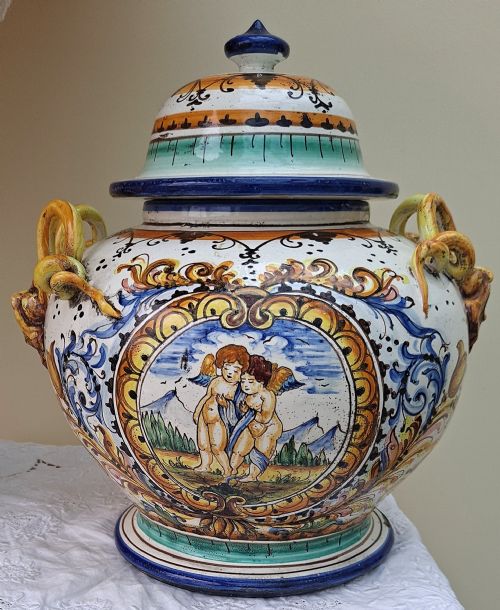
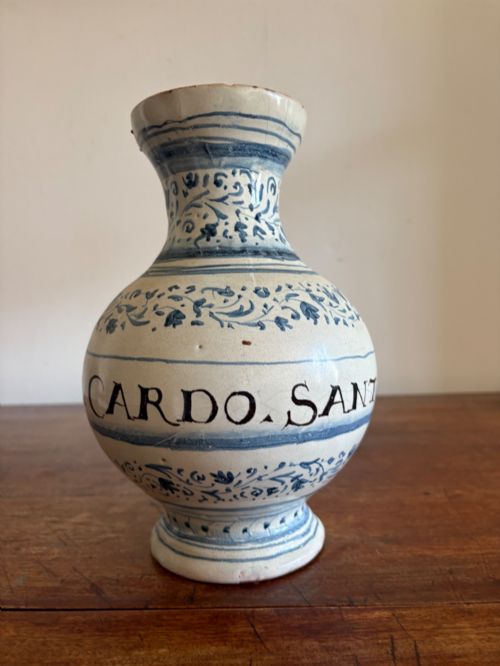
Hand painted Italian pottery encompasses a rich variety of decorative and utilitarian vessels, ranging from apothecary jars and drug jars to large vases, wall chargers, and devotional plaques. When searching for hand painted Italian pottery, collectors encounter both genuine eighteenth-century vessels and nineteenth-century revival pieces that emulate earlier styles.
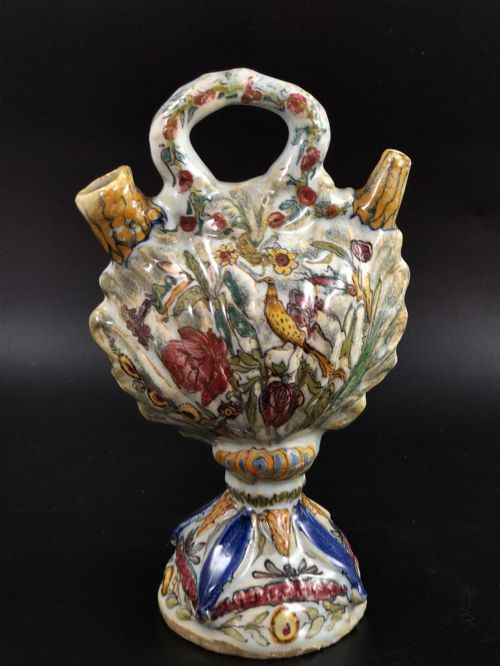
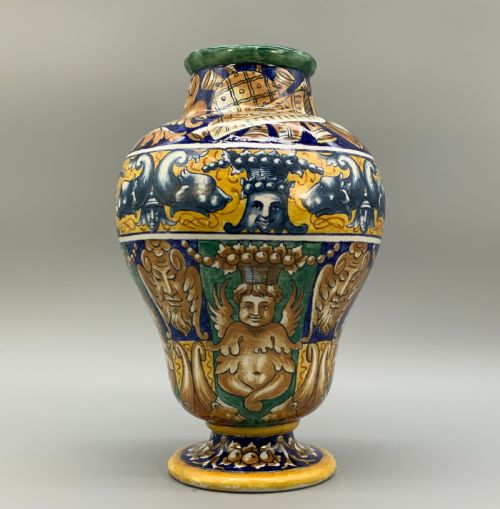
The selection on this page leans heavily towards nineteenth-century interpretations of earlier aesthetics, alongside authentic eighteenth-century examples and early twentieth-century works. Forms include pilgrim flasks, albarelli, lidded urns, and table lamps that bring traditional Mediterranean craftsmanship into domestic interiors.
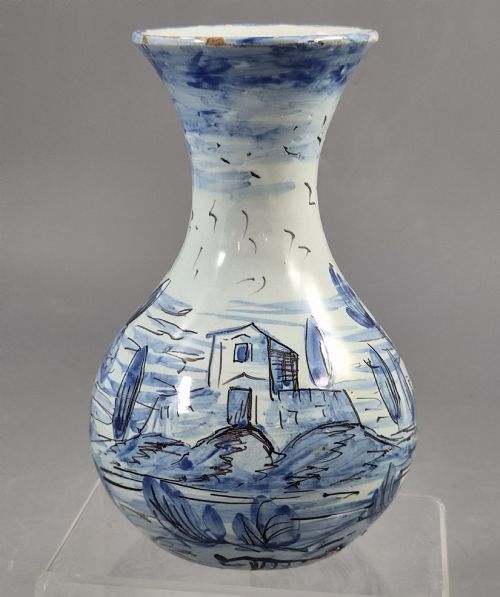
The tradition draws heavily on historical hubs of ceramic production, incorporating styles from the Renaissance Revival and Italian Baroque to Art Nouveau. Buyers find pieces bearing traditional blue and white motifs as well as polychrome designs featuring mangonese, yellow, and green pigments.
How they were made
Potters shaped these objects from earthenware, terracotta, and ceramic bodies, often utilising hand-thrown techniques before applying surface decoration. The foundational structure provides a sturdy base for the elaborate finishes characteristic of this regional tradition.
Makers applied tin glaze to create an opaque white or cream surface, which served as the canvas for hand-painted mineral pigments. Artisans then fired the pieces to set the polychrome or blue and white designs into the glaze layer.
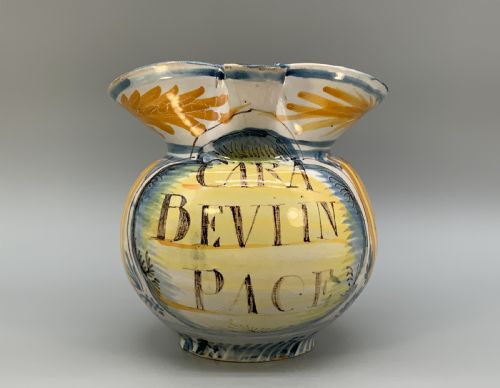
Object forms range from pharmaceutical albarelli and pharmacy jugs to large pilgrim flasks, devotional plaques, and table lamps.
What varies in quality
The standard of painting determines much of the distinction between ordinary production and exceptional examples, with master painters executing crisp, detailed brushwork on portraits, florals, and historical scenes. The depth and vibrancy of the polychrome or blue and white pigments reflect the skill involved in controlling kiln temperatures during firing.
The historical provenance and the reputation of the workshop or maker heavily influence desirability, particularly when pieces originate from notable centres like Florence or bear documented signatures. The integrity of the tin glaze and the preservation of the painted surface over centuries also dictate the standing of an individual piece.
Cantagalli·Gallilleo Chini·C. Ravier
The Hand Painted Italian Pottery Glossary
- Maiolica
- Tin-glazed earthenware produced in Italy, typically decorated with colourful painted motifs on a white background. This technique forms the basis of many traditional and revival pieces found in collections.
- Albarello
- A cylindrical earthenware jar used by apothecaries to store dry drugs, herbs, and ointments. These vessels often feature distinctive waisted bodies for ease of handling.
- Faience
- European tin-glazed pottery, a term frequently applied in northern Europe and sometimes used interchangeably with majolica. The finish relies on an opaque white glaze that accepts hand-painted mineral colours.
- Polychrome
- Decoration employing multiple distinct colours rather than a single hue, such as blue and white. In these ceramics, it typically includes combinations of yellow, green, and mangonese.
- Pilgrim Flask
- A flattened, circular vessel with handles, originally designed for travellers to carry liquids. Ceramic versions evolved into purely decorative cabinet pieces.
- Charger
- A large decorative plate intended for display on a wall or dresser rather than for dining. These often feature elaborate painted portraits, coats of arms, or historical scenes.
Hand Painted Italian Pottery: Frequently Asked Questions
What is an albarello used for?
Apothecaries used albarelli as storage jars for dry drugs, botanical remedies, and medicinal pastes. Their distinctive cylindrical shape with a waisted centre allowed pharmacists to grip them easily on crowded shelves.
Over time, these utilitarian drug jars transitioned into decorative display items prized for their painted botanical labels and heraldic designs.
How do I date majolica?
Dating majolica requires examining the characteristics of the earthenware body, the composition of the tin glaze, and the style of the painted decoration. Nineteenth-century revival pieces often display brighter, more uniform pigments and different baseline wear compared to eighteenth-century originals.
Maker marks, workshop stamps, and signatures can also provide specific chronological markers, though many older pieces remain unsigned.
What is a pilgrim flask?
Pilgrim flasks are rounded, flattened vessels equipped with side loops or handles for suspension cords. Historically carried by travellers and pilgrims, they evolved into purely ornamental ceramic forms during the Renaissance.
Majolica versions often feature elaborate heraldic motifs, mythological scenes, or floral patterns suited for display on cabinets or tables.
How should I display wall chargers?
Wall chargers are large decorative plates designed specifically for visual impact rather than table service. They feature drilled foot rings or require specialised spring hangers to secure them safely to a wall.
Placing them in well-lit areas allows the hand-painted polychrome glazes and historical portraits to catch the light effectively.