
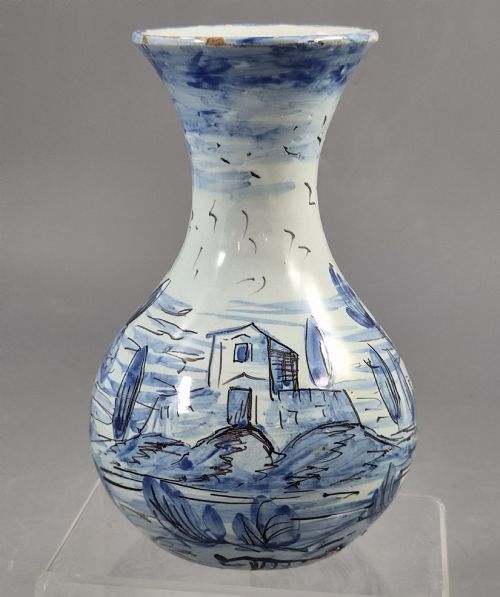
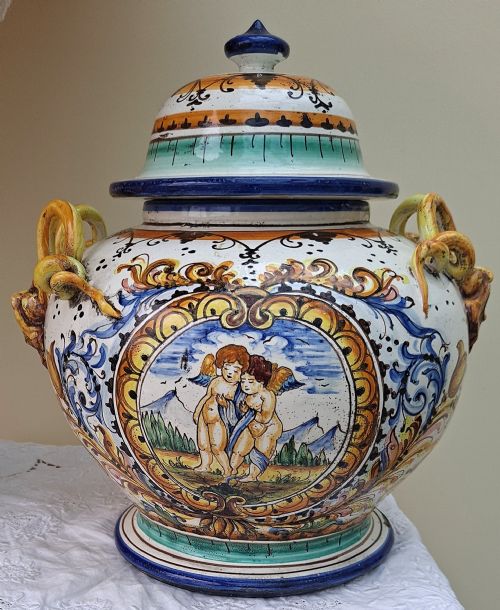


Italian Maiolica Urn
An italian maiolica urn brings tin-glazed earthenware brilliance and Renaissance Revival spirit straight into a room.
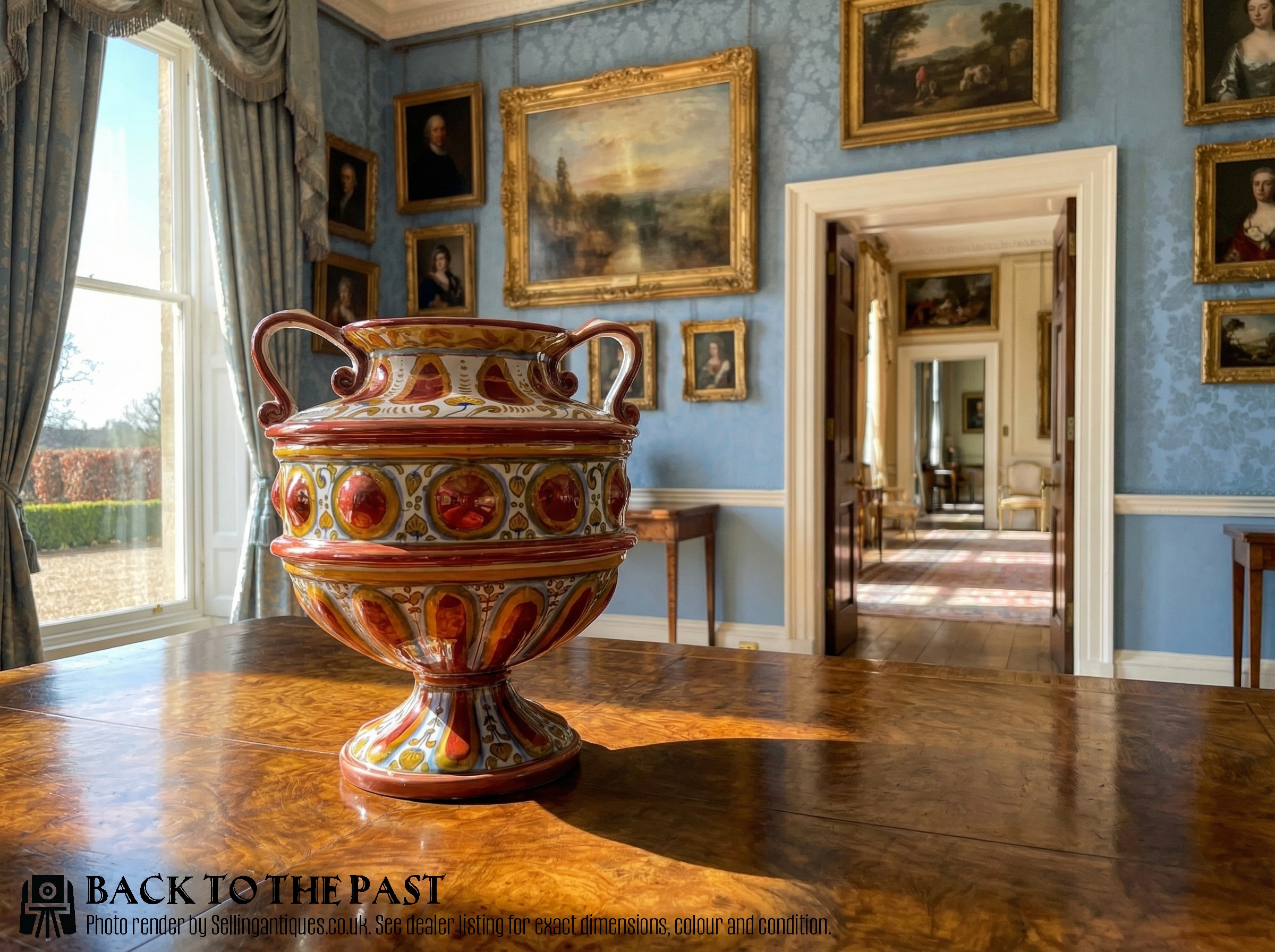
Italian Maiolica Urn
An italian maiolica urn is a ceramic vessel shaped for display, drawing on centuries of heritage from Italian kilns. When you search for this phrase, you encounter decorative vases, lidded vessels, and occasional table lamps created across several distinct eras.
The pieces on this page lean heavily towards the nineteenth century, particularly through Renaissance Revival and Victorian interpretations. Alongside these later revivals, eighteenth-century examples appear, offering older forms such as the traditional Garofano vase and lidded cabinet pieces.
Forms vary from standard decorative vases to large examples mounted on pedestals, as well as cabinet pieces created for visual impact. Most of these vessels serve purely decorative functions within an interior, though a few late nineteenth-century conversions exist as table lamps.
How they were made
These vessels rely on earthenware and terracotta bodies shaped by hand or on the wheel before receiving an opaque tin glaze. This tin-glazed surface provides the ideal absorbent white ground for detailed hand-painted decoration.
Decorators applied pigments directly to the unfired glaze, often utilising traditional blue and white palettes or richer polychrome schemes. Metallic lustre techniques occasionally appear, adding a reflective sheen that required careful secondary firing in the kiln.
The selection includes specialised forms such as lidded cabinet vases, matched pairs, and a nineteenth-century example converted into a table lamp.
What varies in quality
Quality rests primarily in the crispness of the hand-painted ornament and the depth of the tin glaze. Superior pieces exhibit confident brushwork, clean outlines, and harmonious colour placement that evoke sixteenth-century prototypes without stiffness.
The presence of a fitted cover or a matching pair elevates a vessel significantly, as complete lidded sets survive less frequently than open vases. Additionally, the finesse of the underlying earthenware form and any supplementary brass mounts separate standard decorative items from finer studio productions.
Cantagalli
The Italian Maiolica Urn Glossary
- Maiolica
- Tin-glazed earthenware produced in Italy, typically featuring colourful painted decoration over an opaque white glaze. The technique reached its artistic peak during the Renaissance before experiencing various nineteenth-century revivals.
- Tin Glaze
- A ceramic glaze made opaque by the addition of tin oxide, creating a white surface suitable for painting. This finish defines the appearance of all traditional maiolica.
- Garofano
- A decorative pattern featuring stylized carnations, commonly associated with Italian ceramic traditions. The motif draws on distant Iznik influences absorbed through trade and local adaptation.
- Cantagalli
- A prominent Florentine ceramic factory active in the late nineteenth century known for reviving historical maiolica styles. Their pieces often bear a cockerel mark on the base.
- Polychrome
- Decorated in multiple colours rather than a single monochrome palette. In maiolica, this typically involves cobalt blue, soft yellows, coppers, and iron reds.
Italian Maiolica Urn: Frequently Asked Questions
What is an Italian maiolica urn?
An Italian maiolica urn is a decorative ceramic vessel finished with an opaque tin glaze and hand-painted ornamentation. These pieces range from eighteenth-century examples to nineteenth-century revival works created for display.
They draw on historic Italian pottery traditions, often utilising vibrant polychrome or blue and white palettes. Most function as standalone decorative objects or lidded cabinet pieces.
How were these urns used historically?
Historically, these vessels served primarily as decorative display pieces in grand interiors, pharmacies, or garden settings. Their elaborate painted surfaces were meant to be admired rather than used for holding liquids.
Over time, some larger forms were mounted on pedestals to anchor an architectural space. Today, they continue to function strictly as ornamental focal points.
How do I distinguish eighteenth-century pieces from nineteenth-century revivals?
Distinguishing between periods requires careful examination of the body paste, glaze consistency, and the style of the hand-painted decoration. Eighteenth-century examples often show the subtle irregularities of earlier production methods.
Nineteenth-century revival pieces, such as those from the Victorian era, frequently exhibit brighter glazes and cleaner, more uniform execution. Comparing the palette and motifs to documented period pieces helps clarify the date.
How do I live with and care for an antique urn?
Living with these ceramic pieces involves placing them away from high-traffic areas where they might be knocked or damaged. Because tin glaze can be brittle, stable shelving or dedicated pedestals provide the safest support.
Cleaning should be limited to gentle dusting with a soft, dry cloth. Avoid using water or liquid cleaners, which can seep into old hairline cracks or damage the glaze.