


Renaissance Revival Vase
A renaissance revival vase brings bold nineteenth-century classical ornament and rich polychrome glaze straight into a modern room.
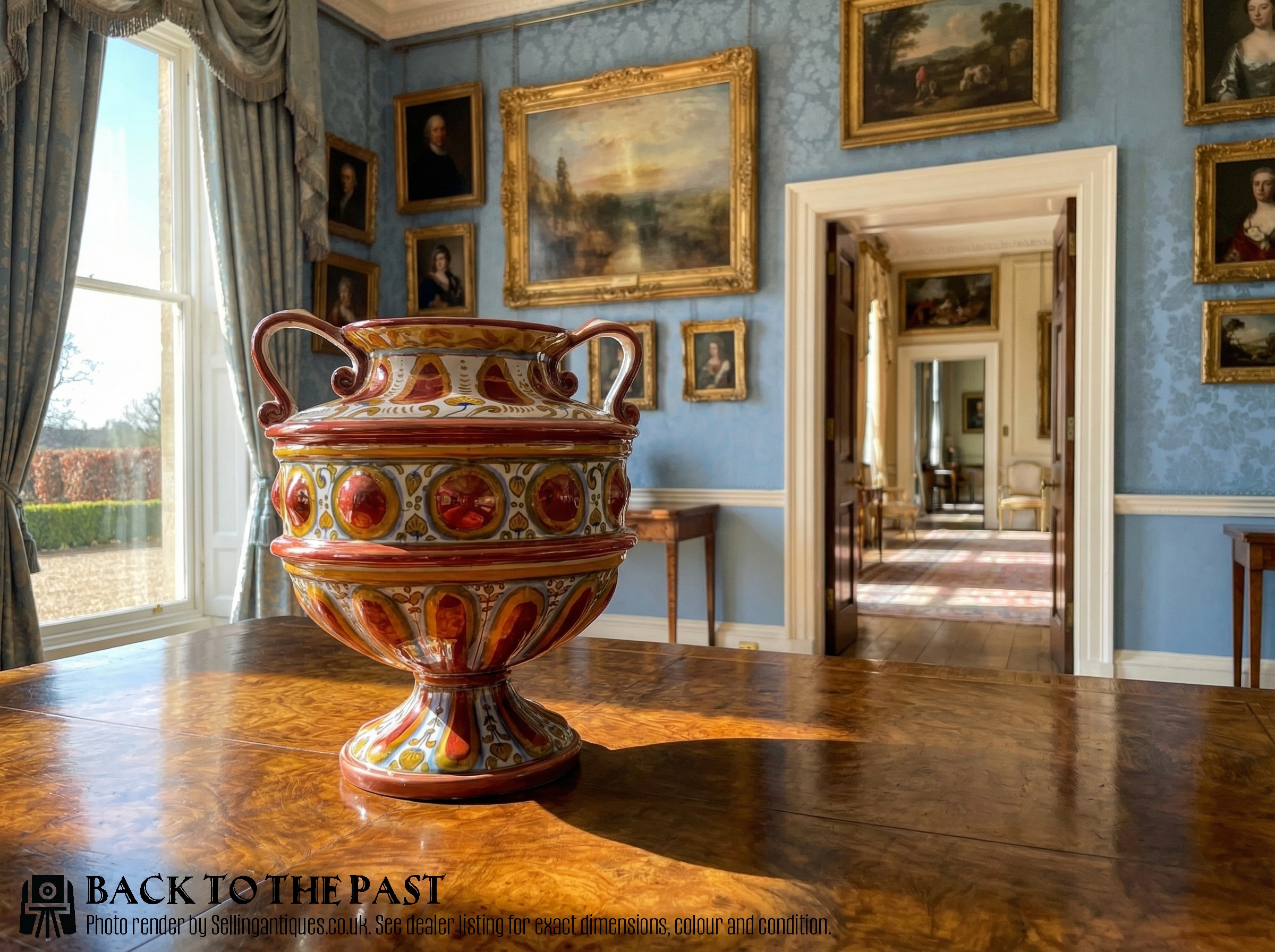
Renaissance Revival Vase
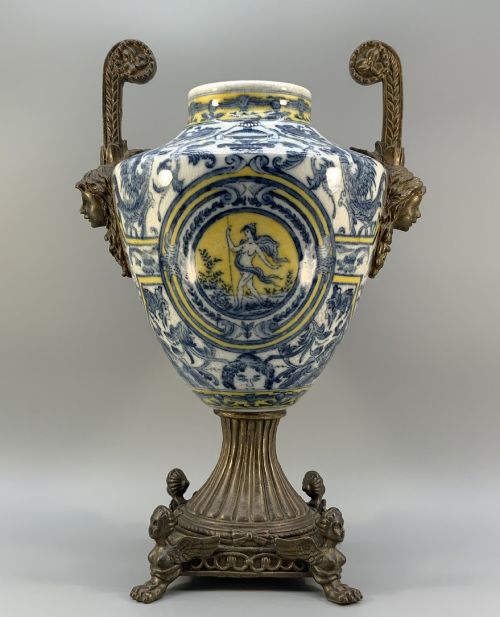
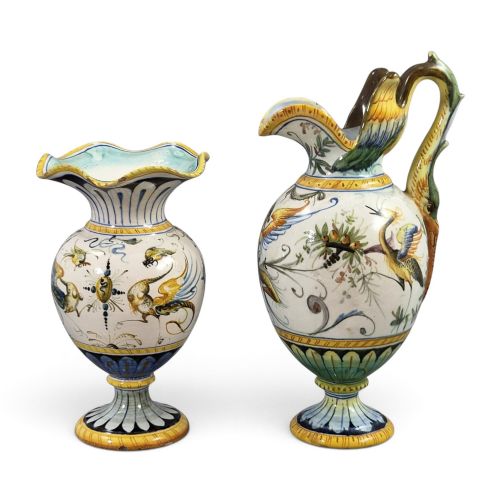
When you search for a renaissance revival vase, you are looking at nineteenth-century works that borrow heavily from earlier Italian majolica and classical bronze forms. These pieces often appear as ewers, urns, and table lamps drawing on nineteenth-century, Victorian, and eighteen-eighties aesthetics.
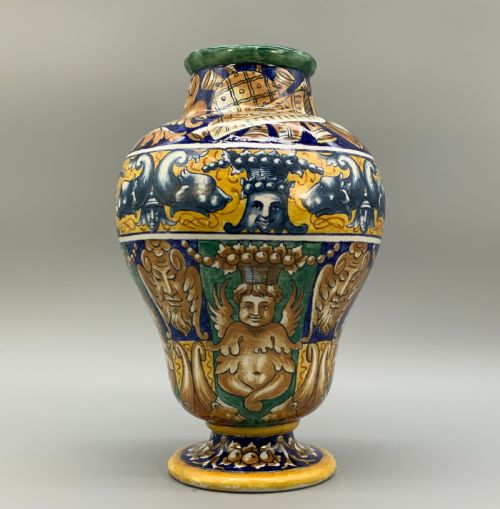
The versions you are most likely to meet on this page span earthenwares, tin-glazed ceramics, and cast bronze mounts. Many items reflect Italian and French origins, particularly Florence-based workshops producing tin-glazed earthenware and faience.
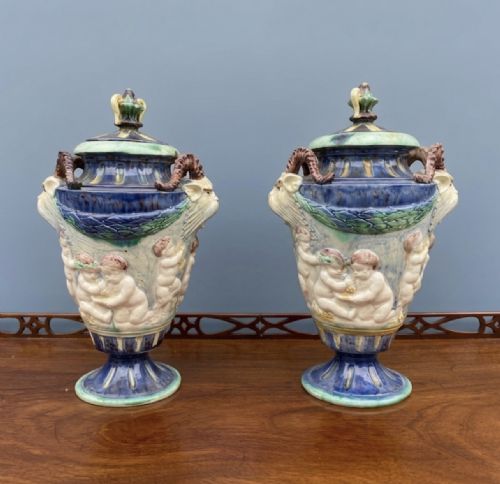
Makers and factories of this period adapted sixteenth-century shapes into grand decorative objects for Victorian interiors. The selection ranges from covered majolica urns to large polychrome centrepiece vessels.
How they were made
Makers shaped earthenware and faience bodies before applying tin or lead glazes to create smooth, opaque surfaces for painting. Polychrome pigments were then brushed by hand across the ceramic body before firing.
Bronze and brass components were cast separately, often featuring classical figures or scrollwork handles. These metal mounts were subsequently attached to secure the ceramic bodies and provide stable feet or rims.
Some nineteenth-century potters took such inspiration from snakes that they wound them into functional handles for majolica bottle vases.
What varies in quality
The standard of a renaissance revival vase rests largely on the execution of the hand-painted polychrome decoration and the crispness of the bronze casting. Finer pieces display careful brushwork and finely chased metal mounts rather than hasty production work.
Proportion and weight also dictate the grade of the piece, with better examples maintaining balanced forms and secure integration between the ceramic body and any metal hardware.
Cantagalli Florence·Ulisse Cantagalli·Clodion
The Renaissance Revival Vase Glossary
- Majolica
- A type of tin-glazed earthenware decorated with colourful metallic oxide paints on an opaque white glaze. This technique reached high artistic levels in Italy during the Renaissance and inspired nineteenth-century revivals.
- Faience
- Tin-glazed earthenware produced primarily in France and Italy. The term describes glazed ceramic vessels intended mainly for ornamental display.
- Ewers
- Large jugs featuring wide spouts and decorative handles, originally used for pouring water but frequently made as purely decorative objects during the nineteenth century.
- Polychrome
- Decoration employing multiple distinct colours painted onto the ceramic surface. It is typical of Italian revival ceramics from the nineteenth century.
- Bronze mounts
- Cast metal fittings attached to ceramic bodies to form handles, bases, or rims. They add structural weight and decorative contrast to the vessel.
Renaissance Revival Vase: Frequently Asked Questions
How do I date a renaissance revival vase?
These pieces date predominantly from the nineteenth century, typically between eighteen-seventy and nineteen-hundred. Look at the characteristics of the glaze, the style of the bronze mounts, and any factory marks on the base to determine the period.
Victorian makers often combined classical Italian majolica motifs with nineteenth-century casting techniques, making a close inspection of materials essential for accurate dating.
Were these vases meant to hold water?
Many of these vessels, particularly those made as ewers or covered urns, served primarily as decorative garnitures for nineteenth-century mantelpieces and tables. Some have since been converted into table lamps with wired fittings.
Using them for fresh flowers requires caution, as nineteenth-century ceramics and applied metal mounts can be sensitive to moisture and frequent handling.
What is the difference between majolica and faience?
Both terms refer to tin-glazed earthenware, though majolica traditionally denotes Italian tin-glazed ceramics, while faience is more commonly associated with French production. Both traditions were heavily emulated during the nineteenth-century revival.
On this page, pieces described under either term share similar manufacturing techniques, employing opaque white glazes painted with polychrome mineral colours.
How should I display a large ceramic urn?
Because these pieces are often substantial in weight, they require a sturdy surface such as a heavy sideboard, console table, or dedicated pedestal. Keep them out of high-traffic walkways to prevent accidental knocks to handles or bronze mounts.
Pairing matching urns or ewers on either side of a fireplace or central piece of furniture creates the balanced aesthetic intended by Victorian collectors.