


Earthenware Floor Vase
These earthenware floor vases bring bold scale and rich historic character to interiors, offering striking focal points for grand rooms.
Earthenware Floor Vase
An earthenware floor vase is a substantial decorative vessel designed to stand directly on the ground, utilising generous proportions to anchor a room. These pieces span the nineteenth century, Edwardian era, and the early decades of the nineteen-hundreds, reflecting diverse international aesthetics.
Domestic settings benefit from these tall vessels by placing them in empty corners, entrance halls, or flanking hearths. Their commanding presence requires no additional contents to make a strong visual statement.
Materials and construction
Potters shaped these large vessels from heavy clay and terracotta, often requiring sectional throwing or coiling to achieve such imposing heights. Skilled artisans then applied glazes, enamels, and slip to the porous bodies before high-temperature firing.
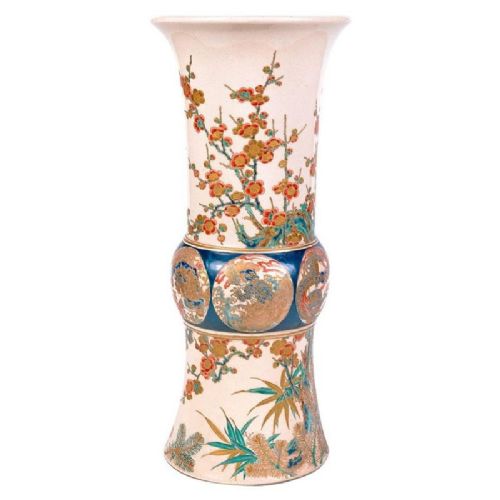
Decoration frequently involved intricate hand-painted enamels, gold leaf accents, and applied sprigged reliefs. Salt glazing and specialised surface treatments added durability and distinct textural depth to the finished earthenware.
Materials represented include traditional earthenware, terracotta, salt-glazed stoneware, enamel, and gold leaf.
Assessing quality and execution
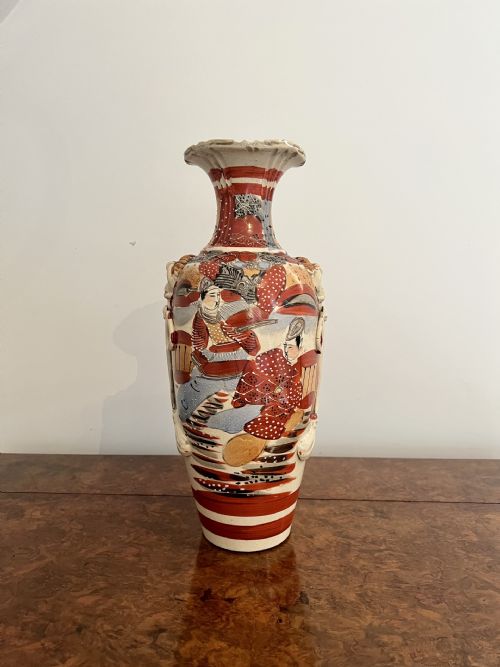
Superior examples distinguish themselves through the crispness of hand-painted details and the balanced symmetry of monumental forms. Finer Satsuma pieces display dense, micro-detailed pictorial work with abundant use of gilt and enamel.
The weight, stability, and integrity of the fired body indicate the skill of the original workshop. Finer European amphorae and majolica pieces show sophisticated glaze chemistry and confident modeling that elevates them above standard utilitarian storage jars.
Amphora Austria
The Earthenware Floor Vase Glossary
- Amphora
- A tall two-handled jar with a narrow neck, originally used in antiquity for storing oil or wine but later revived as a decorative form. These monumental nineteenth-century versions often feature flowing organic lines typical of the period.
- Satsuma
- Japanese pottery traditionally originating from Satsuma Province, characterised by an ivory crackle-glaze earthenware body decorated with elaborate polychrome enamels and gilt. These pieces were extensively produced for export during the Meiji period.
- Majolica
- Tin-glazed earthenware associated with Italian Renaissance traditions and later nineteenth-century revivals. It is known for its vibrant opaque colours and rich pictorial surfaces.
- Terracotta
- Unglazed or glazed fired red clay used for sturdy utilitarian and decorative vessels. Its warm earthy tones make it a staple of Mediterranean rustic styles.
- Sprigged
- A ceramic decoration technique where moulded clay reliefs are applied to the surface of an un-fired vessel before glazing and firing. This creates raised ornamental details that catch the light.
Earthenware Floor Vase: Frequently Asked Questions
Can I put fresh flowers in them?
Many historic earthenware and terracotta vessels are porous or lack modern waterproof glazes, making them unsuitable for holding water directly. Using a hidden inner plastic or metal container protects the historic interior from moisture damage.
Dried botanicals, large branches, or pampas grass provide height and texture that complement the vessel without introducing moisture. This preserves the delicate interior surfaces and historic glazes.
How do I identify a Meiji period Satsuma vase?
Satsuma wares from the Meiji period typically feature a distinctive fine network of crackles across a warm ivory earthenware glaze. They are heavily decorated with detailed hand-painted figures, floral motifs, and raised gold leaf.
Examining the base often reveals painted or impressed workshop signatures from Japanese makers of the era. The precision of the enamel work usually indicates the quality of the production.
How do I clean historic earthenware?
Dust these vessels gently with a dry, soft microfiber cloth to prevent accumulation in textured areas and crevices. Avoid harsh chemical cleaners or excessive water, which can seep into porous clay or damage historic enamel and gold leaf.
Regular, gentle maintenance keeps the glaze lustrous and protects delicate painted details. Professional conservation advice should be sought for stubborn residues on antique surfaces.