
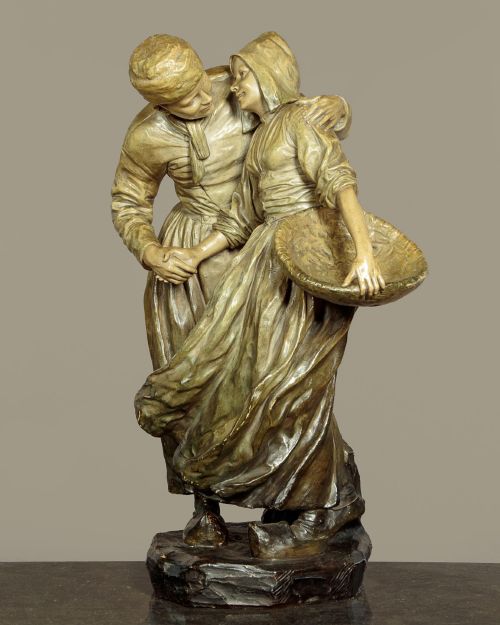


Antique Austrian Pottery
Antique Austrian pottery brings fluid Art Nouveau contours and rich glazes into a room, offering expressive figures and dramatic vases that collectors prize.
Antique Austrian Pottery
When you search for antique Austrian pottery, you encounter works spanning the late nineteenth century into the early twentieth century, taking the form of vases, sculptures, and jardinieres. These pieces capture the sculptural ambition of European workshops operating during the height of the Art Nouveau and Classical Revival movements.
You are most likely to meet earthenware and terracotta figures alongside glazed ceramic vessels produced around nineteen hundred. The inventory ranges from monumental ewers and spill vases to decorative plates and centrepieces.
The aesthetic leans heavily into organic forms, floral motifs, and classical subjects. Makers utilised porcelain and earthenware to create both delicate cabinet pieces and substantial architectural ornaments.
How they were made
Potters shaped these objects using earthenware, terracotta, and porcelain, applying complex glazes to achieve rich surface textures and colour variations. Workshops employed skilled modellers to cast figurative sculptures and vessel bodies before hand-finishing the details.
Selected pieces incorporate delicate additions such as gold leaf to highlight intricate relief work and mouldings. The combination of slip-casting and hand-painting allowed makers to produce both fluid organic lines and crisp classical ornamentation.
Rebecca continues fetching water by the spring in terracotta across multiple parlour figures.
What varies in quality
Quality rests upon the crispness of the modelling and the ambition of the original design. Works executed by named modellers show superior anatomical definition and more controlled glaze application than anonymous production pieces.
The complexity of the form dictates the standard of execution, separating standard decorative wares from monumental exhibition pieces. Glaze depth and the precision of hand-painted accents distinguish finer examples within any given category.
Goldscheider·Julius Dressler·Ernst Wahliss·Turn Vienna·Eichwald
The Antique Austrian Pottery Glossary
- Earthenware
- Porous pottery fired at lower temperatures, commonly used for nineteenth-century figurative sculptures and large decorative vessels.
- Terracotta
- Unglazed or slip-coated fired clay of a brownish-red colour, frequently utilised for detailed sculptural groups and female figures.
- Majolica
- Pottery decorated with opaque coloured glazes on a tin-enameled base, known for vibrant depictions of birds, flora, and botanical subjects.
- Ewer
- A large jug with a wide spout and curved handle, often produced as a pair for decorative display during the Art Nouveau period.
- Jardiniere
- An ornamental pot or stand designed to hold growing plants, typically ornamented with relief modelling or floral motifs.
Antique Austrian Pottery: Frequently Asked Questions
How do I identify Art Nouveau Austrian pottery?
Look for characteristic whiplash lines, asymmetrical floral motifs, and naturalistic female figures typical of production around nineteen hundred. The integration of organic shapes into the body of vases and ewers marks the key aesthetic.
Examine the base for impressed model numbers, factory stamps, or designer signatures. Major firms often marked their sculptural earthenware and porcelain with distinct factory ciphers.
Were these pieces used or displayed?
Most large vases, centrepieces, and figurative groups served as decorative drawing-room ornaments rather than utilitarian vessels. Jardinieres held indoor plants, while decorative plates and ewers functioned purely as ornamental displays.
Smaller spill vases held matches for hearths, but the sculptural nature of the inventory suggests primary placement on mantels, pedestals, and cabinets.
How should I clean antique pottery?
Dust surfaces gently with a soft, dry brush to prevent dirt accumulation in crevices and relief details. Avoid using water or chemical cleaners on terracotta and older glazed earthenware, as moisture can penetrate porous bodies.
Keep pieces away from direct sunlight and damp environments to protect delicate hand-painted surfaces and gold leaf highlights. Professional conservation is recommended for any ingrained grime.
What is majolica pottery?
Majolica is a type of ceramics defined by brightly coloured lead glazes applied over a tin-opacity base. In Austrian pieces, this technique yielded vivid depictions of natural subjects like sunflowers and birds.
The glossy surface and intense palette set majolica apart from standard terracotta or matte earthenware. These pieces rely on rich chromatic contrast for their visual impact.