




Monumental Ceramic Vase
A monumental ceramic vase carries immense presence in a room, offering striking scale and rich historical craft.
Monumental Ceramic Vase
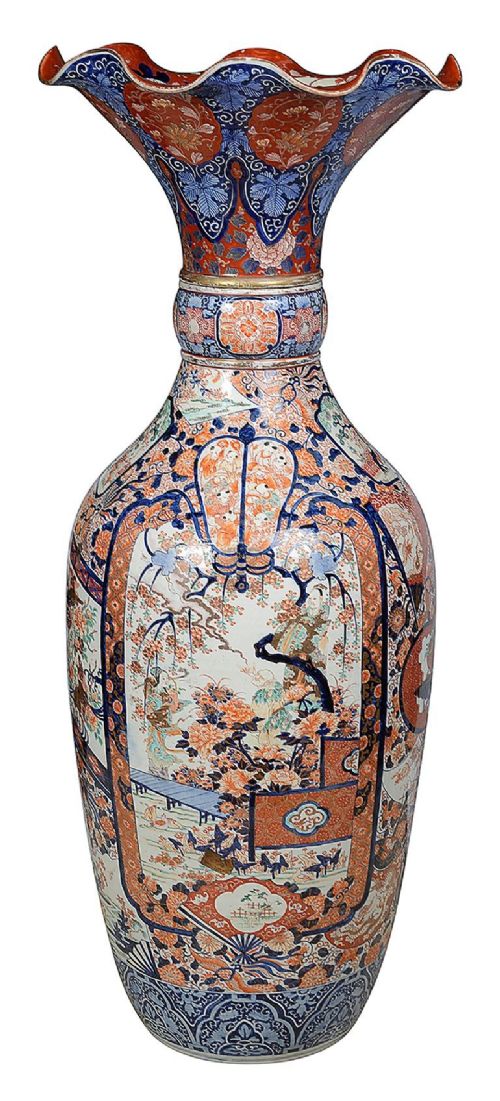
When you search for a monumental ceramic vase, you encounter grand, imposing vessels designed to dominate large spaces or anchor a room. These statement pieces span several distinct cultures and aesthetics, ranging from nineteenth-century Chinese celadon and Cantonese porcelain to Japanese Meiji period Satsuma and Imari works.
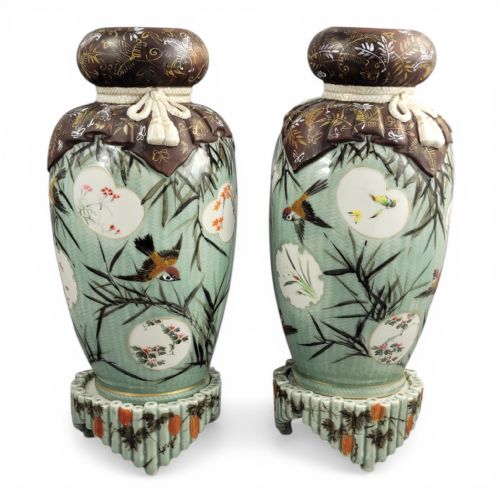
You are most likely to meet nineteenth-century examples on this page, including towering floor vases, elaborate pairs on matching stands, and grand European interpretations like Minton majolica and Sevres style ormolu-mounted urns. Makers and factories utilised porcelain, earthenware, and heavy glaze to achieve these outsized forms, frequently incorporating brass or wood bases.
The assortment also encompasses Austrian Art Nouveau pottery and French Rococo revival designs, showing how diverse makers scaled up traditional forms for grand interiors. Whether standing nearly five feet tall or styled as grand table lamps, these objects combine utilitarian origins with supreme decorative ambition.
How they were made
Potters and ceramists shaped these heavy bodies using earthenware and fine porcelain, mastering high-firing techniques necessary to support such massive structures without warping. Artisans applied rich colour palettes utilising intricate enamel work, underglaze blue decoration, and hand-applied gold leaf to enhance the expansive surfaces.
Many of these grand pieces received protective and decorative layers of glossy glaze, while European works often integrated cast brass or ormolu mounts to secure and elevate the ceramic body. Japanese Meiji period examples and Chinese Qing dynasty vessels demonstrate advanced throwing and moulding methods achieved by skilled historic workshops.
Some of these towering vessels stand nearly five feet tall, easily outgrowing the average interior decorator's initial spatial calculations.
What varies in quality
The standard of a grand vessel depends heavily on the crispness of its hand-painted details, the depth and consistency of the glaze, and the structural integrity of large-scale ceramic firing. Superior examples display precise brushwork in enamels and gold leaf, avoiding muddy colours or misaligned decorative panels across their vast surfaces.
Additionally, the quality of a piece is reflected in the sophistication of any accompanying mounts, such as cast brass or ormolu, and whether the object retains its original matching stands. Works bearing signatures from recognised artists or prominent potteries command greater interest due to documented authorship and superior execution.
Kato Sanhei·Seiko-en Chokei·Minton
The Monumental Ceramic Vase Glossary
- Celadon
- A type of ceramic glaze originating in China known for its jade-green colour, achieved through iron oxide in a reduction kiln. It creates subtle, translucent tones across large surfaces.
- Majolica
- A colourful, tin-glazed earthenware popular in Victorian times, noted for its vibrant sculptural reliefs and rich lead glazes. Minton produced notable examples in this technique.
- Ormolu
- Gilded bronze mounts applied to furniture and ceramics, particularly popular in French decorative arts. These metal additions provided structural support and opulent visual framing.
- Satsuma
- A style of Japanese earthenware featuring an ivory-coloured craquelure glaze decorated with intricate polychrome enamels and raised gold. It became highly sought after during the Meiji period.
- Imari
- A traditional style of Japanese export porcelain characterised by a palette of underglaze blue, iron red, and gold. These wares were widely produced for Western and domestic markets.
Monumental Ceramic Vase: Frequently Asked Questions
Where should I place a monumental vase?
These grand vessels suit expansive entryways, high-ceilinged reception rooms, or substantial hallways where their scale can be fully appreciated without crowding the surrounding architecture.
Because many examples stand well over a metre tall, they function best directly on the floor or on dedicated pedestals rather than standard furniture.
How do I identify a Meiji period piece?
Meiji period ceramics typically showcase meticulous decorative detail, often combining Satsuma earthenware or Seto porcelain with dense enamel and gold leaf motifs.
Look for maker signatures inscribed on the base, alongside stylistic indicators reflecting Japanese craftsmanship intended for both domestic and international exhibition.
Are these vases waterproof?
Historic large-scale ceramics were primarily created for display and architectural decoration rather than everyday floral arrangement.
Utilising them for fresh water and flowers can risk damaging historic bodies, interior glazes, or delicate enamel work over time.
What is the difference between earthenware and porcelain?
Earthenware is fired at lower temperatures and remains porous unless thoroughly glazed, resulting in a heavier, sturdier body often used for large Art Nouveau pottery.
Porcelain utilises refined white clay fired at much higher temperatures, producing a dense, vitrified material capable of holding finer details and resonant tones.