
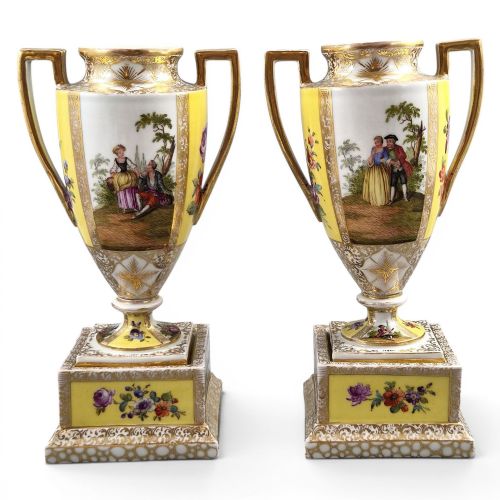
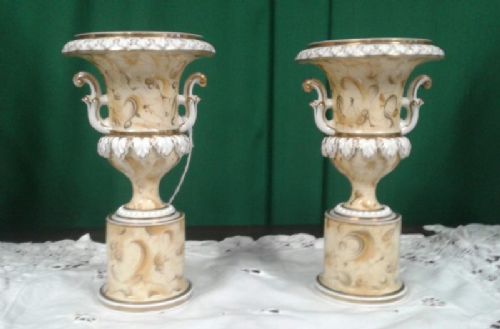


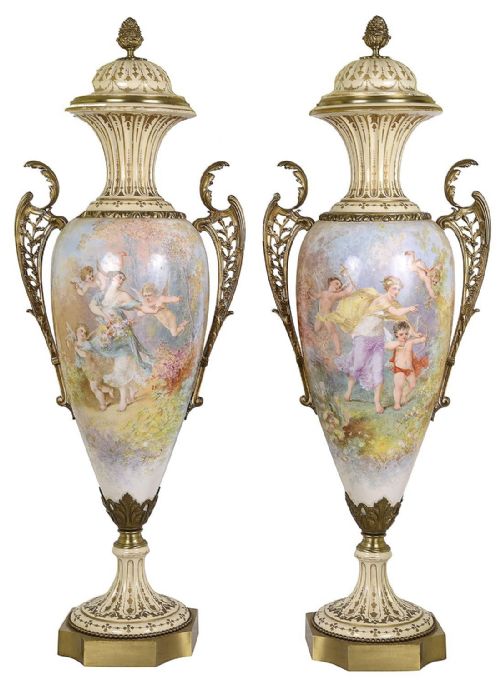


Pedestal Ceramic Urn Vase
These pedestal ceramic urn vase examples bring neoclassical symmetry and majolica depth to a room, offering classical form combined with nineteenth-century decorative arts.
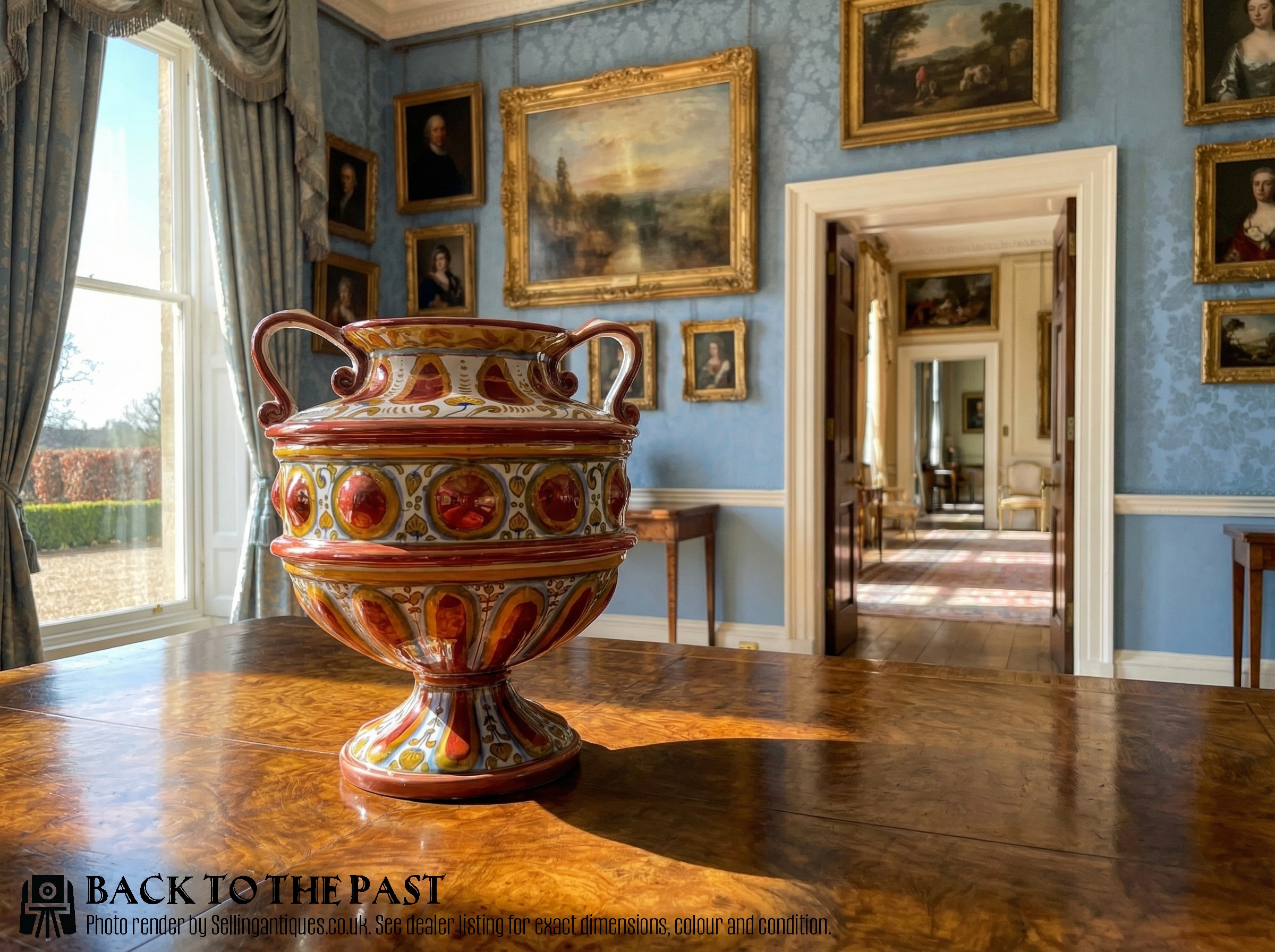
Pedestal Ceramic Urn Vase
A pedestal ceramic urn vase combines classical vessel shapes with raised footings, drawing on nineteenth-century revivals such as Neoclassical, Rococo, and Renaissance styles. Buyers encounter porcelain, earthenware, and terracotta vessels shaped as campana urns, lidded jars, and jardinieres designed for display.
The nineteenth century dominates the available forms, featuring British and continental factories working in porcelain and majolica. Pieces range from large decorative garnitures to smaller campana shapes raised on dedicated bases.
Makers often drew inspiration from Grand Tour discoveries, producing items that echoed ancient Greek and Roman pottery while employing contemporary glazing and gilding techniques.
Materials and production techniques
Potters shaped clay bodies using earthenware, terracotta, and hard-paste porcelain, frequently finishing surfaces with tin glaze, enamel, or gilt highlights. Moulding and throwing formed the primary vessels, which were then fitted with pedestals or three-dolphin bases.
Decoration relied on hand-painted enamel scenes, applied white bas-reliefs on blue jasperware, and rich majolica coloured glazes. Guilds and factories utilised gold leaf and elaborate firing processes to achieve deep colour saturation and lustrous finishes.
Cock pheasants and leaping storks occasionally superintend your sideboard from the painted porcelain flanks of these nineteenth-century vessels.
Distinctions in quality and execution
The richness and stability of the glaze application distinguish standard production from exceptional studio and factory output. Finer examples show careful control over enamel colours and gilding without distracting surface blemishes.
Helena Wolfsohn Dresden·Ridgeways·Meissen·WEDGWOOD·Doulton Burslem·Minton·Cantagalli·Vienna·Hadley's Worchester·Sevres·Mougin·Hadley’s & Sons Worcester·Capodimonte·Royal Worcester·Royal Crown Derby·James Stinton·Albert Carrier
The Pedestal Ceramic Urn Vase Glossary
- Campana
- A bell-shaped vessel with a flaring rim and a tapered body, frequently mounted on a pedestal base. This classic ancient form inspired numerous nineteenth-century revival pieces.
- Majolica
- A type of earthenware coated in an opaque tin glaze and painted with metallic oxide colours. It achieved immense popularity during the Victorian era for bold, sculptural ceramics.
- Jasperware
- A fine-grained, unglazed stoneware developed with distinct coloured bodies and contrasting applied white bas-relief figures. Wedgwood remains the most celebrated exponent of this technique.
- Garniture
- A set of three or more matching or complementary decorative vases designed to sit together on a mantelpiece or sideboard. These sets often include lidded urns and side vases.
- Jardinier
- A large ornamental pot or stand designed to hold growing plants or floral arrangements. They frequently share decorative motifs with pedestal urns.
Pedestal Ceramic Urn Vase: Frequently Asked Questions
How were pedestal ceramic urn vases used?
These vessels served primarily as decorative garnitures on mantelpieces, sideboards, or large tables within nineteenth-century drawing rooms. Some functioned as plant holders or formal planters.
Larger examples stood alone on dedicated pedestals to anchor architectural room schemes during the Victorian and Edwardian periods.
What styles influence these ceramic urns?
Neoclassical and Renaissance revival styles dominate the designs, reflecting nineteenth-century fascination with archaeological discoveries. Makers also drew upon Rococo curves and Grand Tour souvenirs.
British and continental factories reinterpreted these classical motifs through contemporary glazing and porcelain manufacturing techniques.
Are majolica urns heavy?
Majolica pieces are notably heavy due to the dense earthenware body and thick, opaque coloured glazes characteristic of the technique. Monumental examples require sturdy placement surfaces.
Porcelain and lighter earthenware versions offer a more delicate alternative for display on mantelpieces or cabinets.